“The land does not belong to us; we belong to the land.” It is a sentiment expressed in many cultures around the world, but nowhere have I seen it lived more completely than on the vast grasslands of Mongolia.
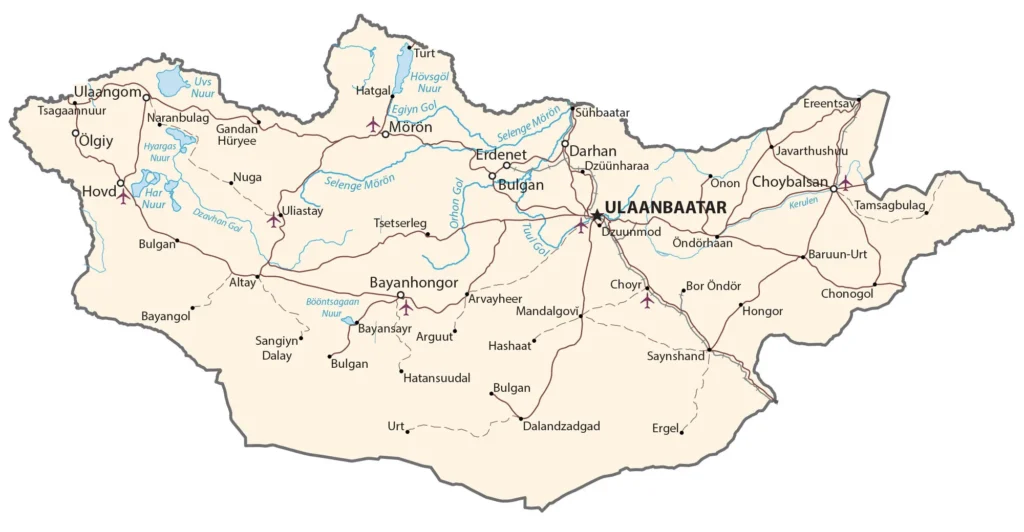
Stretching from the Siberian forests to the Gobi Desert, Mongolia is one of the last places on Earth where people continue to live largely as they have for centuries. Around a quarter of the population still follows a nomadic or semi-nomadic way of life, moving with the seasons to ensure their animals have fresh pasture and the land has time to recover. It is a rhythm refined over generations, one that has shaped not only a culture, but an entire ecosystem. I arrived expecting sweeping landscapes, wild horses and endless skies. What was more invaluable was leaving with a deeper understanding that Mongolia’s nomadic herders hold some of the most important lessons our modern world needs to hear.
Living by Nature’s Rhythm
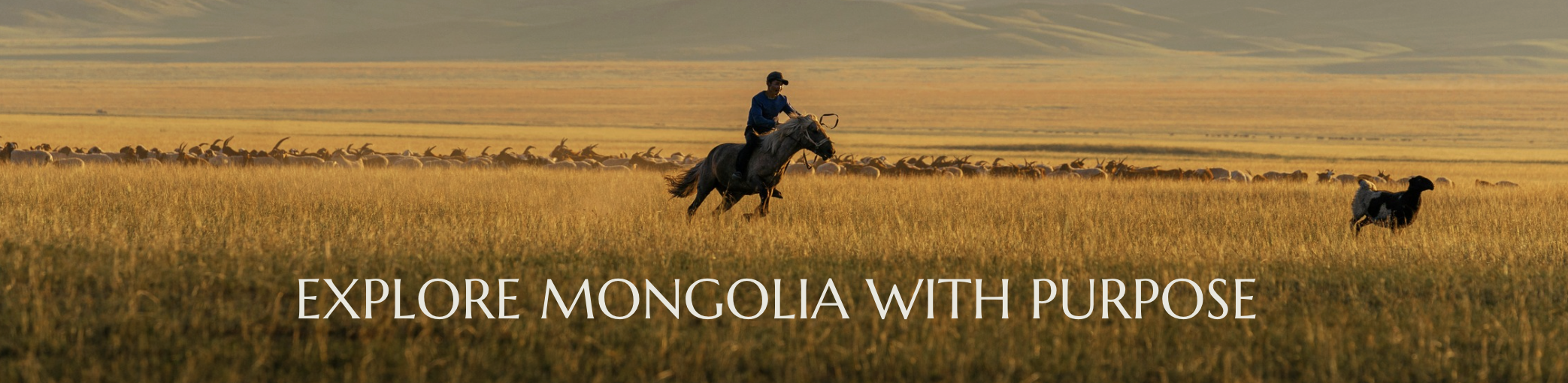
Leaving behind the bustle of Ulaanbaatar and travelling deeper into the steppe towards Mandala Camp the roads gradually disappeared, replaced by faint tracks stretching towards the horizon. White gers appeared like tiny beacons beneath impossibly wide skies, while herds of horses, sheep, goats and camels grazed across grasslands that seemed to have no beginning or end. Nothing here feels permanent. Families move with the seasons, packing up their homes several times each year to follow the needs of their livestock. Summer camps give way to autumn pastures, before sheltered winter valleys offer protection against the brutal cold. Every migration has a purpose. Every route has been carefully passed from one generation to the next. Unlike many parts of the world where landscapes have been divided by fences and ownership, Mongolia’s steppe feels alive. It breathes with the movement of people, animals and weather. It is impossible not to slow down yourself.
Learning From Mongolia’s Greatest Teachers
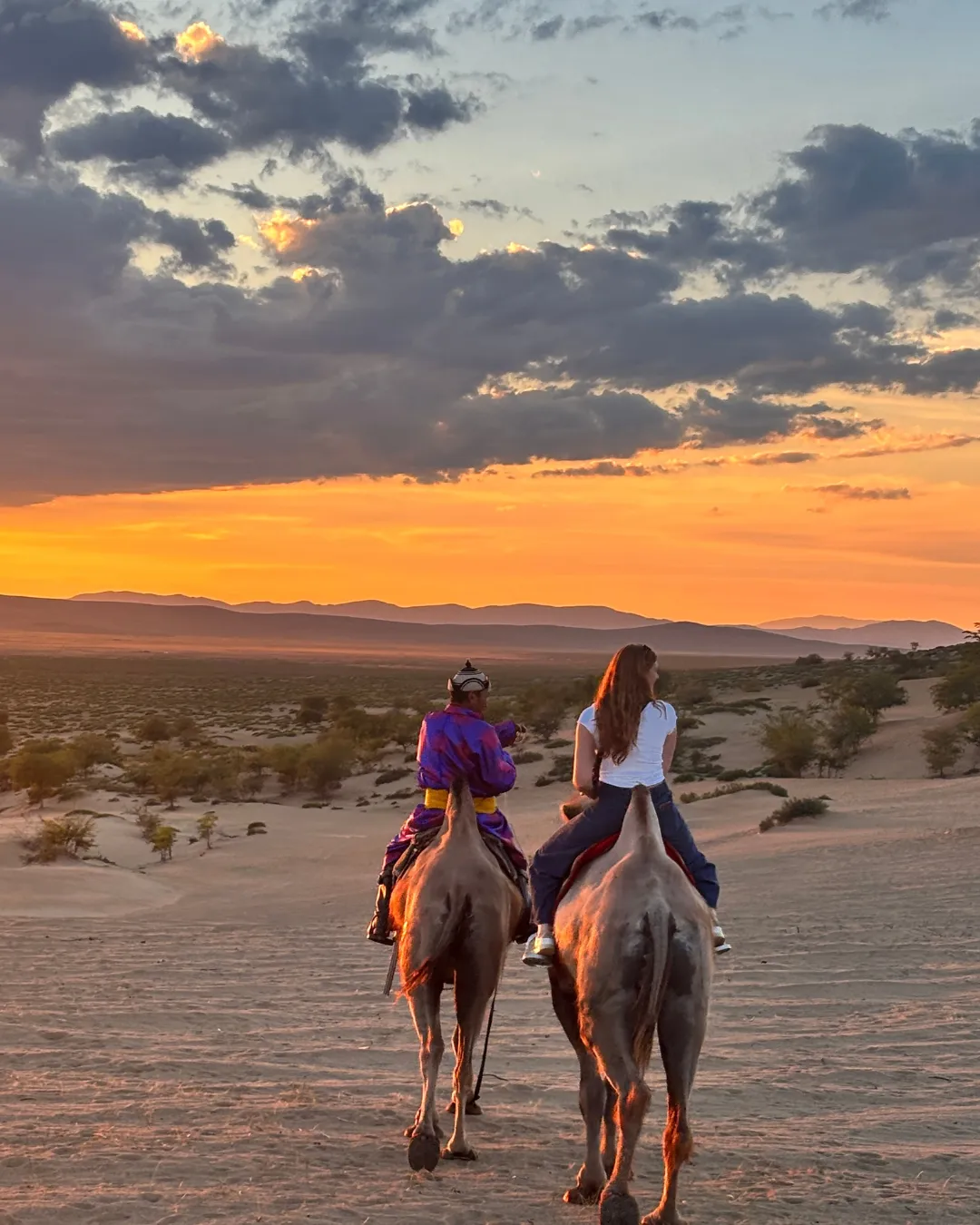
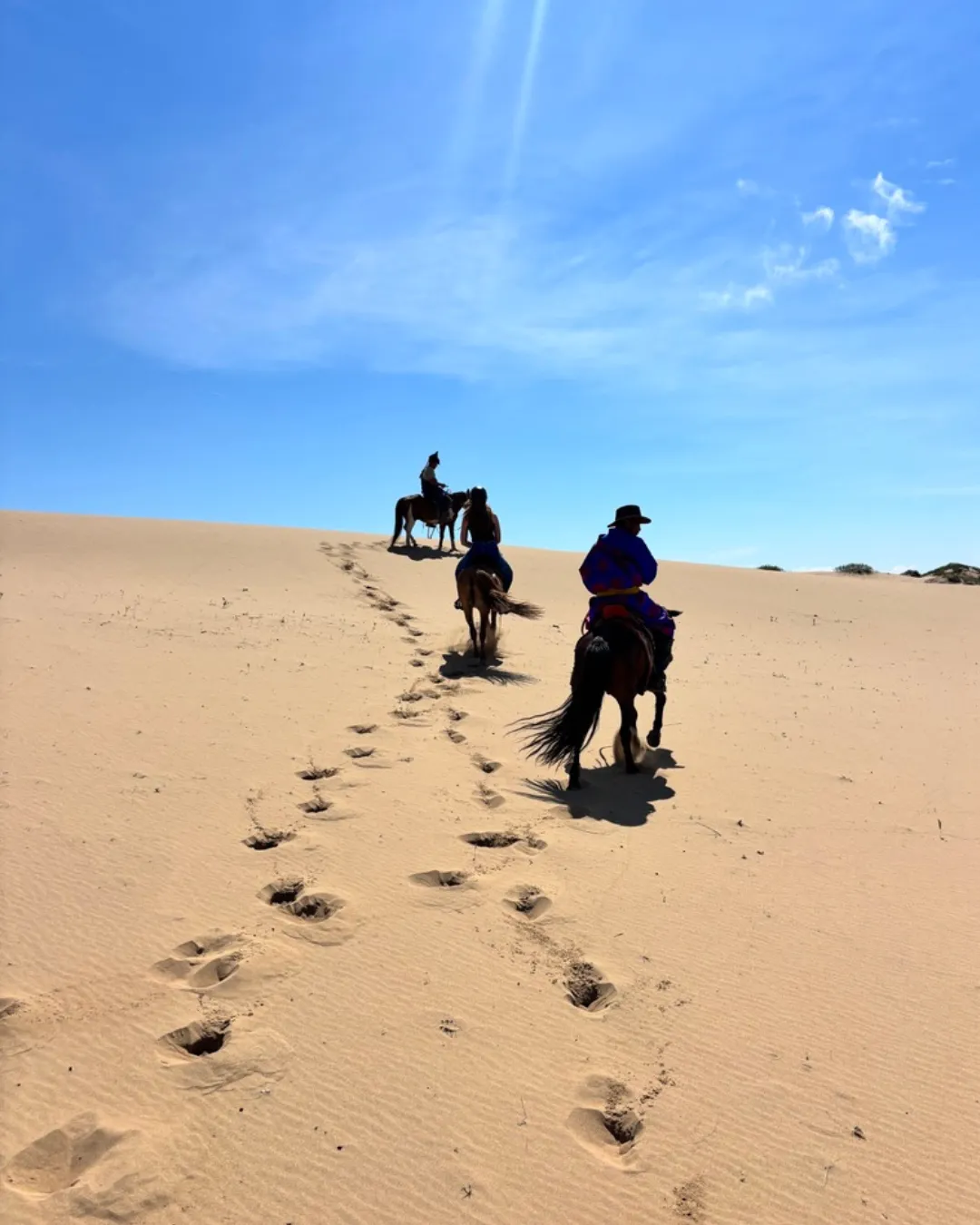
At Mandala Heartland, we were welcomed not as tourists, but as guests. The camp is hosted by a Nomadic herding family who live minutes away. On arrival, Chimbaa and Tuya immediately invited us to partake in, and feel part of, family life. We crossed golden sand dunes by camel as the sun dipped below the horizon, sharing stories, warm hospitality and one of the clearest night skies I have ever experienced. The following morning we were riding across the steppe on horseback, cantering alongside towering dunes, laughing with Chimbaa as we howled like wolves across the open plains and Choo Choo’d our horses on to greater speeds.
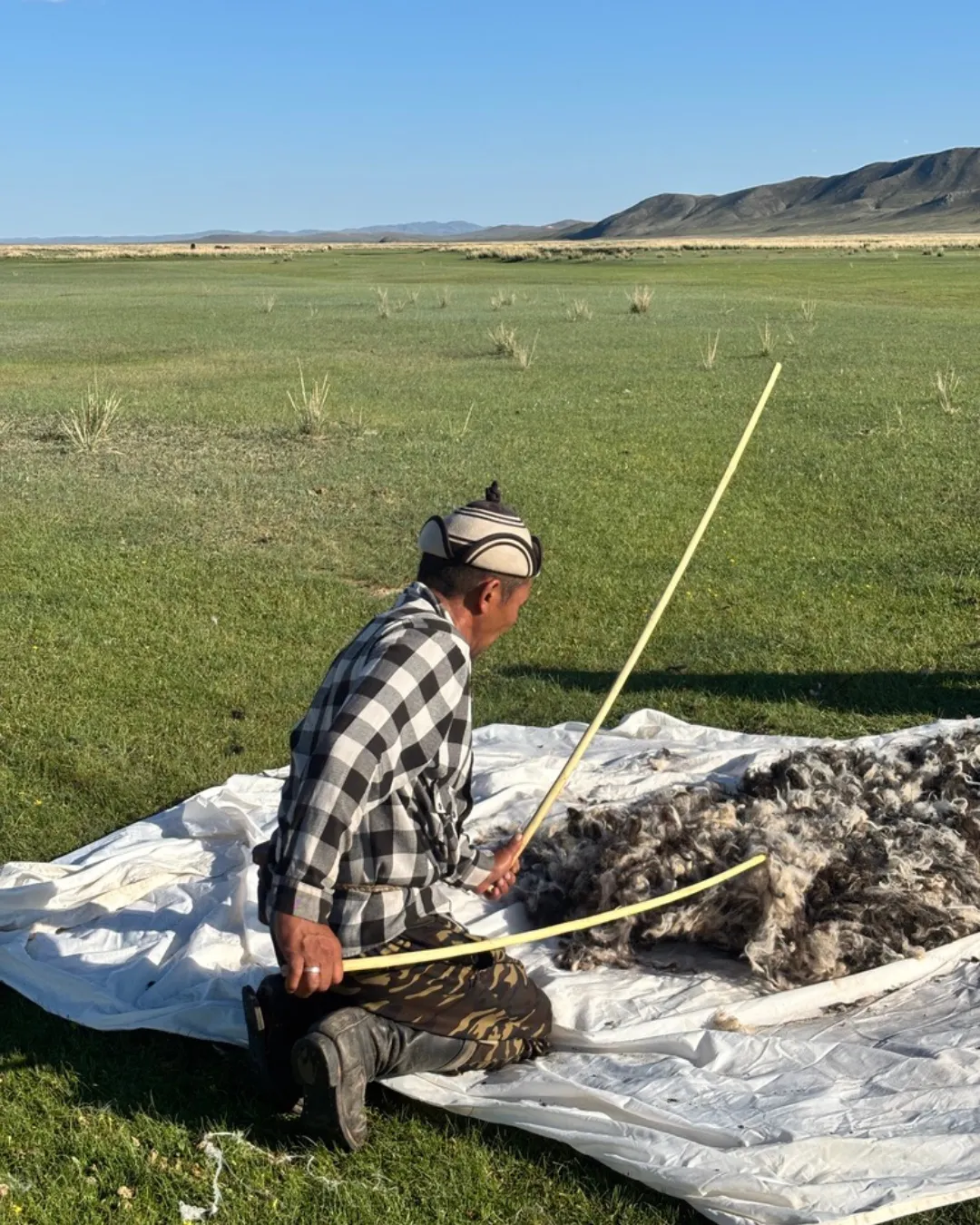
Each activity felt like a glimpse into everyday life. Over the following days I began to understand that every tradition had meaning. I joined Chimbaa, Tuya and their friends in making felt from sheep’s wool, rhythmically hitting, rolling and singing together because good energy, they explained, is then installed into the finished piece which lines the walls of their ger in the winter. I watched centuries-old craftsmanship continue in exactly the same way it has for generations.
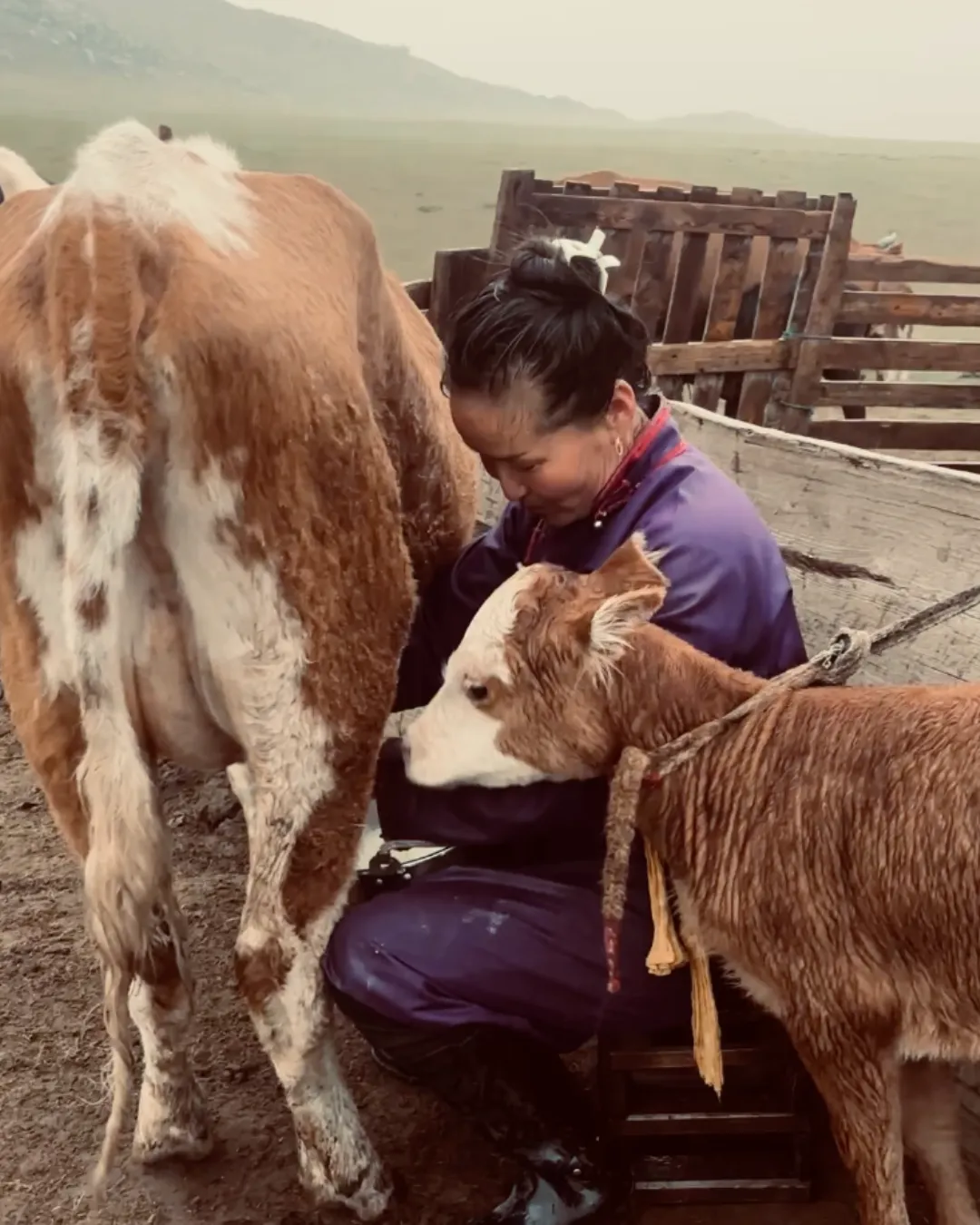
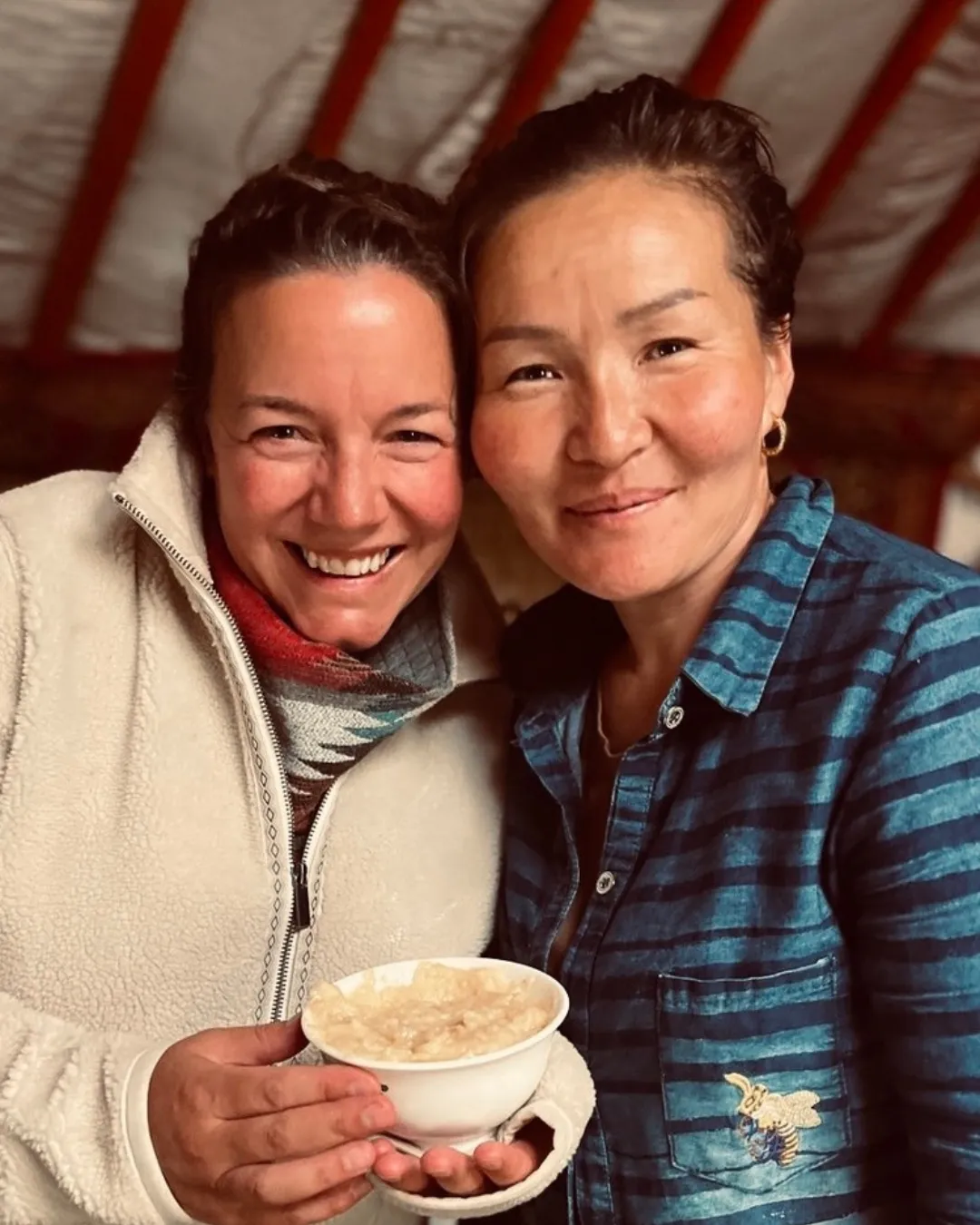
Later in the week at Ravdan and Enkhmaa’s family ger high in the mountains, I was welcomed with milk tea, carefully accepting it with my right hand while supporting my elbow with my left, a small gesture of respect, and meeting their children and learning about Ravdens work as a park ranger. The following morning, in the middle of a thunderstorm, Enkhmaa patiently taught me how to milk her cows. She effortlessly collected fresh milk from six cows while I struggled to master the technique with one. Then something extraordinary happened. The moment she stepped away, the milk seemed almost to stop flowing. She smiled knowingly.
The familiarity of her voice, her movements, even the smell of the dell she always wears while milking, had built a relationship of trust over countless seasons with her herd. It was one of those wonderfully simple moments that quietly reminds you just how much knowledge and connection between human and animal is imperative to survival in this landscape.
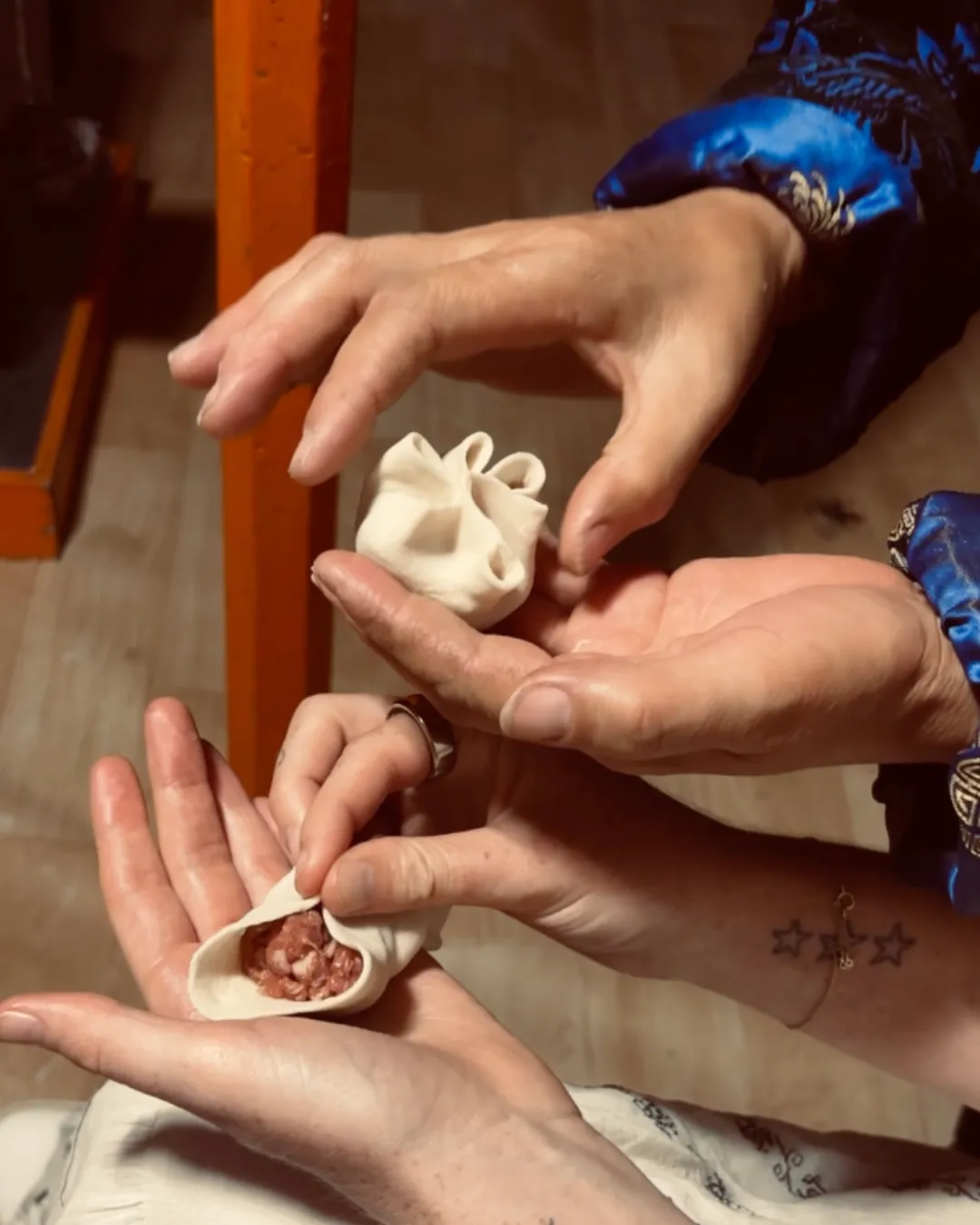
She later taught me how to transform that milk into yoghurt, clotted cream, and curd. She also taught me how to make khuushuur, Mongolia’s delicious fried dumplings. Watching her nimble hands shape each dumpling into beautiful shapes while mine butchered each attempt just added to the already enormous admiration I had for her and her daily work that quietly sustains both family and tradition.
Living With Nature, Not Against It
Spending time alongside these two nomadic families revealed something that is easy to overlook from the outside. These families are not simply livestock farmers. They are ecologists. They understand where the best pasture will emerge after rain, when grazing pressure needs to ease, which rivers will provide water where others dry up, how mountain valleys provide shelter during harsh winters, and how the wildlife and livestock have coexisted for centuries.
Their calendar is written not by dates, but by the seasons. Every decision is guided by observation of the land. As our conversations deepened, one topic surfaced again and again. Desertification.
One guide quietly pointed towards sand dunes forming in places they had never existed before. Mongolia’s grasslands are changing. Following the collapse of the Soviet Union, restrictions on livestock ownership disappeared. Today many families own significantly larger herds than the land historically supported, particularly goats, whose grazing habits place greater pressure on fragile vegetation.
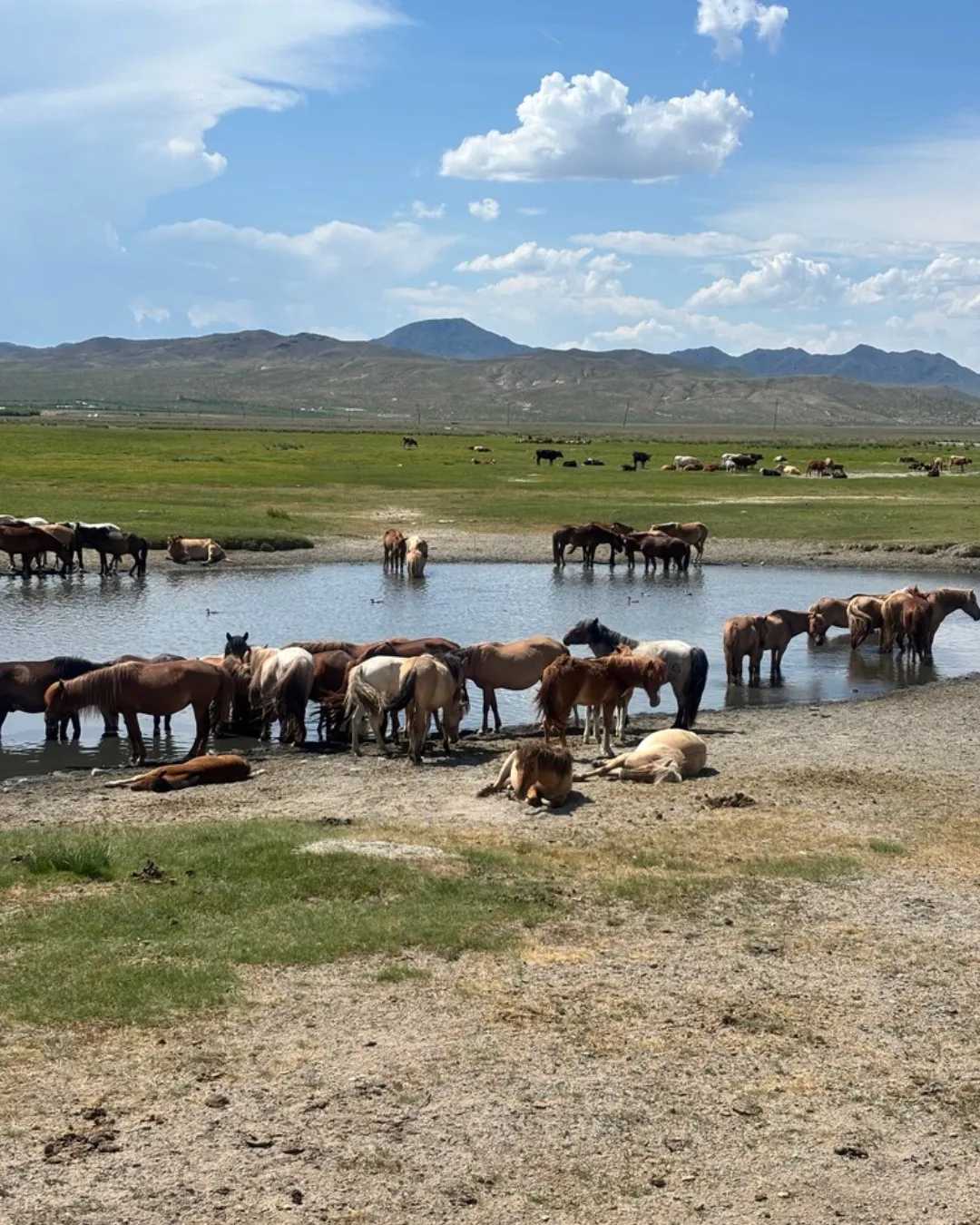
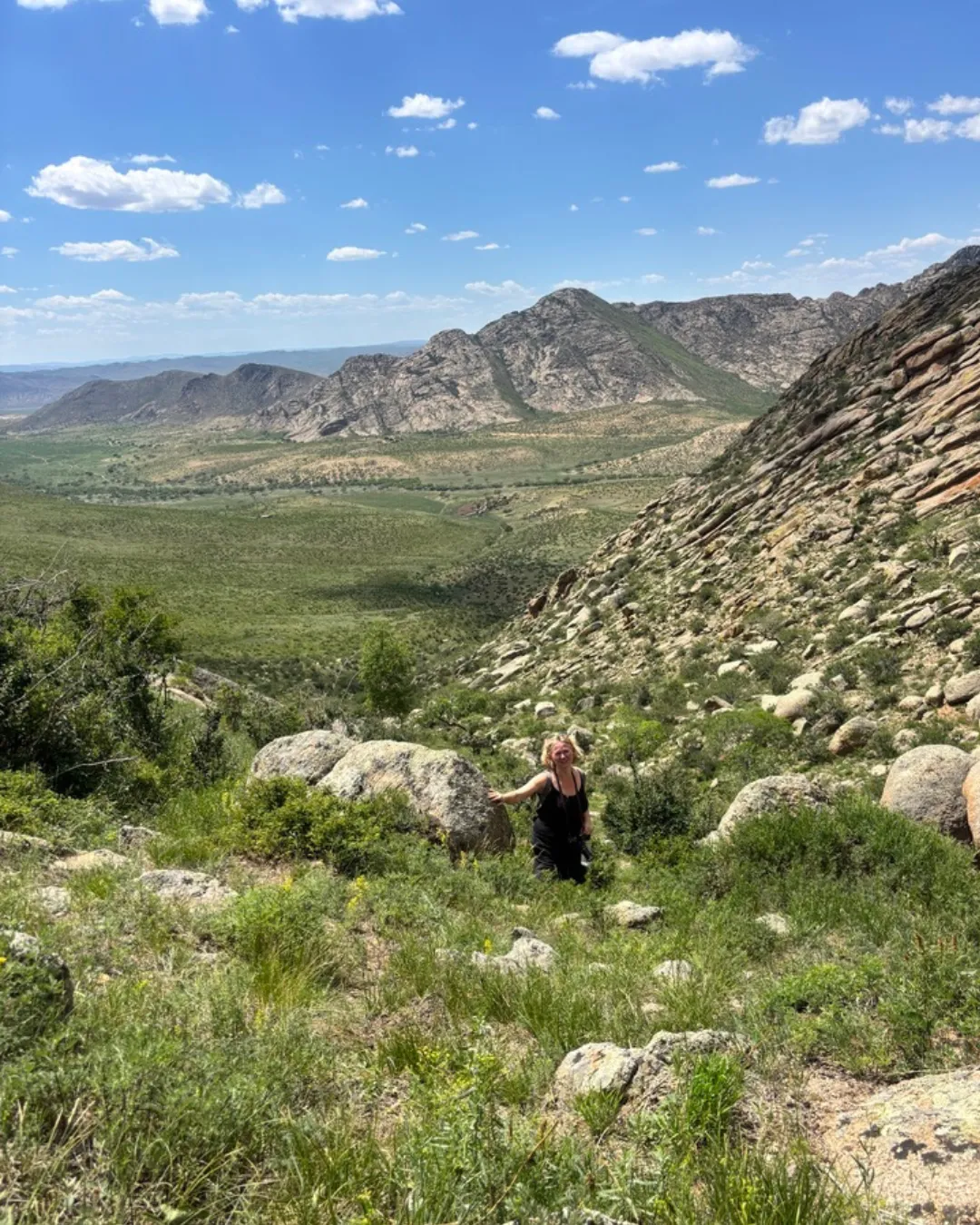
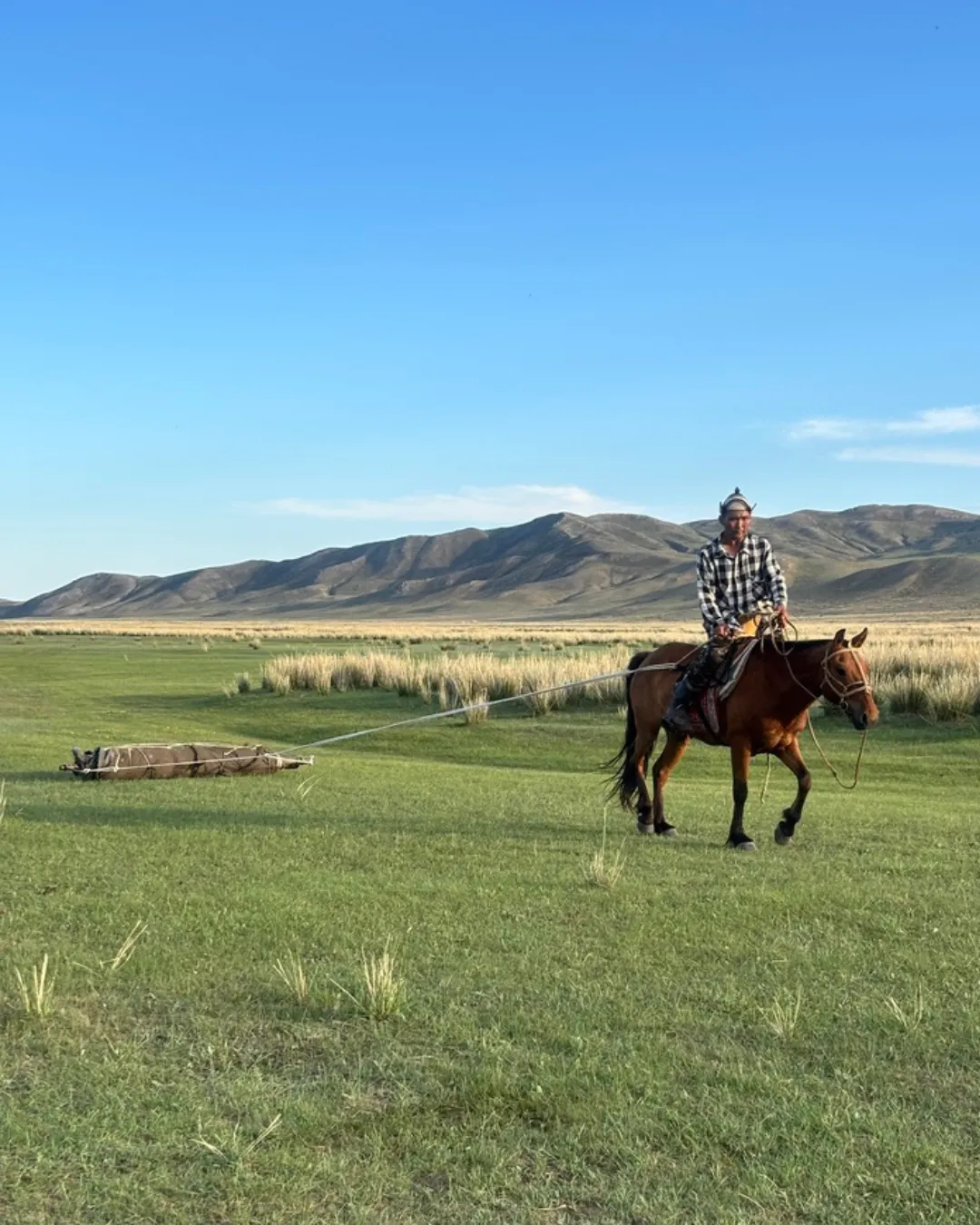
Today, Mongolia has around 3.5million people and 1.5 million of those people live in the city. However these numbers are greatly exceeded with livestock which lies at approximately 58 million. Combined with increasingly frequent dzud winters (Mongolia’s devastating winter phenomenon, when extreme cold, deep snow or thick ice prevent livestock from reaching the grass beneath, often resulting in the loss of entire herds and threatening the livelihoods of nomadic families) and the growing impacts of climate change, the delicate balance between people, animals and pasture is becoming harder to maintain.
This isn’t simply a Mongolian challenge. Grasslands cover around 40% of our planet’s land surface and support countless communities worldwide. When they deteriorate, biodiversity declines, soils lose carbon, water systems change and livelihoods disappear.
Conserving Cultural Heritage
We often think of conservation in terms of protecting wildlife, national parks, endangered species and protected landscapes. Yet Mongolia really demonstrated to me that conservation is fundamentally about protecting people.
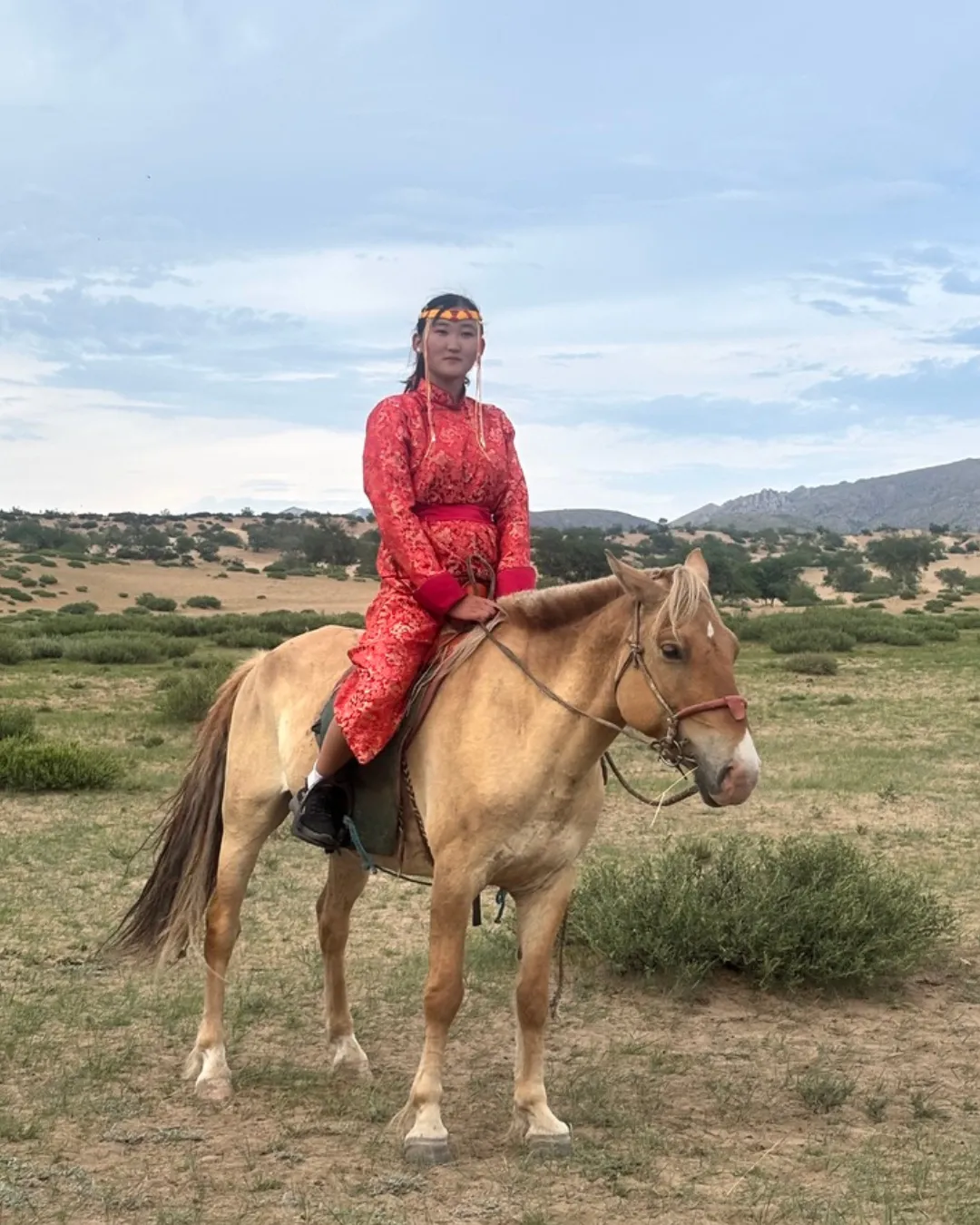
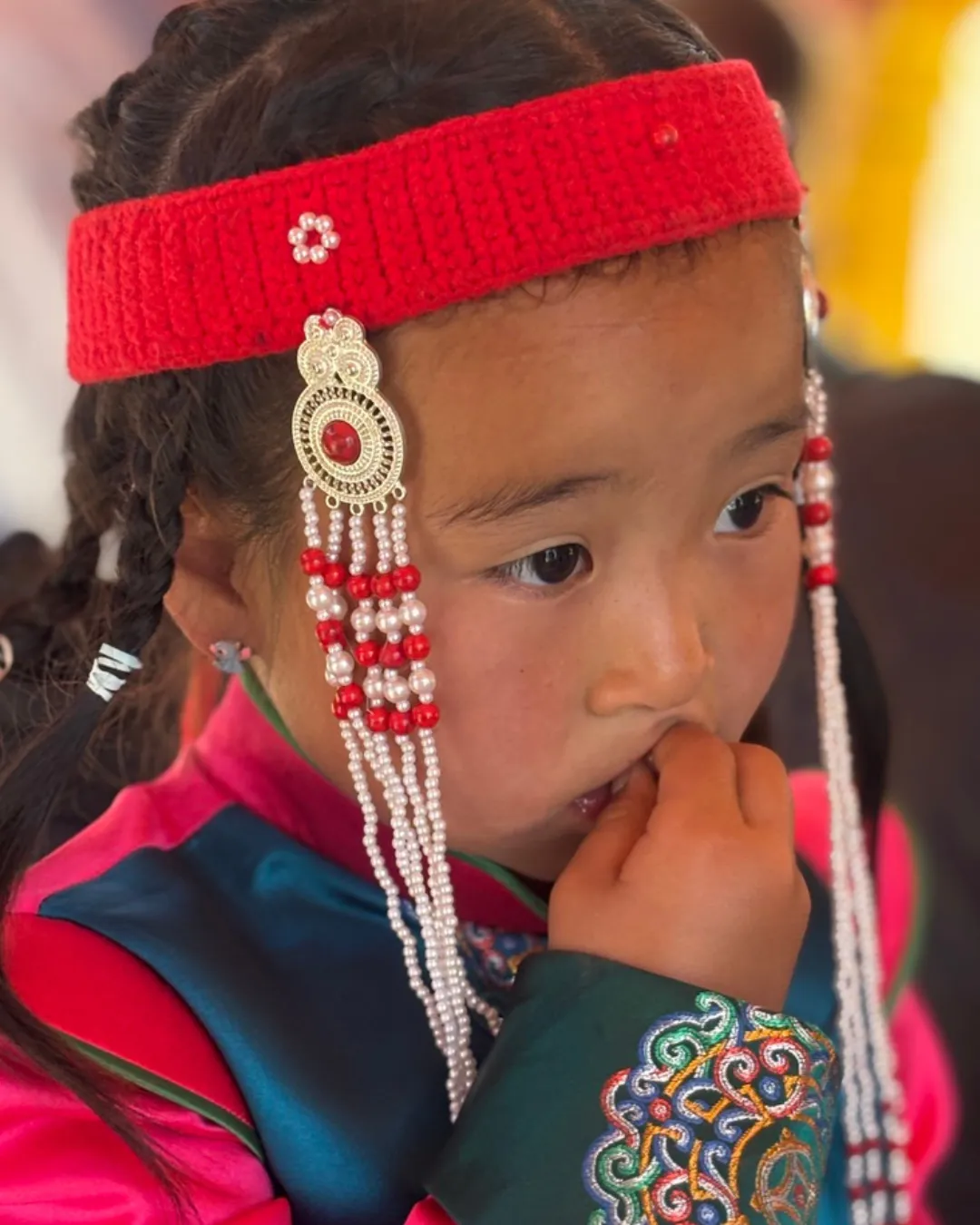
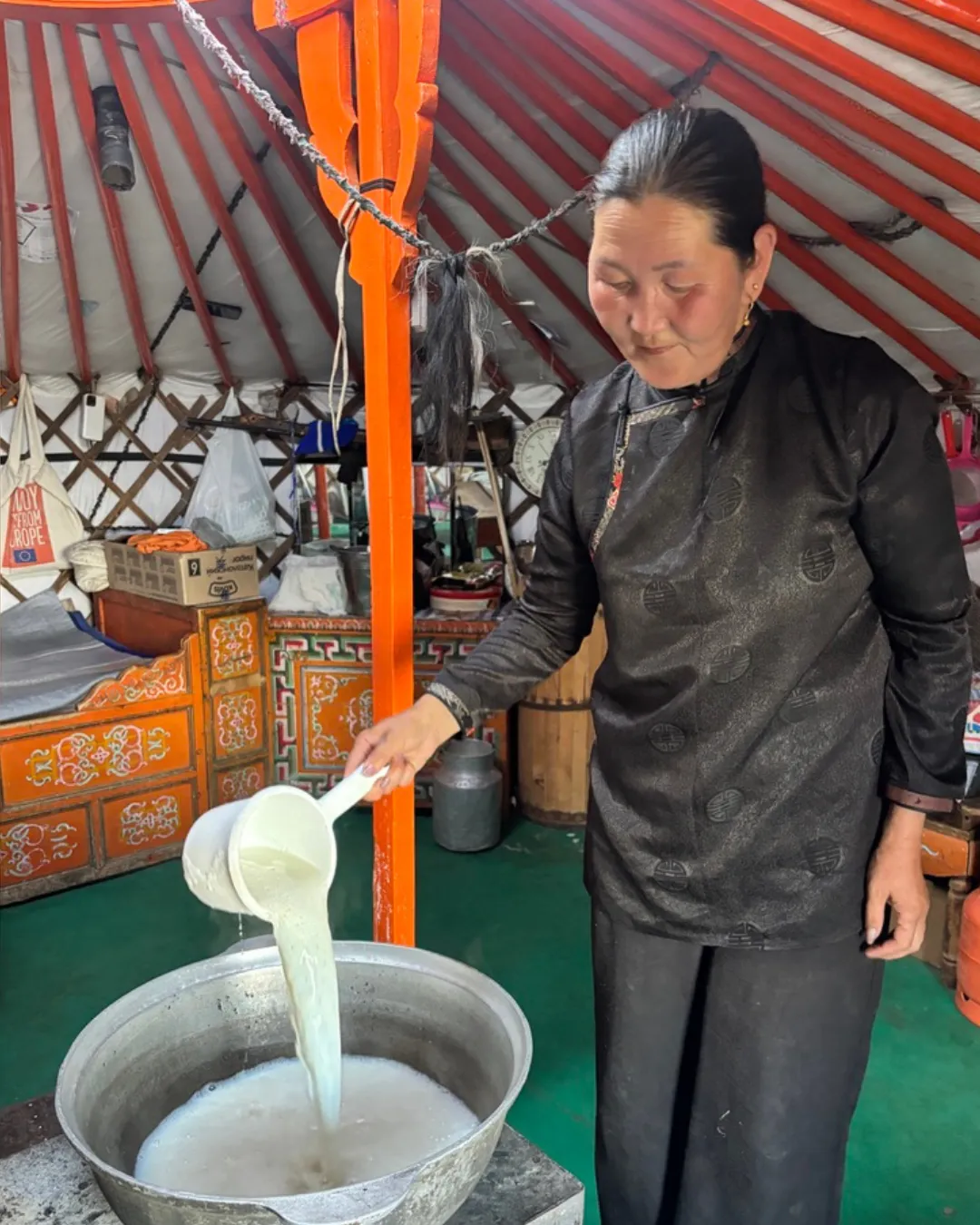
Who better understands these grasslands than the families who have lived alongside them for centuries?
Who first notices changing weather patterns?
Who recognises when rivers run lower?
Who understands which valleys recover quickest after winter?
Who knows when the animals need to move?
Long before climate reports are published, nomadic families are already adapting. Their knowledge has been built through observation over generations. It cannot simply be replaced. If these communities disappear, we risk losing far more than a remarkable culture. We lose one of humanity’s oldest living relationships with the natural world.
Beyond the Steppe
Our journey to Mandala Camps revealed many other layers of Mongolia’s extraordinary story. We celebrated Naadam, where children as young as seven race horses across 6km of steppe, wrestlers perform eagle rituals unchanged for centuries and archery remains a source of national pride. I enthusiastically attempted my own archery lesson with considerably less success and finesse.
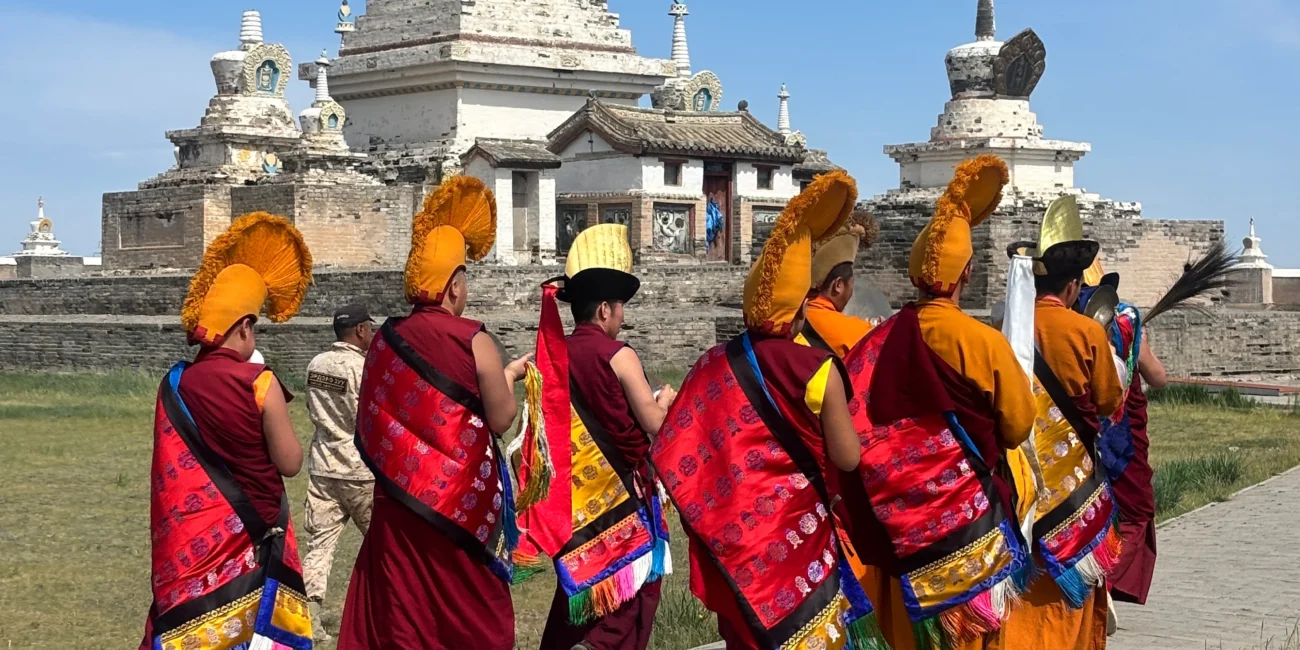
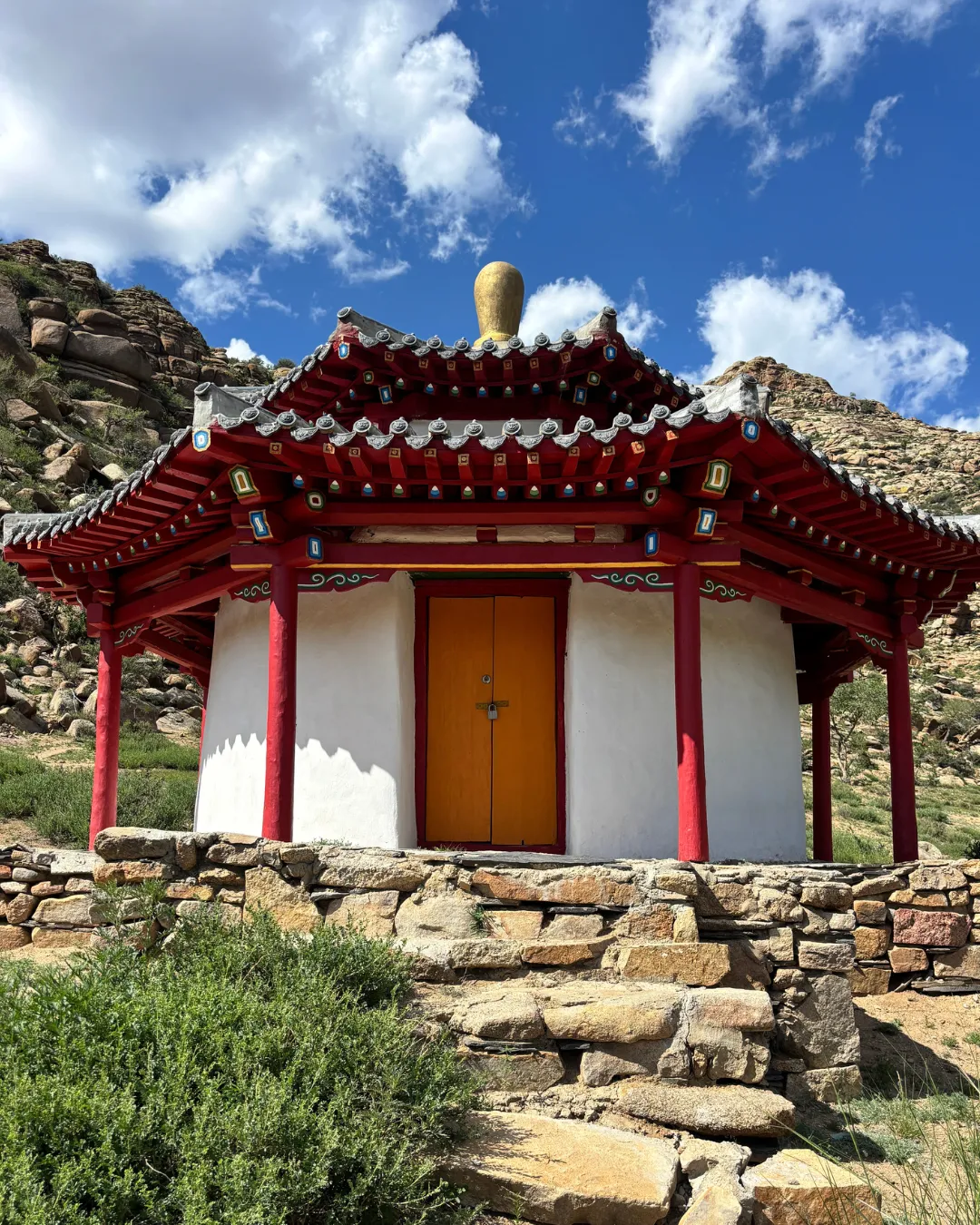
We visited remarkable artisans preserving traditional techniques while creating sustainable livelihoods for women, single mothers and families of children with disabilities. We explored hidden monastery ruins tucked within mountain valleys, walked among ancient petroglyphs and stood beside recently rediscovered dinosaur footprints that may reshape understanding of Mongolia’s prehistoric past.
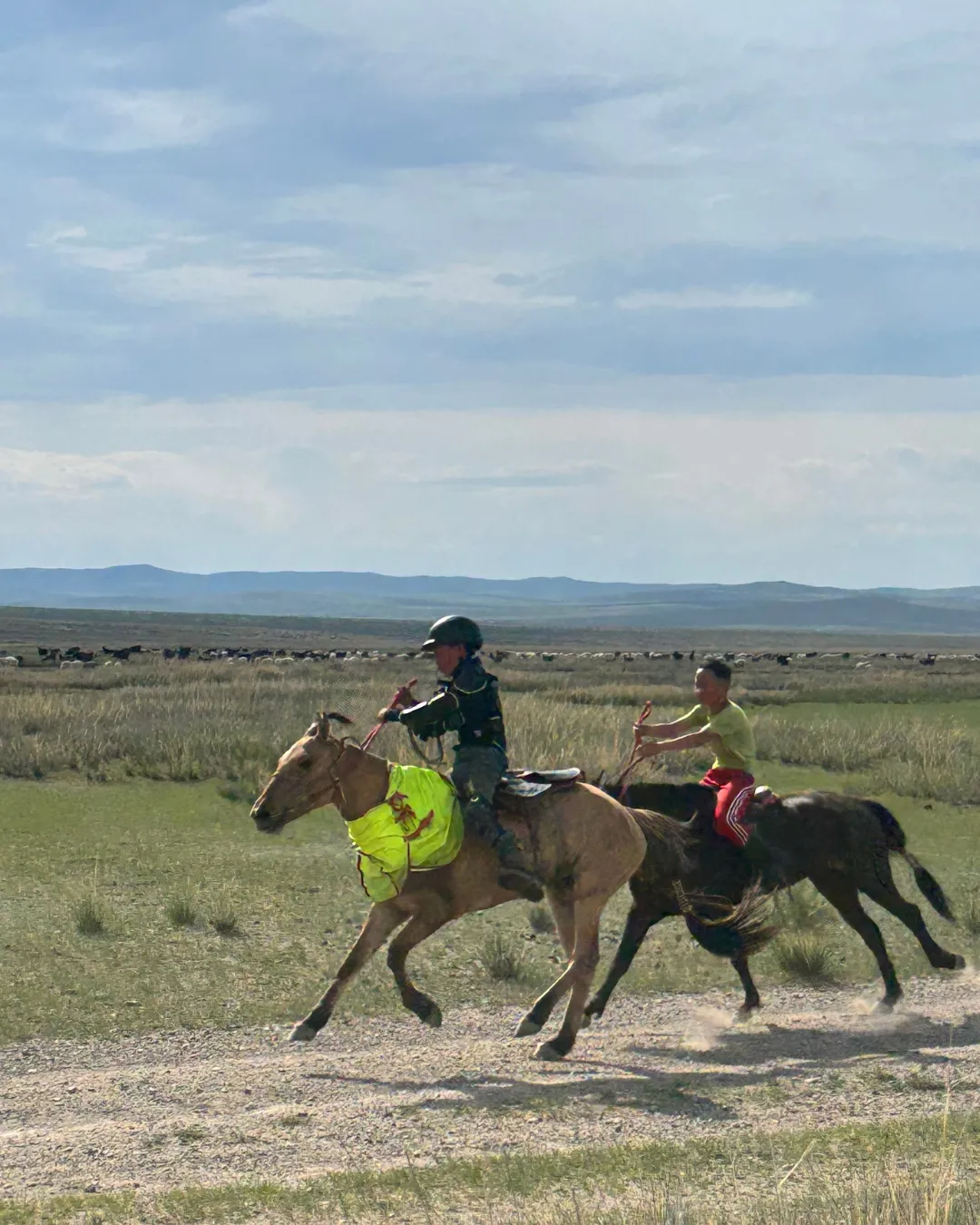
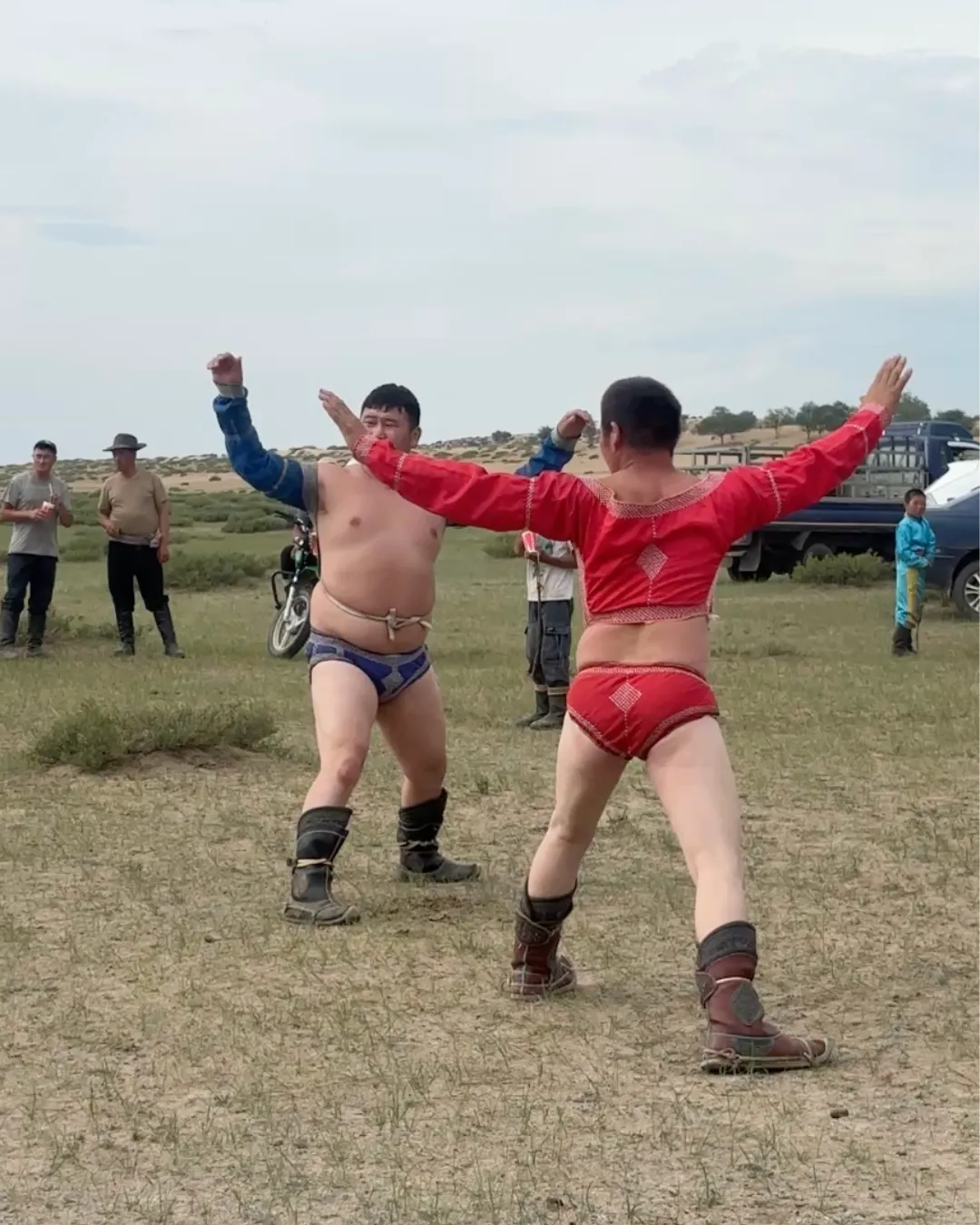
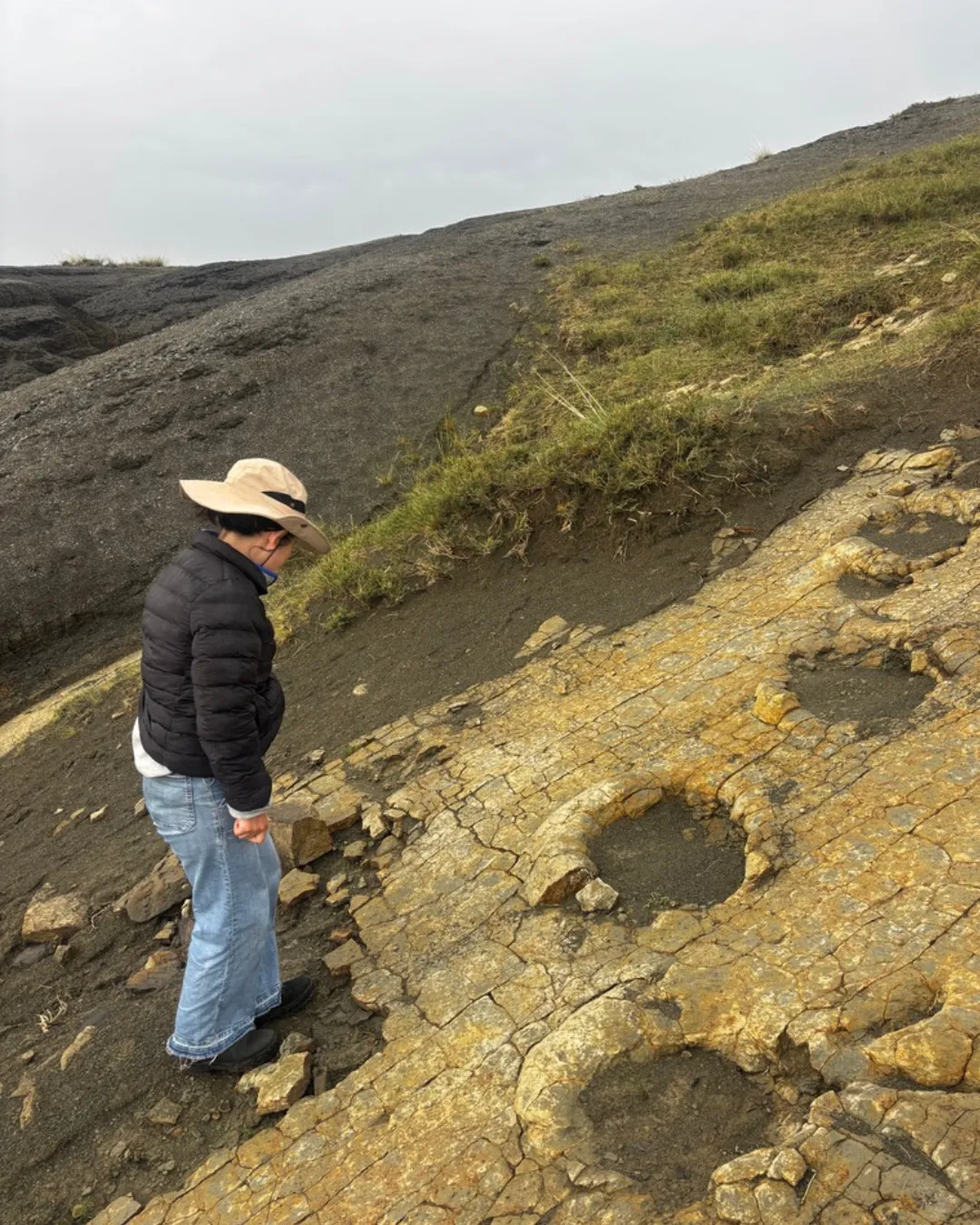
It became increasingly clear that Mongolia offers something for every kind of traveller. Families can give their children a legacy journey that teaches empathy, resilience and cultural understanding. Horse riders can accompany nomadic families as they migrate between seasonal camps, experiencing life exactly as it has unfolded for centuries. Adventure seekers can combine riding, hiking, biking, climbing, kayaking and camel trekking with remote wilderness exploration. Wildlife enthusiasts can search for Argali sheep, wolves, lynx, nesting steppe eagles and the reintroduced Przewalski’s horse alongside local rangers. Those fascinated by palaeontology can visit remarkable fossil sites and dinosaur remains. Yet whatever draws you here, it is invariably the people who leave the deepest impression.
Travel That Helps Protect the Future
Witnessing these challenges first-hand also made me question the role of tourism in this landscape. Too often, travel extracts value from the places it visits. Yet in Mongolia I saw a vastly different model emerging, one where every journey has the potential to strengthen communities, preserve traditions and protect landscapes. Mandala Camps is far more than a luxury wilderness camp; it is a thoughtfully conceived model of how tourism can become a force for conservation and community.
Every detail has been carefully considered to ensure that its impact extends well beyond the guest experience. The elegant, low-impact gers are handcrafted by Mongolian artisans using traditional techniques, furnished with locally made products and powered primarily by solar energy, while nomadic families are employed year-round as custodians and hosts, providing a vital supplementary income that helps them continue their traditional way of life. Even the soaps, slippers, furniture and textiles tell a story, each supporting local craftspeople, social enterprises or community initiatives across Mongolia.
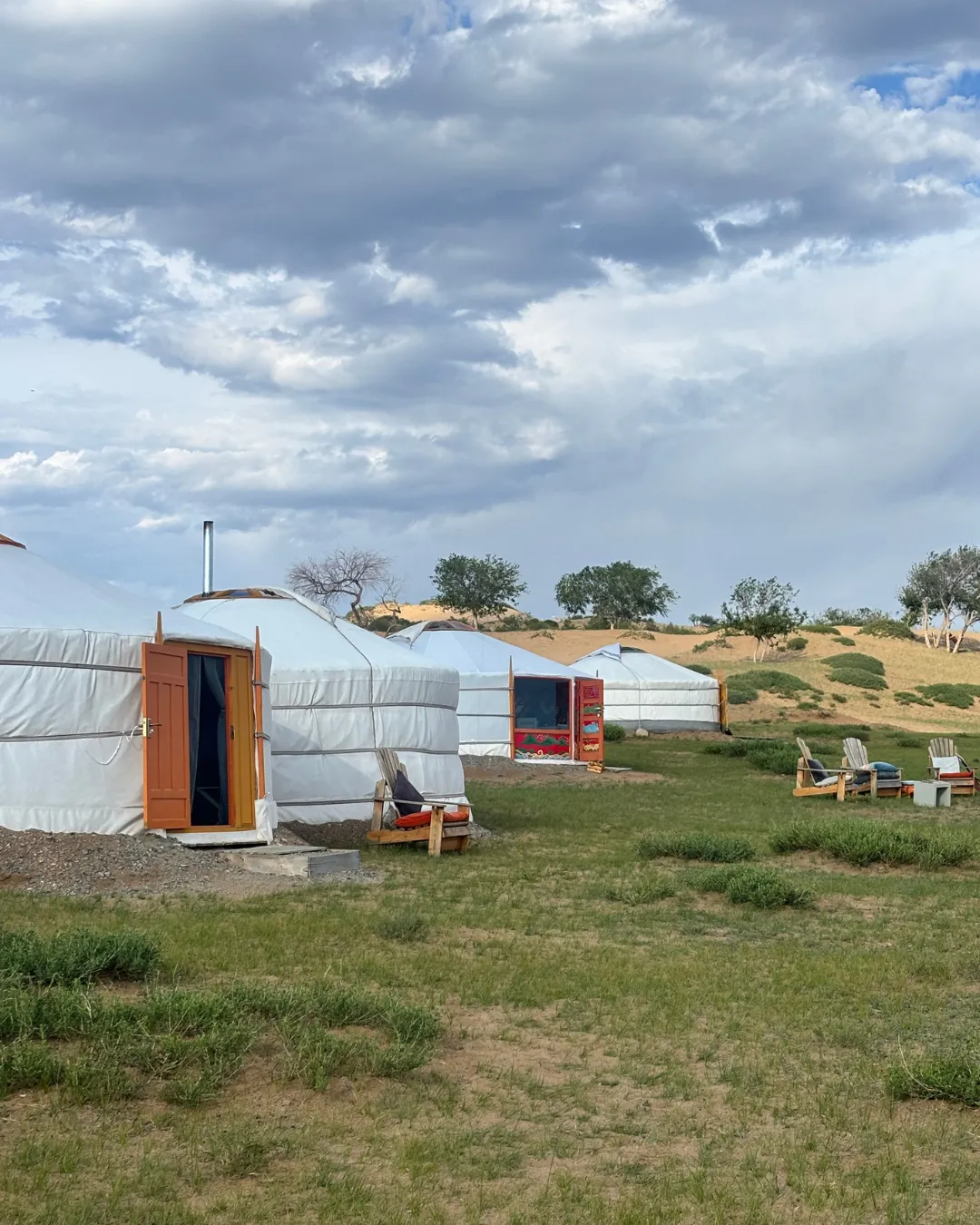

By ensuring that tourism benefits nomadic families, artisans, conservation projects and the wider rural economy, Mandala demonstrates that luxury and sustainability are not opposing ideals but partners in creating meaningful travel. It is a place where every stay leaves a positive imprint, not only on the traveller, but on the people and landscapes that make Mongolia so extraordinary. It is also ENORMOUS fun and I spent so much time laughing with all those that made up the Mandala family
Purposeful travel can become a powerful force for conservation when local people remain at its heart.
As I boarded my flight home, I realised I hadn’t travelled to Mongolia simply to experience one of the world’s last great nomadic cultures. I had travelled to meet some of its greatest teachers. Their classrooms are the grasslands. Their textbooks are the seasons. Their lessons are written in the movement of horses across the steppe, in the generosity of sharing milk tea with strangers, in the patience required to make felt by hand, and in an understanding of nature refined over hundreds of years.
The challenges facing Mongolia are real. Climate change, desertification, rapidly melting glaciers and changing lifestyles all threaten a way of life that has endured for centuries. But there is so much hope and resilience in this landscape. Across the country I met families determined to preserve their traditions, artisans passing ancient skills to children, conservationists protecting wildlife such as the highly endangered Gobi bear and snow leopard, researchers uncovering Mongolia’s remarkable history and local communities embracing tourism as a way to safeguard both culture and nature.
Perhaps the greatest lesson Mongolia offers is that the future does not always lie in discovering something new. Sometimes it lies in recognising the wisdom that has been quietly waiting for us all along. If we truly want to protect Mongolia’s vast steppe, its wildlife and its extraordinary landscapes, we must first protect the people who know them best. Because preserving Mongolia’s nomadic culture is not simply about safeguarding the past. It is about investing in the future of one of Earth’s last great wildernesses and learning, perhaps, how to care for our own landscapes a little better too.
Ready for your own intrepid expedition?
Get in touch with our team on 020 3544 8137 or connect@journeyswithpurpose.org.