There is something inherently difficult about asking people to care about what lies beneath the surface.
We can see a forest disappear. We can watch a river run dry. But much of the ocean’s decline happens out of sight, beneath a surface that can still look perfectly blue from above.
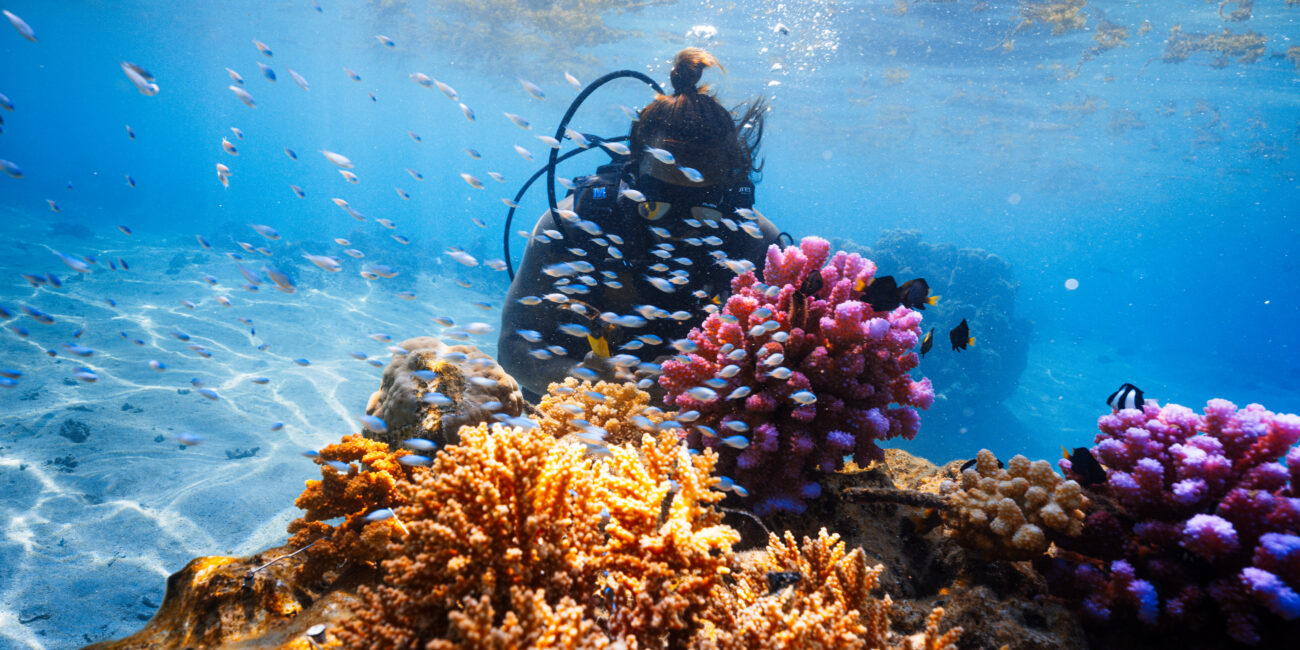
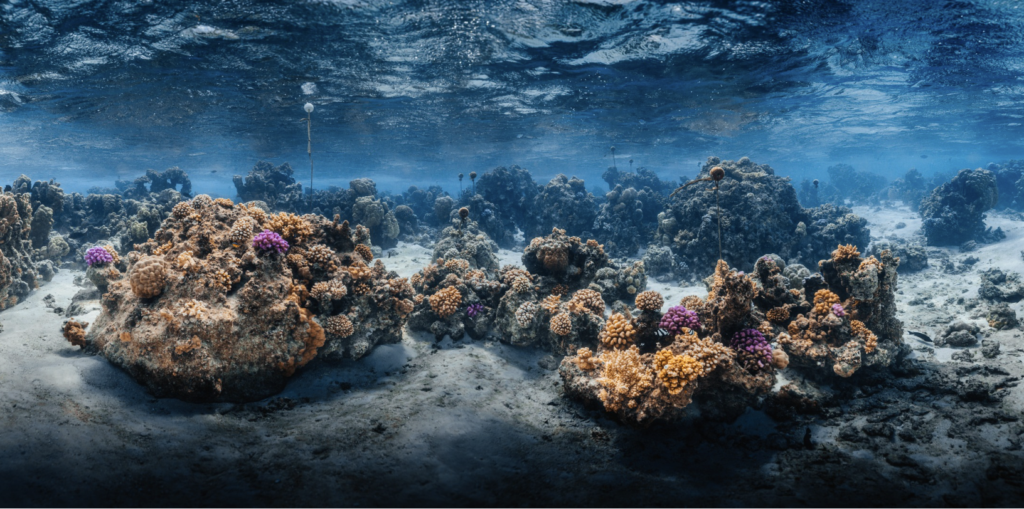
Perhaps that’s why coral reefs have such a particular power. To encounter a healthy reef is to enter a world operating at full capacity. Every structure is lived in, every corner crowded. Corals build upon older corals, life stacks upon life.
And then there is the stark opposite.
You don’t need to be a marine biologist to feel the weight of that rupture; you just have to see it once. For Titouan Bernicot, founder and CEO of Coral Gardeners, witnessing that disparity was the beginning of everything.
Growing up in French Polynesia, the reef was not somewhere he visited. It was his backyard, his playground and, in many ways, the foundation of his understanding of the world. As a child, Titouan spent his first years on a pearl farm, where his parents cultivated pearls and the lagoon became the place where he spent much of his time.
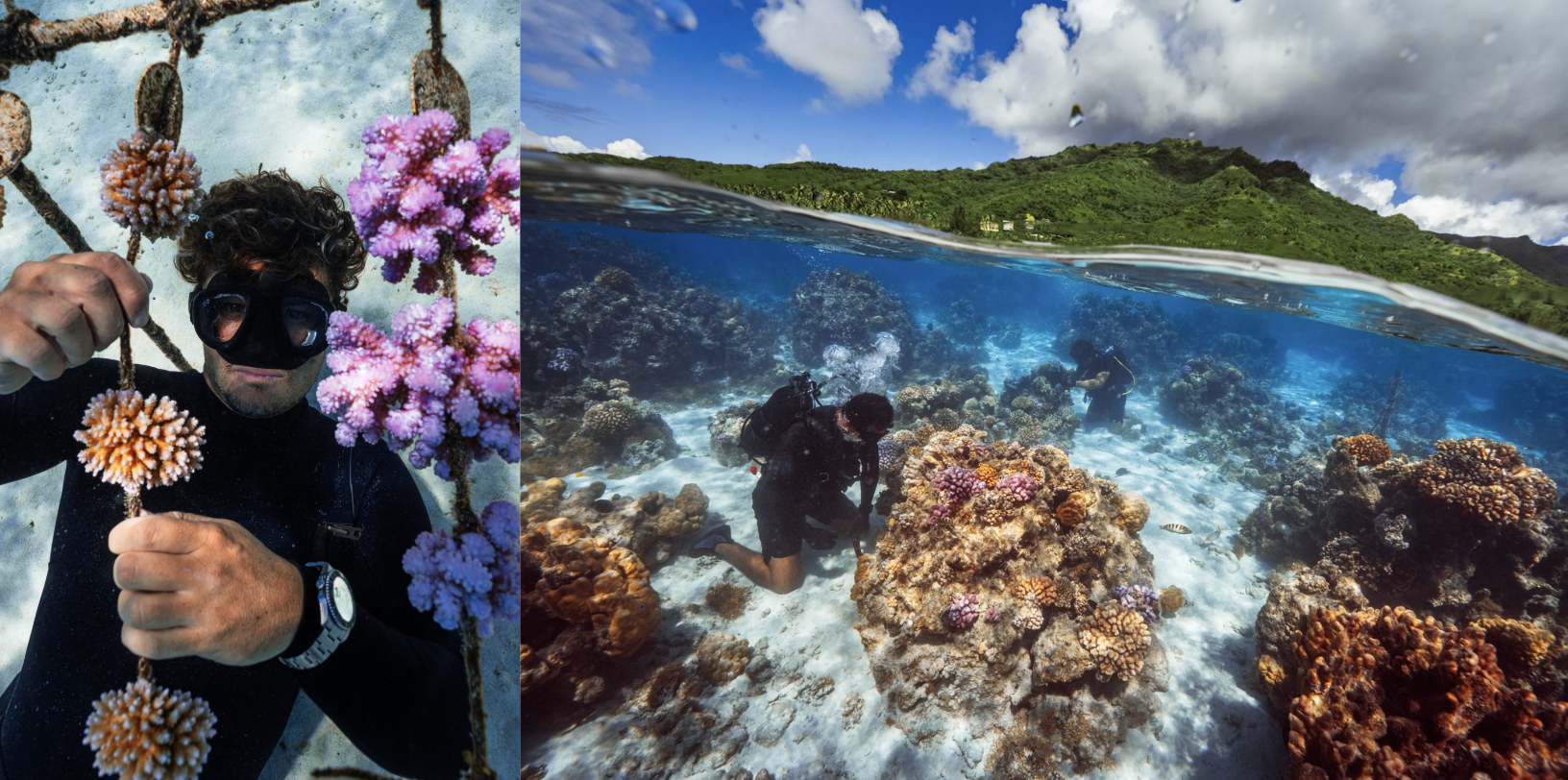
“I probably had more fish, sharks, and reef creatures for company than people on that little island,” he told me.
It’s a wonderful image, but it also helps explain why his relationship with the ocean feels so instinctive. Spearfishing for dinner, surfing with friends and free diving simply to explore were part of everyday life.
“When you grow up that close to the ocean, you start to understand nature differently,” he said. “You observe it, and you realise you’re not so separate from it.”
As Journeys With Purpose continues our focus on Oceans & Coasts, I sat down with Titouan to talk about the journey that took him from those early years in the lagoon to founding one of the world’s most recognisable reef restoration organisations, and what it might take to turn more of us from spectators into participants in the future of the ocean.
The moment everything changed
Titouan was sixteen when he first encountered coral bleaching.
He was on a surf trip when he came across a reef that felt entirely unlike the ones he had grown up with.
“Growing up, I was surrounded by vibrant reefs full of colour, fish, and marine life of all shapes and sizes swimming around me,” he said. “So when we went surfing that day and saw what felt like a ghost town underwater, the contrast really stayed with me.”
At the time, he did not fully understand what he was looking at. He did not yet know much about coral or the forces that were threatening reefs around the world.
But the impact of that encounter was undeniable. The more he began to learn, the more he understood just how much the reef had quietly given him: the food he ate, the protection of his island, the waves he surfed, and the entire ecosystem that had formed the backdrop to his childhood.
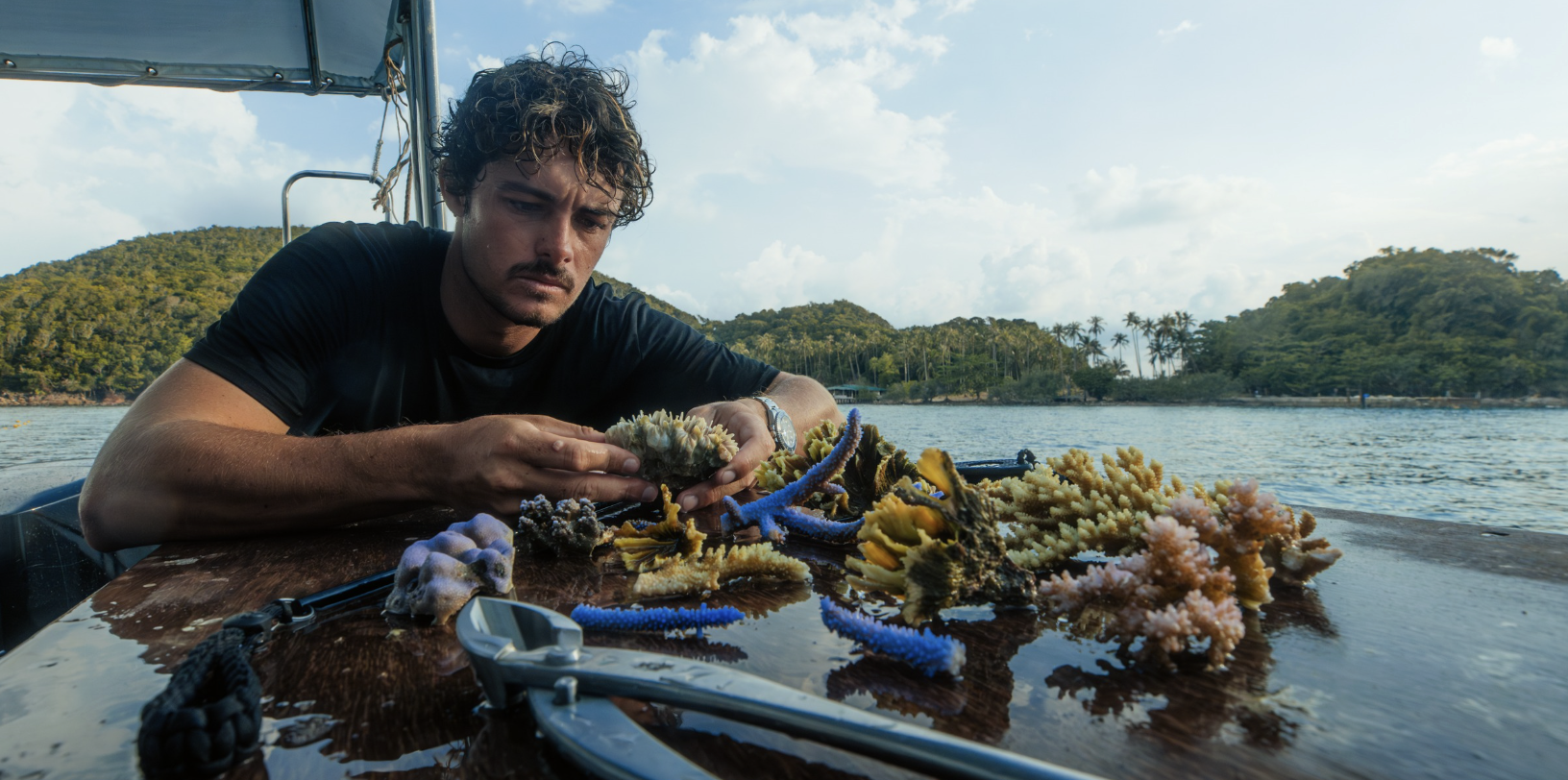
“When you grow up surrounded by something so full of life, it’s hard to imagine a world without it,” he said. “And that’s when you realise how much there is to lose.”
So he decided to do something about it.
There is no grand origin story here, no suggestion that he had all the answers from the beginning. It was just a young person seeing a place he loved changed beyond recognition and wanting to understand why.
That curiosity eventually became Coral Gardeners.
Learning to pay attention
When Titouan began, coral restoration was still a relatively fringe idea. Today, the conversation around reef restoration has moved considerably, with growing interest in the role that active restoration can play alongside wider efforts to tackle the causes of ocean decline.
Yet Titouan harbours no illusions about how much remains unknown.
“We still know very little about coral reefs,” he told me.
That might seem surprising, given how often they feature in global conversations. But the reef is still full of unanswered questions, not least around why some corals appear more resilient to changing climatic conditions than others.
“Cracking that secret is key to adapting to tomorrow’s climate,” he said. “The fact that some are resilient and adapt is also what gives me hope.”
That idea of hope came up repeatedly in our conversation, never in the vague or sentimental sense, but as something pragmatic. It is rooted in experimentation, observation and the willingness to keep learning.
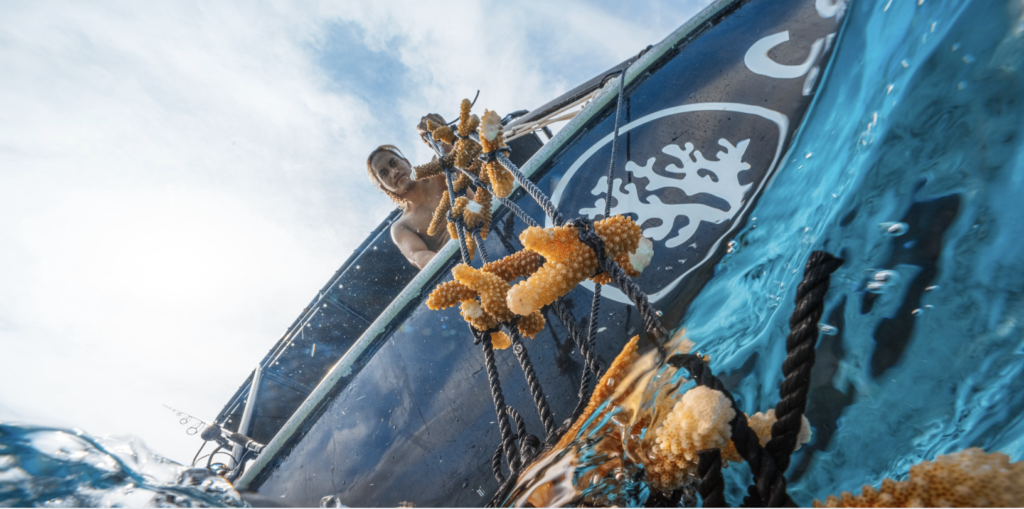
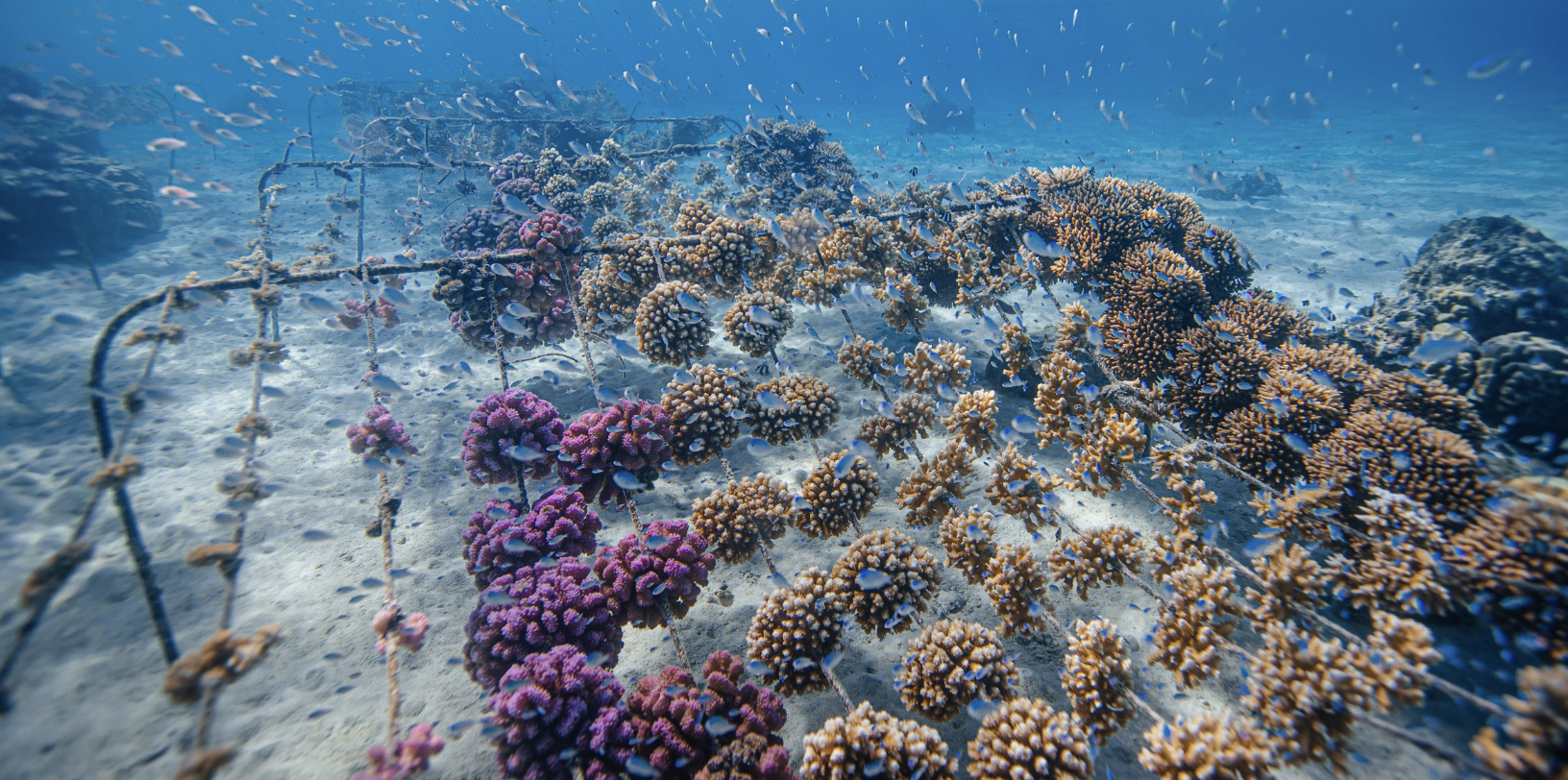
Each Coral Gardeners restoration site is, as Titouan describes it, an ongoing experiment. The team collects data, develops and refines its methods, and adapts its approach to different locations. Most importantly, he says, they are learning to “listen closely to the reef itself.” That distinction matters. Conservation can sometimes sound as though the natural world is a problem waiting to be solved by us. But Titouan’s approach suggests something more reciprocal. We bring our knowledge and technology, certainly, but we also have to pay attention to what the ecosystem is telling us.
The ocean as identity
For Titouan, this connection is also deeply cultural. Growing up in French Polynesia meant living with an awareness of how dependent island life is on the ocean. It was never an abstract environmental concept, but something woven directly into everyday life through growing food, spearfishing, surfing, and sharing what was caught.
“Having that reciprocal relationship with the environment around you is a huge part of the culture here,” he told me.
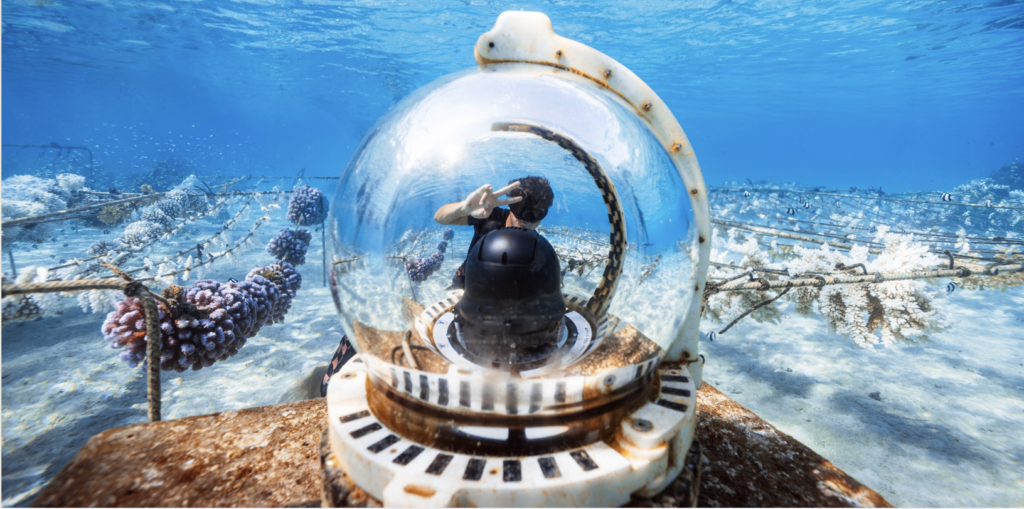
That word, reciprocal, feels particularly important. The ocean gives, but the relationship cannot move in only one direction. That balance is the core philosophy behind the idea of gardening itself, where we care for and give back to the very ecosystem that sustains us.
And perhaps there is a lesson in that which extends far beyond French Polynesia.
“We’re all connected to nature, no matter what part of the world, background, or culture we’re from,” he said. “We all breathe the same air, and most of it comes from the ocean.”
The reef may feel distant to someone sitting in London, New York or Paris. But distance is not the same as disconnection.
Making conservation something people want to be part of
One of the things that makes Coral Gardeners particularly interesting is the way it has approached storytelling. Conservation has not always been very good at inviting people in. It can be technical, daunting and, at times, overwhelmingly bleak. The scale of the problem can leave people feeling that there is little meaningful role for them to play.
Coral Gardeners took a different approach. From the beginning, Titouan and his team were intentional about how the organisation would look and feel.
“We’ve placed a lot of emphasis on it, not for the aesthetic itself, but because it gets people invested in the movement,” he said.
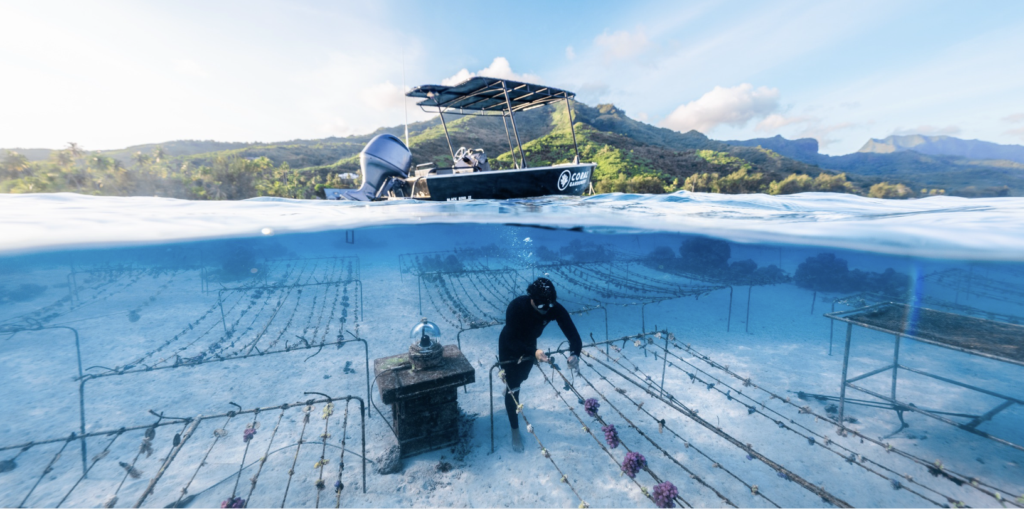
Their ambition was to move away from the traditional visual language of conservation and make the work feel accessible, relevant and something people actively wanted to be part of.
“We wanted to do something different from the traditional NGO approach and rebrand conservation to make it accessible, cool, and sexy.“
It is a deliberately provocative choice of words, but the point behind it is serious.
If storytelling can bring more people into the conversation, then it can also create more support for the work happening in the field. And if conservation is to grow into a genuine movement rather than remain the domain of a relatively small number of experts and organisations, it has to find ways of connecting with people emotionally as well as intellectually.
The aesthetic isn’t the point. Participation is.
From spectators to coral gardeners
That desire to make participation possible runs through everything Coral Gardeners is building.
Technology has played an important role in allowing the organisation to scale its work. Through CG Labs, the team has developed ReefOS, a suite of restoration tools designed to make monitoring faster and more accessible.
One of those tools, ReefApp, allows coral gardeners to capture data underwater using an iPhone, with the information feeding directly into a shared dashboard rather than being recorded manually.
The technology can also be used to create detailed 3D models of reefs from underwater photographs and has been translated into different languages to support the training of new gardeners in different locations.
The implications go beyond efficiency. These tools, Titouan explained, are helping to democratise the field and standardise methodologies across Coral Gardeners’ growing network. Or, as he puts it, they can “teach anyone to become a coral gardener within weeks.”
There is something quietly radical about that.
For so long, environmental action has been framed as something we can support from a distance. Donate here. Sign there. Share a post. Those things have their place, of course. But Titouan is interested in taking people one step further.
“Getting more people to experience the ocean and the reef is something I really believe in,” he said. “By giving people the chance to experience it firsthand, right in the garden, it creates an emotional connection so people want to protect it and be part of the solution.”
The experience he is describing is not simply about seeing a reef, it’s about caring for one.
“There’s no better feeling than being in the garden and caring for the corals,” he told me. “For me, the best feeling in the world.”
A relationship worth tending
This is where Titouan’s vision feels particularly aligned with how we think about travel at Journeys With Purpose.
Travel can be passive. We arrive, we look, we leave.
But at its best, it can create a relationship with a place that stays with us long after we return home. It can make something previously abstract feel immediate. It can introduce us to the people doing the work and give us a clearer understanding of what is at stake.
Coral Gardeners already offers visitors the opportunity to snorkel around its gardens and take part in the restoration process, with ambitions to make this kind of participation possible for more people.
For Titouan, that interest is already there.
“So many people from around the world are reaching out to us because they want to help,” he said. “And we want to give everyone the power to revive the ocean.”
That is perhaps the most compelling idea to emerge from our conversation. Not that every traveller should become a marine biologist. Not that one afternoon in a coral garden will solve the climate crisis. But that the distance between caring about something and doing something about it does not have to be quite so great.
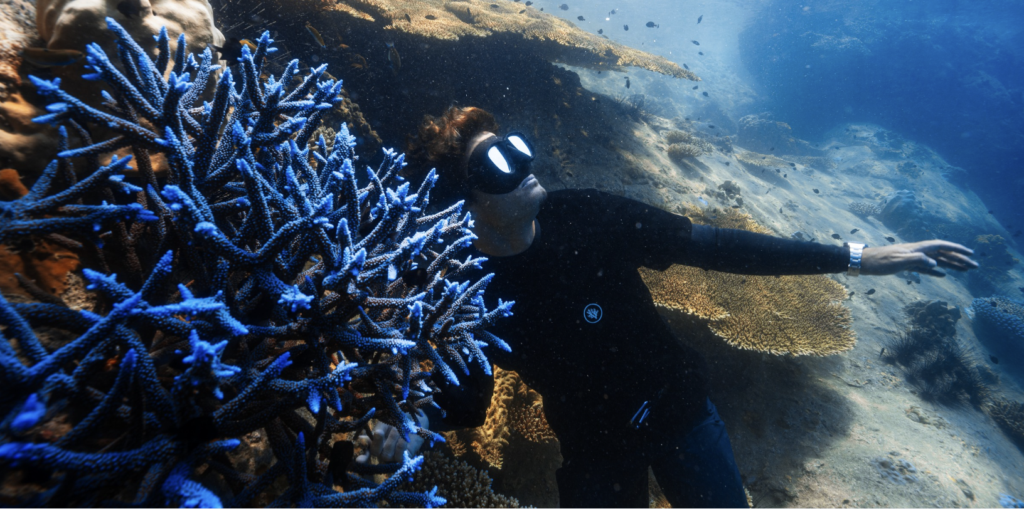
From home, Titouan points to several ways people can become involved. Adopting a coral and following its journey. Visiting one of Coral Gardeners’ branches and experiencing the work firsthand. Sharing the story so that more people understand why reefs matter.
Individually, these may seem like small acts. Collectively, they begin to look like something else. A movement built not around guilt or even fear, but around connection.
Coral Gardeners’ ambition was never just about restoring individual reefs. It was about changing how we see the ocean, not as a distant expanse, but as a relationship worth tending. Titouan grew up with the reef as his backyard, but he knows that most of us will never have that experience. Perhaps that’s the ultimate point of his work, to bring people closer. Close enough to understand what’s there. Close enough to see what’s being lost. And, crucially, close enough to realise that the future of the ocean isn’t someone else’s responsibility.
It belongs to all of us.