‘Amazônia, sua linda’ (Amazônia, you beauty) were the words in Dom Phillips’ final social media post on 30 May 2022. Words of joy for his continuing and indelible love of a place he cherished and its resident Indigenous communities.
He was on his way to the Javari Valley, an immense primordial wilderness and one of the last remaining on Earth in the far West of the Brazilian Amazon near the Peruvian border, to research a story about environmental crimes and the threat they posed to the ecosystems, wildlife and Indigenous peoples.
Less than a week later on 5 June 2022, together with his mentor and friend Bruno Pereira, he was murdered. Shortly afterwards, Amarildo da Costa da Oliveira was arrested and confessed to the shooting and killing.
Why? Dom and Bruno had received many death threats for helping to protect the Indigenous peoples from illegal drug traffickers, wildcat miners ( ‘garimpeiros’ ), loggers, hunters and cattle ranchers clearing forest land, all of which ultimately profited from extracting resources from the Amazon. At least 44 environmental journalists have been murdered in the last 15 years, with attacks doubling between 2019 and 2023.
Roughly two journalists are killed annually for covering topics like illegal mining and deforestation. These murders often occur in extremely remote areas, with nearly 90% impunity from prosecution and conviction. The stakes on both sides are very high – to protect a world and its critical life systems with all your heart and spirit versus the gain of financial wealth for a few, mainly for the orchestrators. I understand why environmental journalists risk such jeopardy.
Dom had been working on a book, provisionally titled ‘How to Save the Amazon: Ask the People Who Know’ , and much of it had been written in draft notes. His and Bruno’s murder caused a national and international outcry, the effects of which continue to this day. Following their deaths, a group of determined writers took up his partially completed manuscript and committed to his mission of uncovering the truth about deforestation and searching for solutions. The outcome of this is ‘How to Save the Amazon’ , a dazzling account and must read of how we can all fight ecological destruction and stand in solidarity with the Earth’s environmental defenders.
This was a substantial inspiration for me to visit Amazon and experience its wonders and challenges first hand.
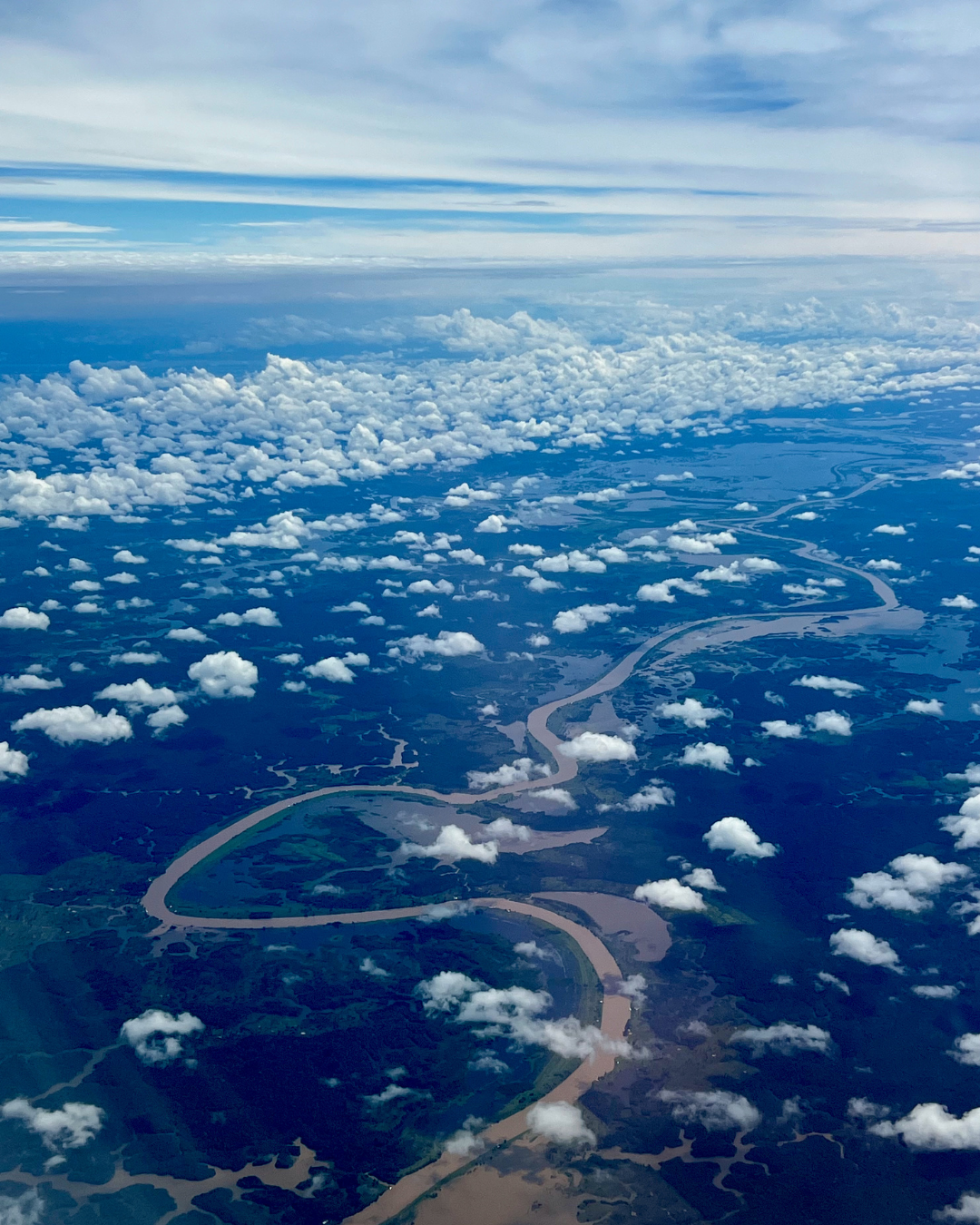
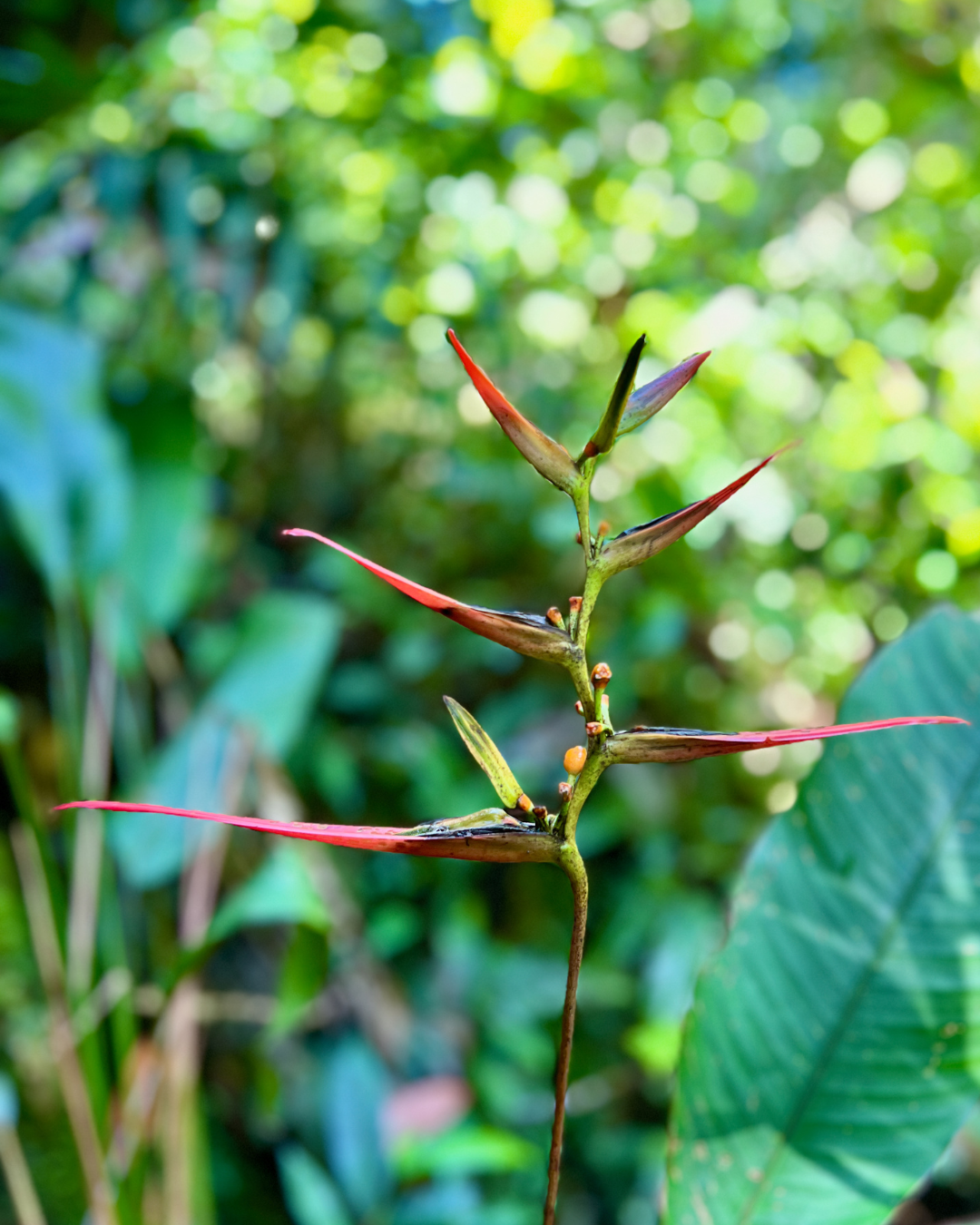
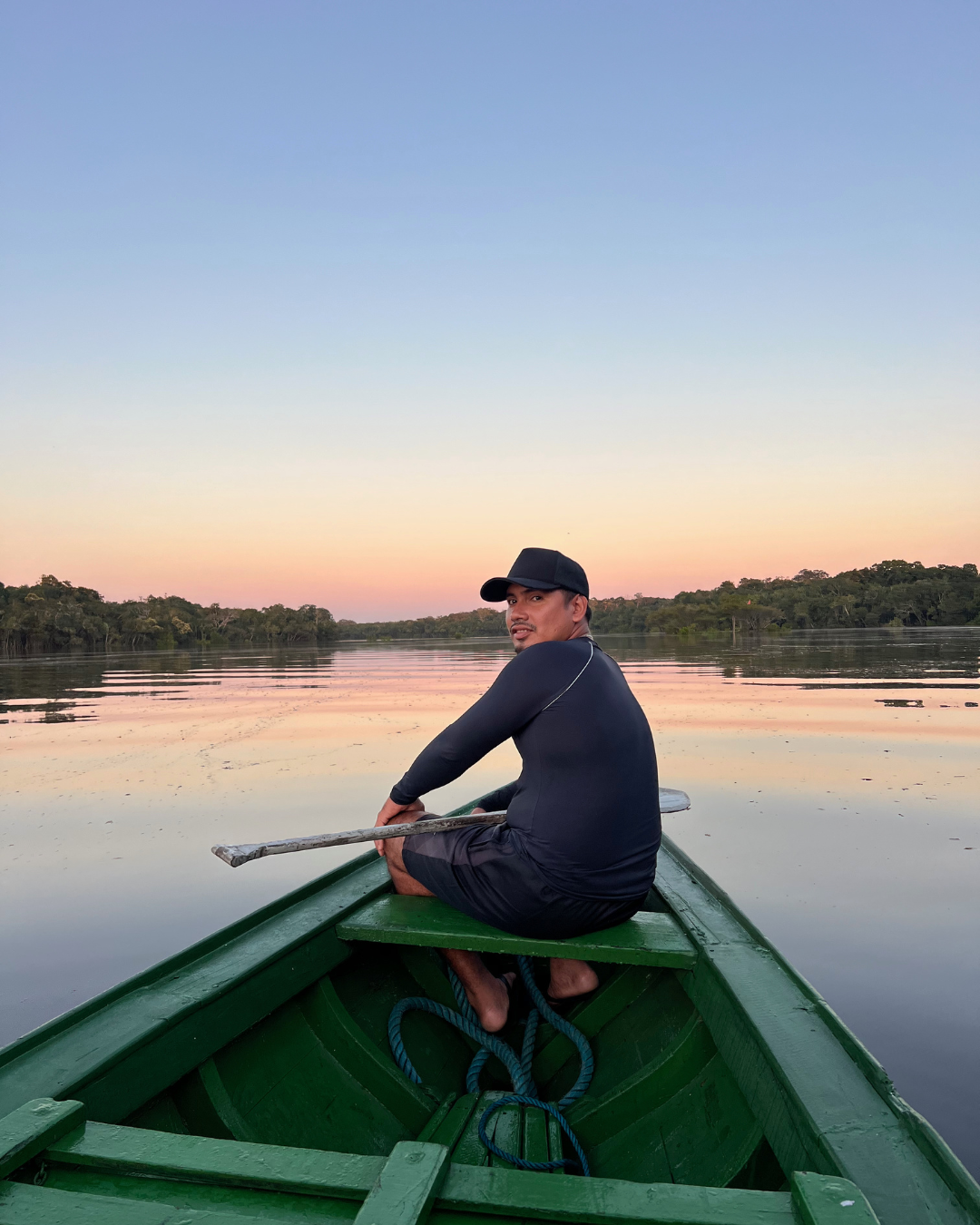
I arrived in Manaus, the ‘Paris of the Tropics’ as it became known in the late 19th Century, towards the end of March 2026. Manaus, on the banks of the Rio Negro in northwestern Brazil, is the capital of the vast state of Amazonas. It’s a major departure point for the surrounding Amazon Rainforest. Just east of the city, the dark Rio Negro converges with the brown, muddy Rio Solimões resulting in a striking visual phenomenon called the ‘Meeting of the Waters’. The combined tributaries form the Amazon River.
I stayed in the heart of the old city, just across the road from a building I consider part real, part legend – the Teatro Amazonas (Amazon Theatre), a majestic opera house that dominates the city’s main square. Testament to the wealth of Manaus at the height of its rubber boom, the theatre replicated European cultural taste in the heart of the tropical rainforest. More information is here – The beautiful theatre in the heart of the Amazon rainforest. I was fortunate enough to join a performance one evening, a wonderful and moving experience.
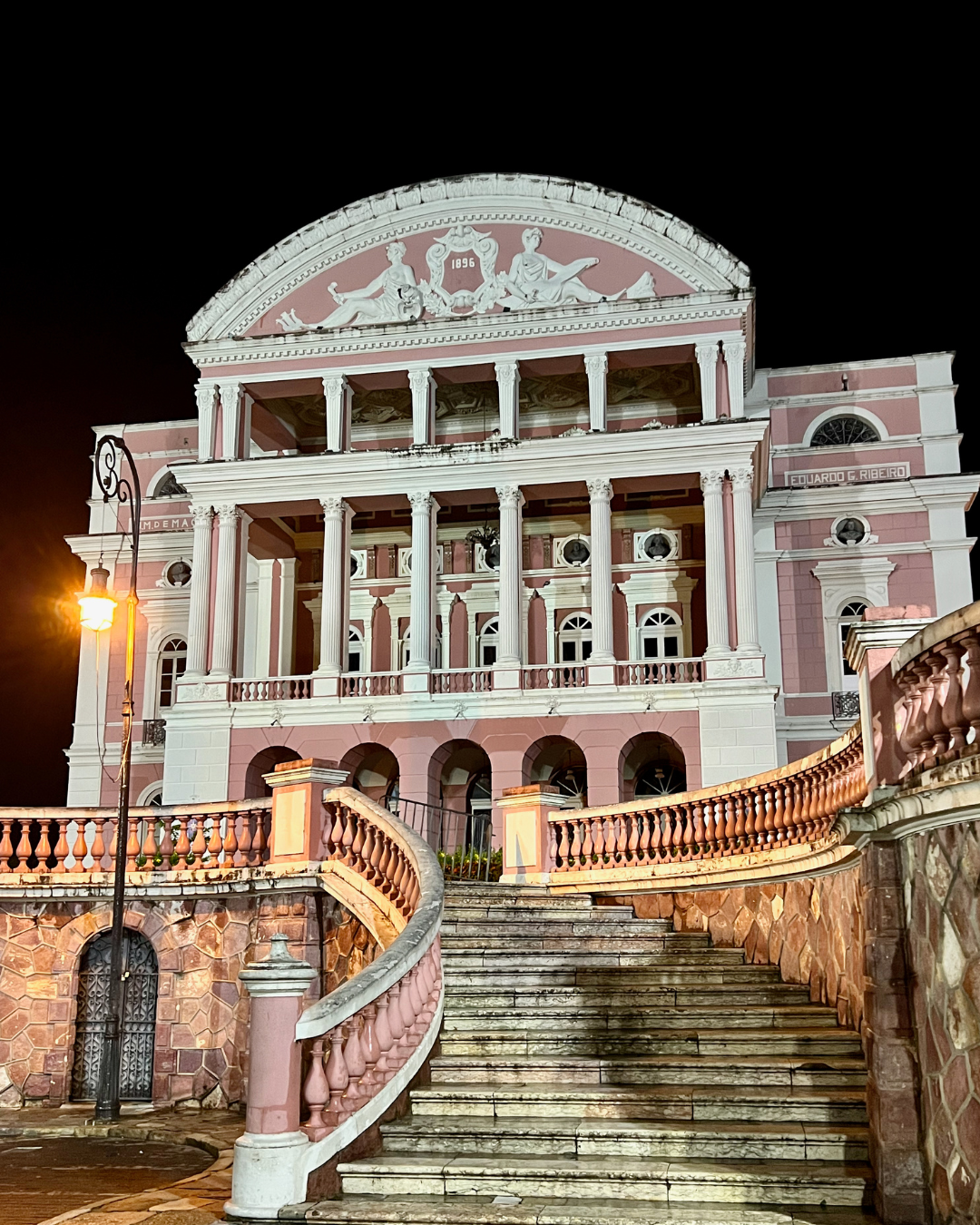
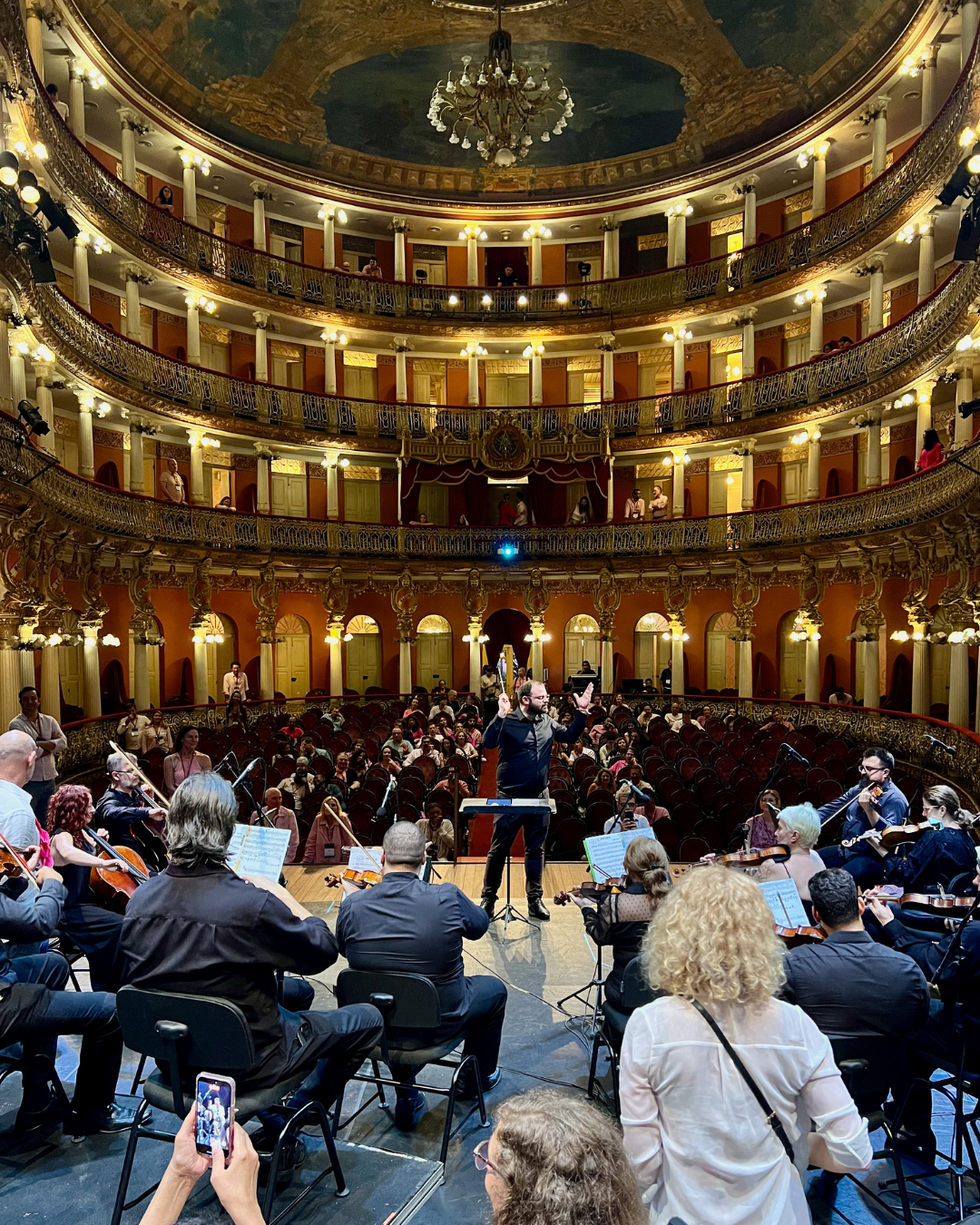
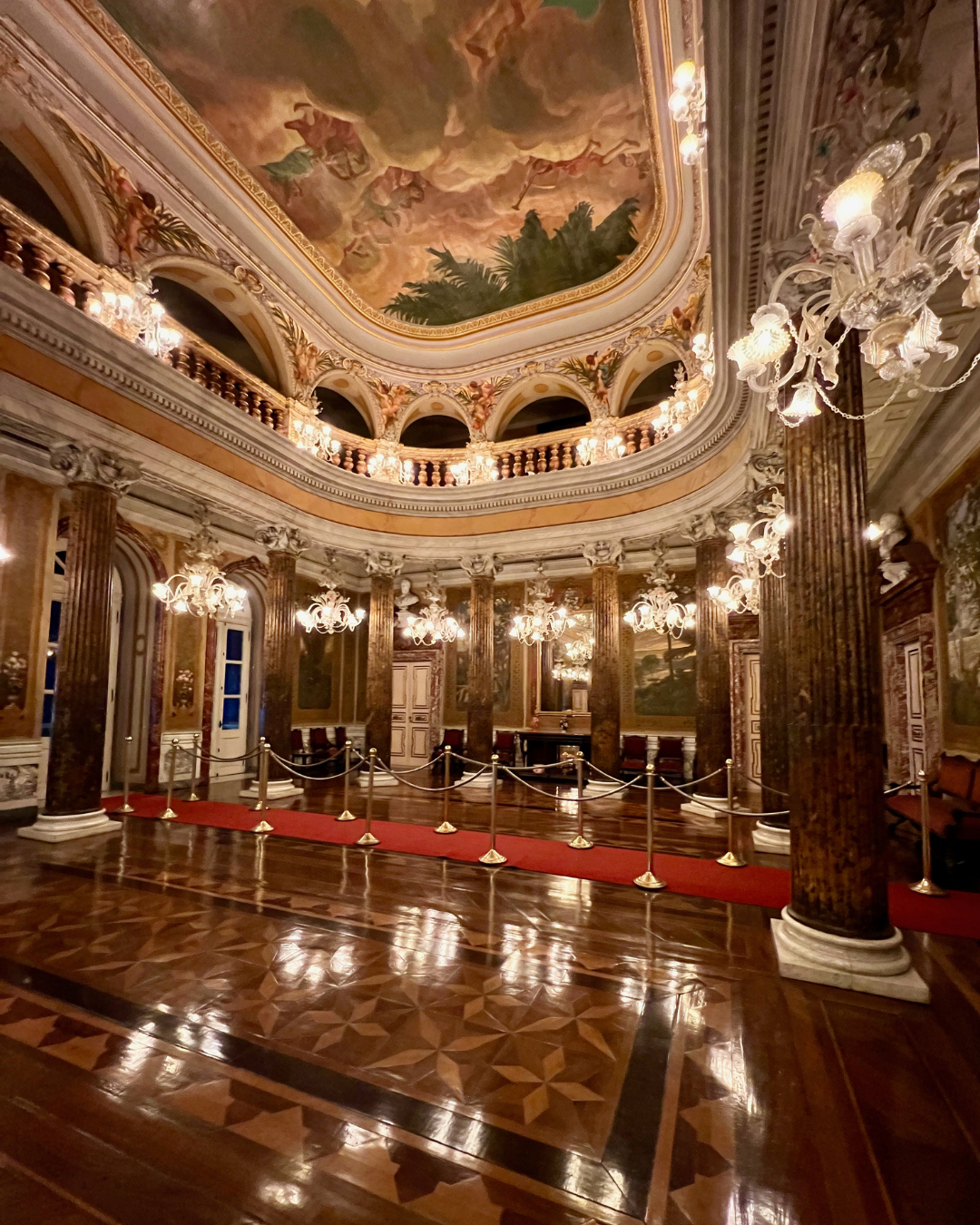
As I grew up I enjoyed enormously film and its power of storytelling, and part of this was becoming completely absorbed by the films of Werner Herzog, of which perhaps the most famous is Fitzcarraldo , inspired by the true story of Carlos Fermín Fitzcarrald, a 19th Century Peruvian rubber baron who navigated a steamship from one Amazonian river to another by disassembling it over an isthmus. Herzog elevated this story, creating a ‘fever dream’ of an obsessed opera fan, played by Klaus Kinski, attempting to drag a 320-ton steamer intact over a mountain to build an opera house in the jungle… A masterpiece, described by Brad Pitt as ‘one of my all time favourites’.
Possibly even greater than the film itself is Burden of Dreams , the story of Fitzcarraldo’s filming, widely regarded as one of the greatest ‘making-of’ documentaries ever made. It’s more than behind-the-scenes footage – it’s a portrait of artistic obsession and the cost of visionary filmmaking, blurring the lines between genius and insanity, particularly with the volatile, explosive, and abusive Klaus Kinski. When shooting was nearly complete, the chief of the Machiguenga tribe, whose members were used extensively as extras, asked Herzog if they should kill Kinski for him; Herzog declined. Compelling.
“If I abandoned this project I would be a man without dreams. And I don’t want to live like that”
Werner Herzog, ‘Burden of Dreams’
However, the real journey was about to begin. Together with a wonderful group of fellow explorers we drove to Novo Airão located on the Rio Negro about 180 km upstream of Manaus. From here we embarked on our boat to begin our journey – Amazônia: In the Footsteps of Sebastião Salgado .
Very few people have truly shaped my life. Sebastião Salgado is one , and it is his work, above all, that inspired me to undertake this journey. I clearly remember his photographs being published in 1986 of Serra Pelada, depicting endless numbers of mine workers distributed on various parts of a tall gold mining cliff. Later in life, for six years Sebastião Salgado traveled the Brazilian Amazon and photographed the unparalleled beauty of this extraordinary region: the rainforest, the rivers, the mountains, the people who live there – this irreplaceable treasure of humanity in which the immense power of nature is felt like nowhere else on earth – creating his book Amazônia. “For me, it is the last frontier, a mysterious universe of its own, where the immense power of nature can be felt like nowhere else on Earth” he says. Together with his other environmental masterpiece, Genesis, they are love letters to Earth, featuring a monumental portfolio of nature, animals, and Indigenous peoples that reveal the earth in all the precious splendor of its pristine state, replete with stunning panoramas as much as the most intricate textures and details of our natural world.
This is the world we sought.
From Novo Airão we boarded our vessel, the Donrinha, and began our journey further upstream. A boat is more than transport; it is a moving vantage point into the Amazon’s vibrant biodiversity, local culture and ever-changing natural world. Navigating quiet tributaries, observing wildlife at dawn and dusk, and anchoring beneath vast skies, this experience transforms river travel into a deeply resonant chapter of an Amazon expedition.
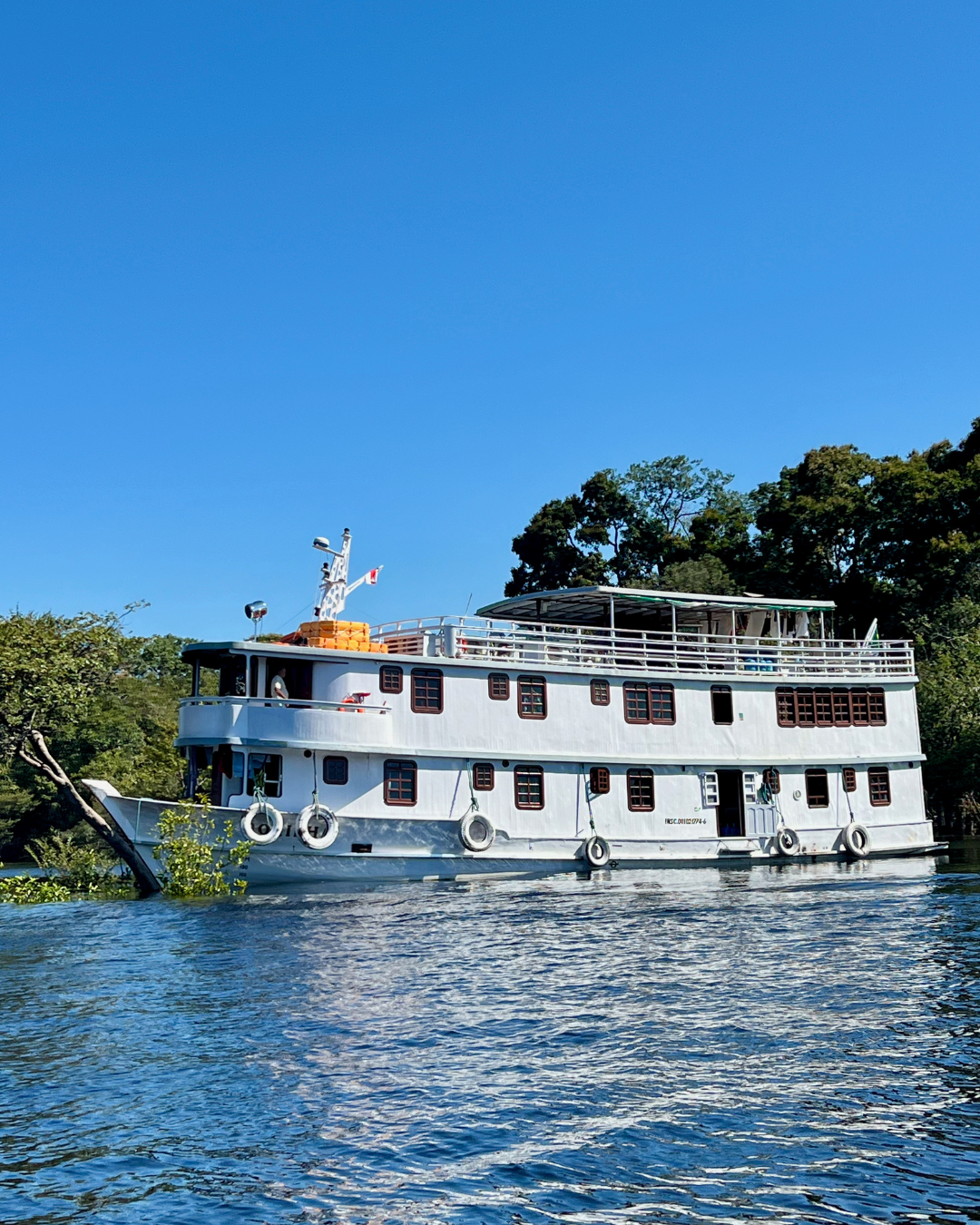
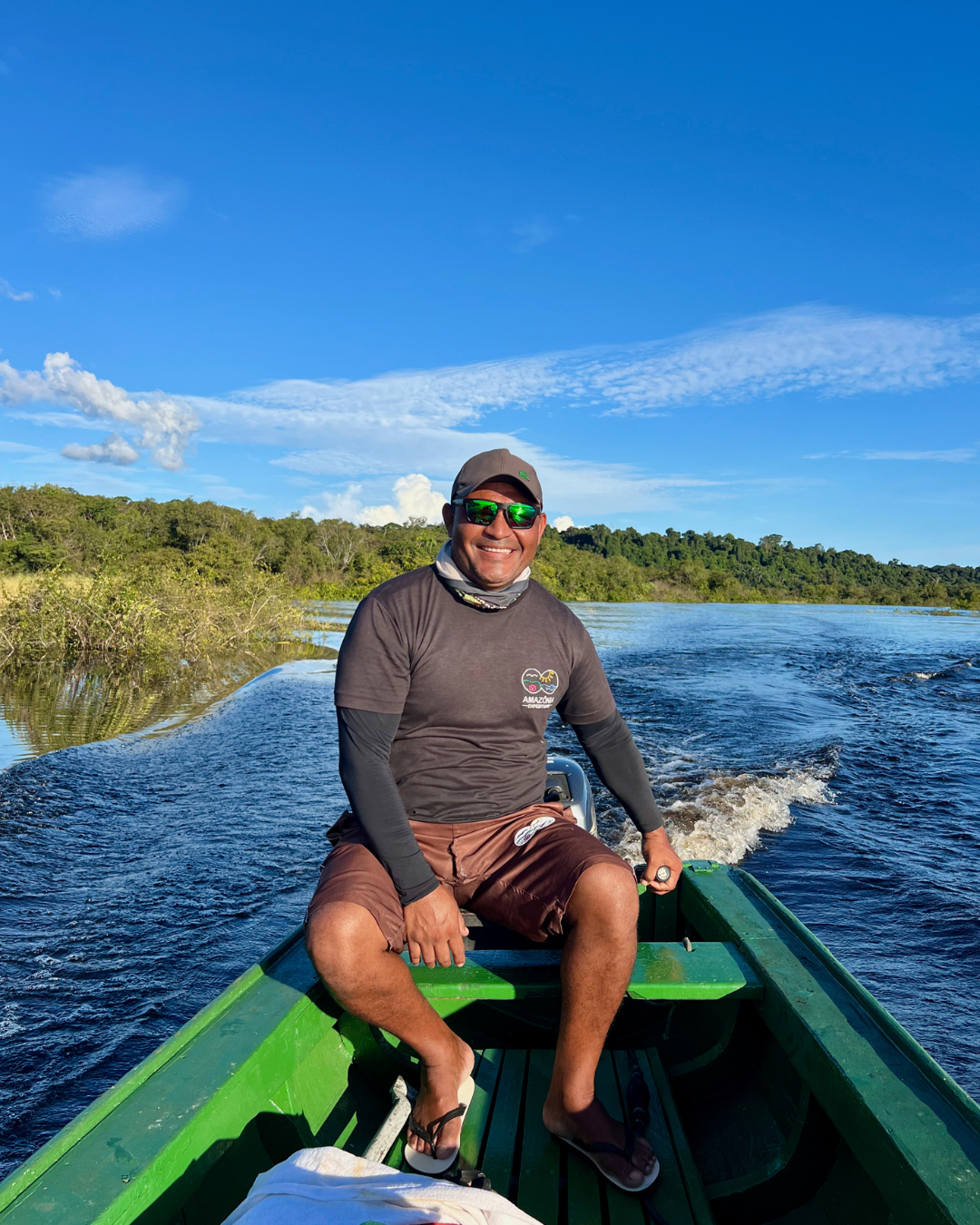
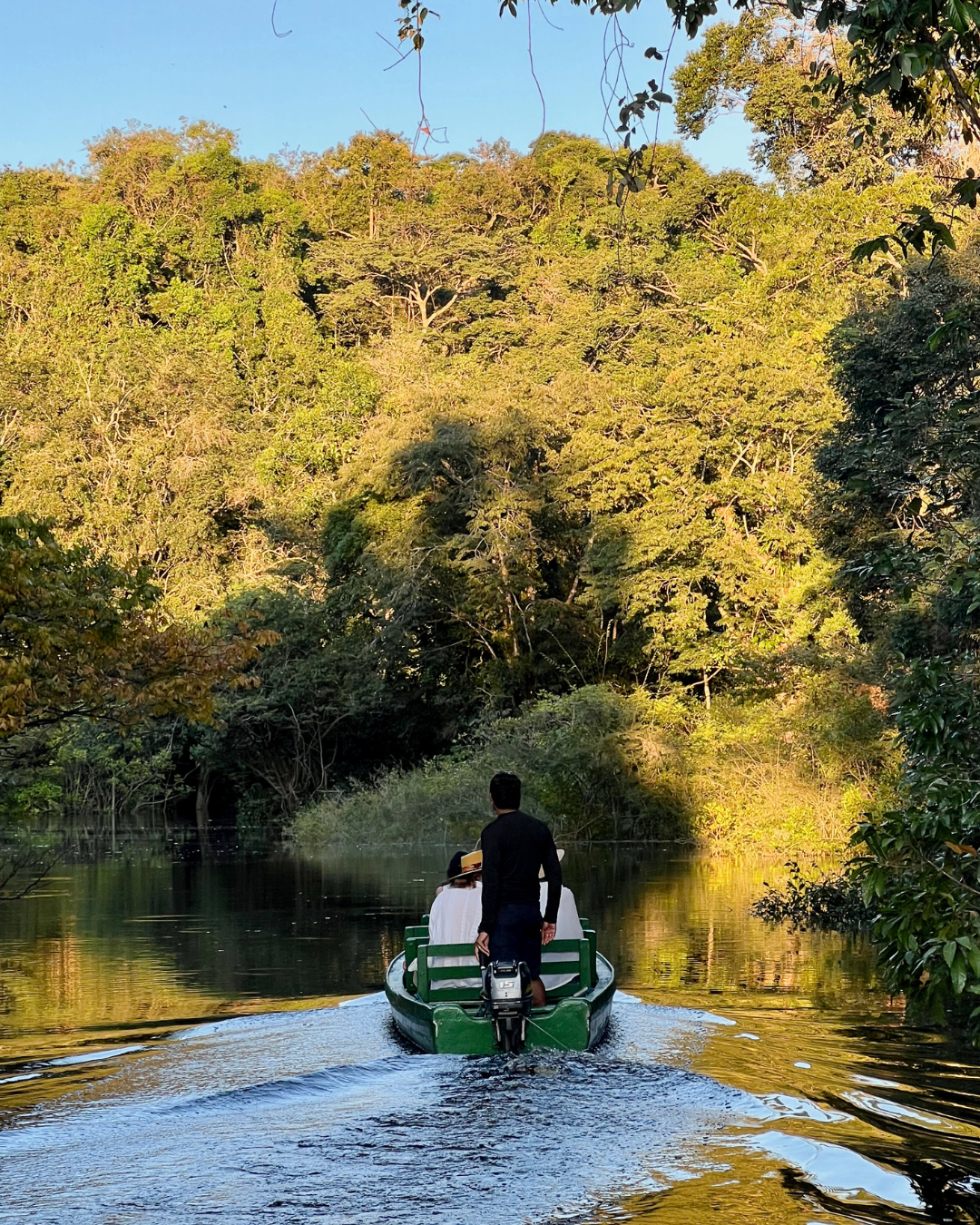
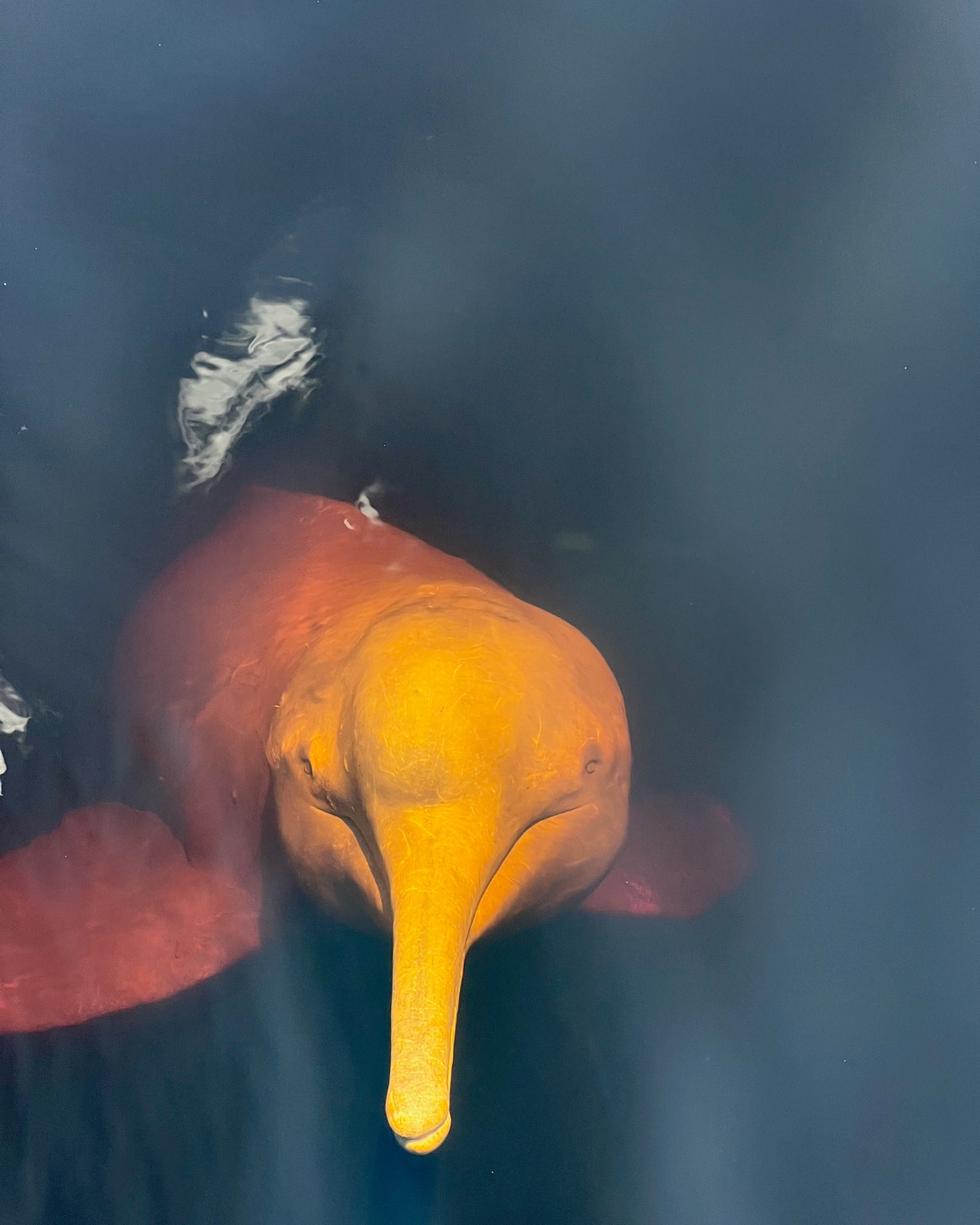
We set sail into the Anavilhanas Archipelago, one of the world’s largest river archipelagos, and began exploring nearby islands and lakes. Throughout the following days we spotted tucuxis (a small, grey, freshwater dolphin species) and botos (pink river dolphins), ‘rafts’ of giant river otters (often nicknamed ‘river wolves’ because they are highly social, cooperative, and territorial predators), herons, macaws, parrots, other vibrant birdlife, snakes and caimans.
We continued to Redário do Madadá, where the group divided to spend the night either in their cabins or in a hammock at Mirante, a peaceful forest bungalow with stunning views of the Rio Negro.
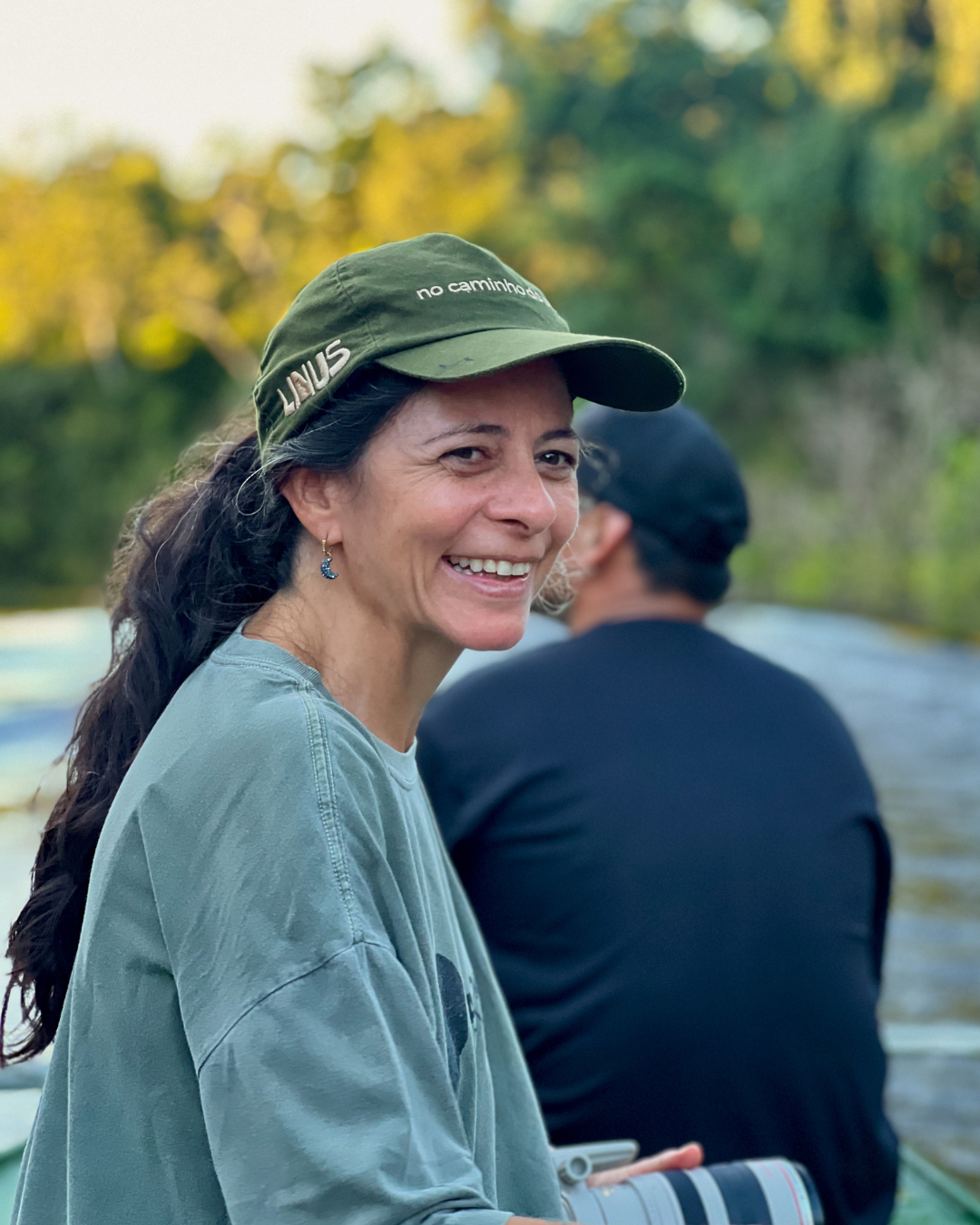
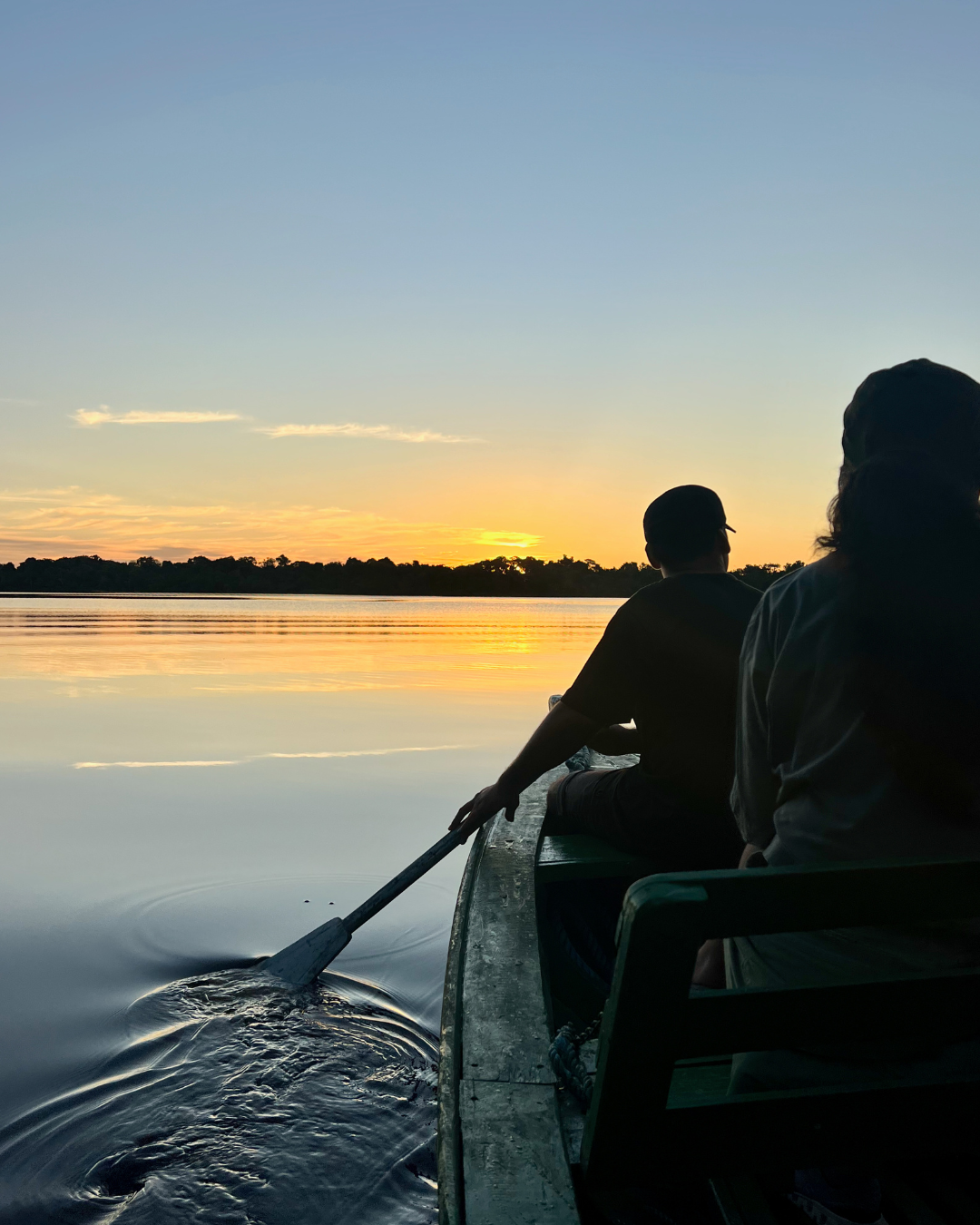
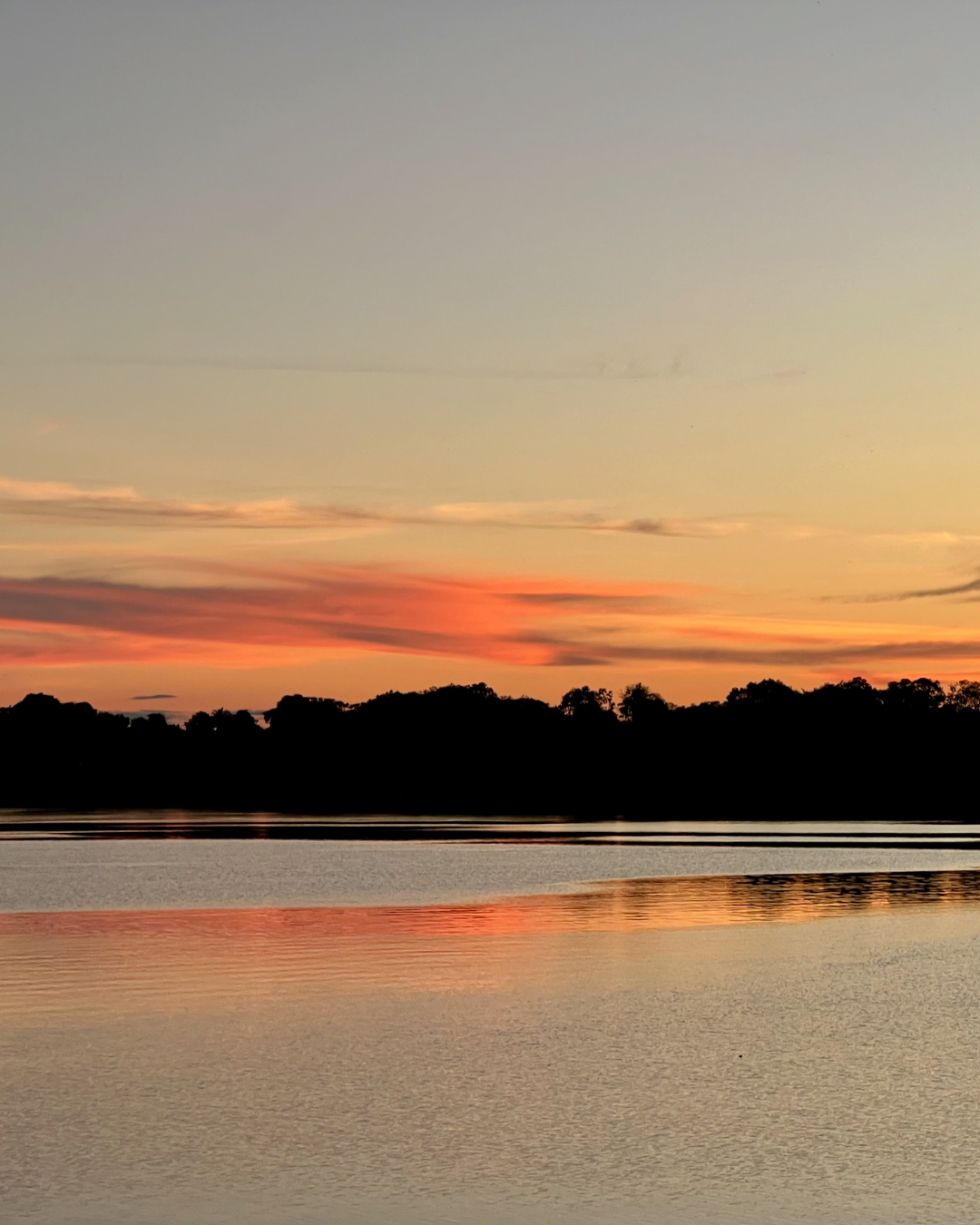
We woke early the next day, beginning with stunning views over the river whilst enjoying our breakfast. Our morning began with a trek through pristine primary forest, beginning at ‘Pedra do Sanduíche’ or Sandwich Stone, an accurate name for the landmark stones at this point, and the overall character of the local geology. The trail led to the remarkable Madadá Caves, natural rock formations tucked deep within the rainforest. Along the trail, we were offered lessons in blow pipes and archery – our skill levels were mixed!
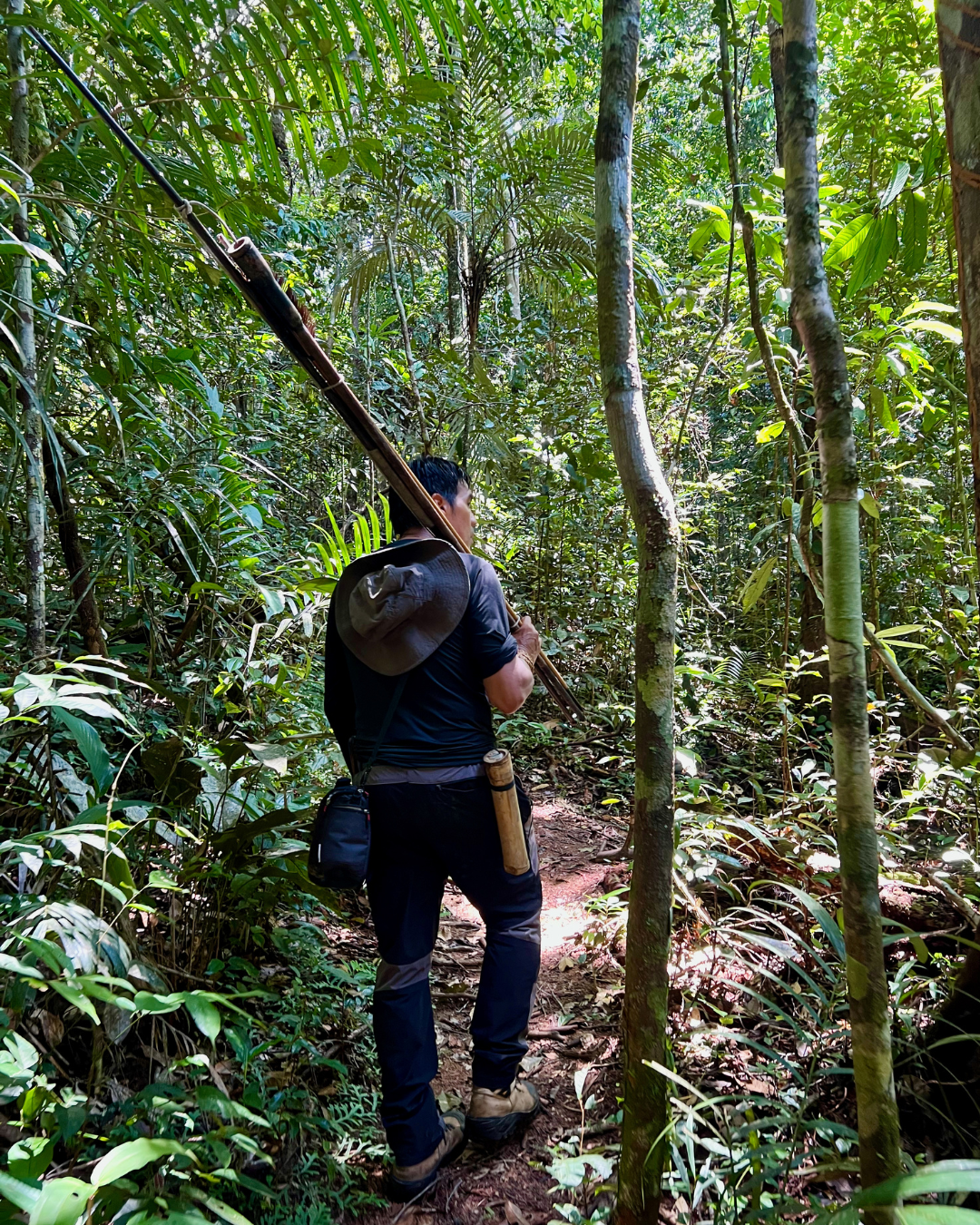
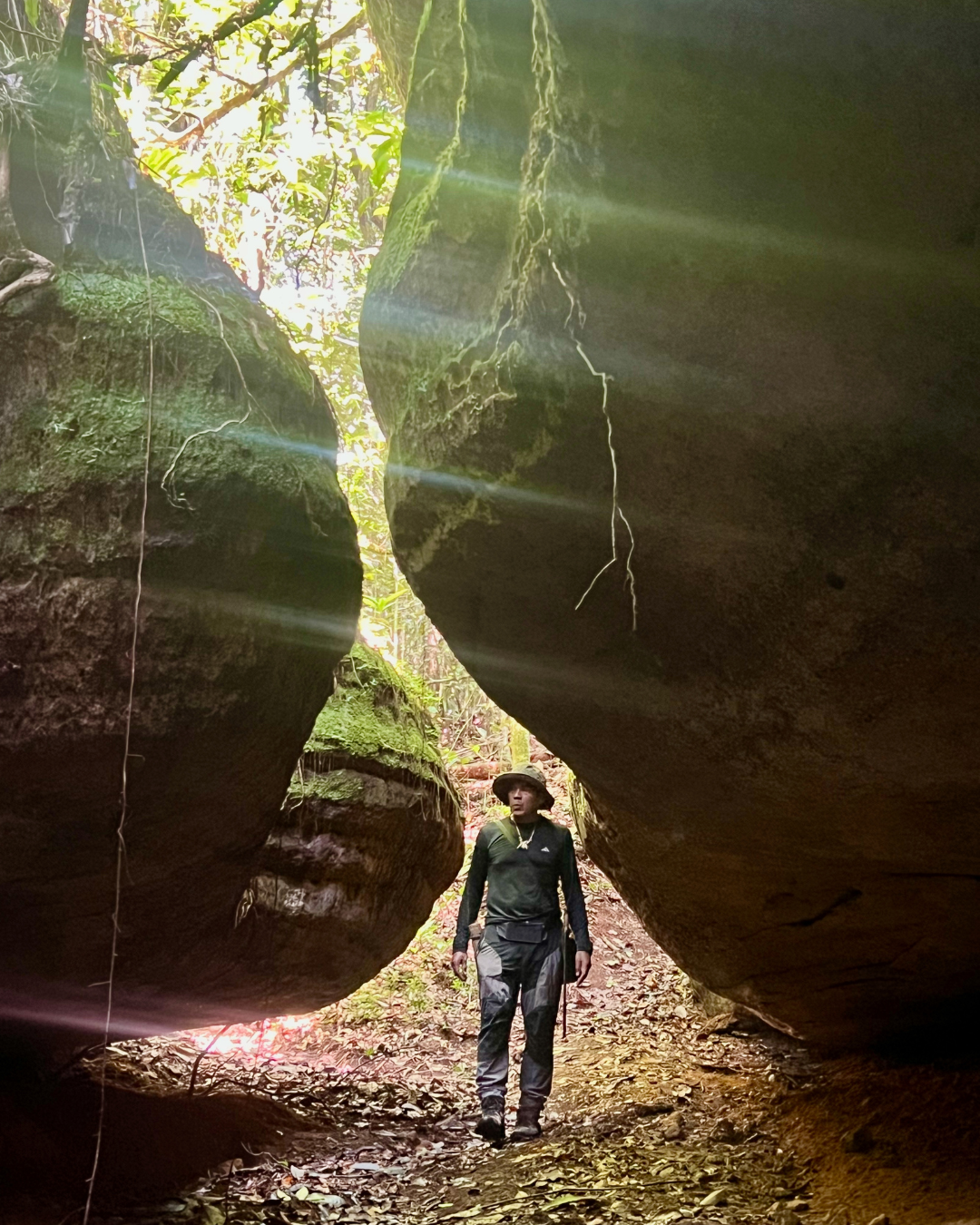
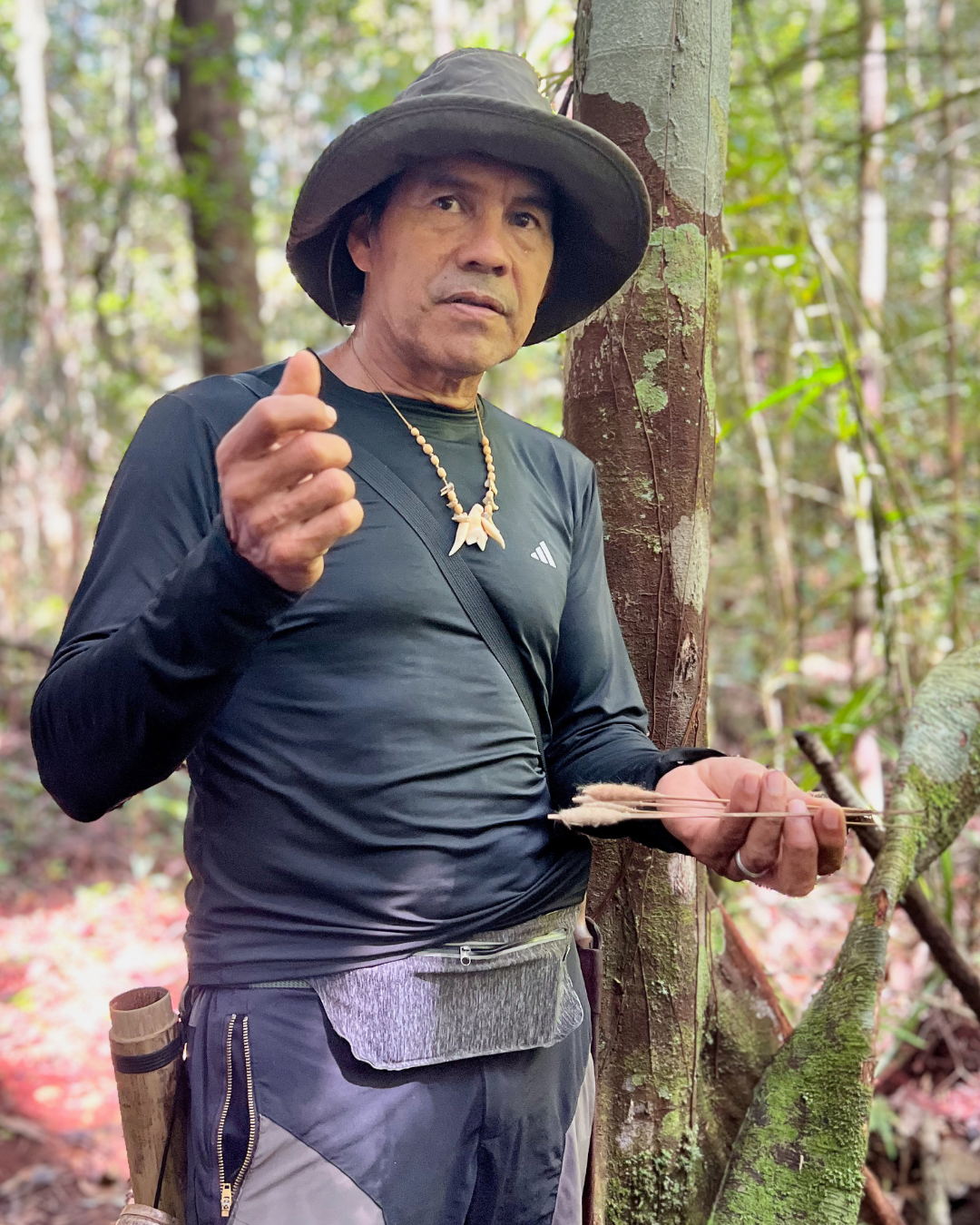
Afterwards we sailed on toward Praia do Sono, where we visited the small riverside community of Mirituba, learned about locally foraged and farmed foods, schooling, and participated in a dynamic game of village football. Immense fun, laughter, warmth and hospitality with the wonderful people of Mirituba.
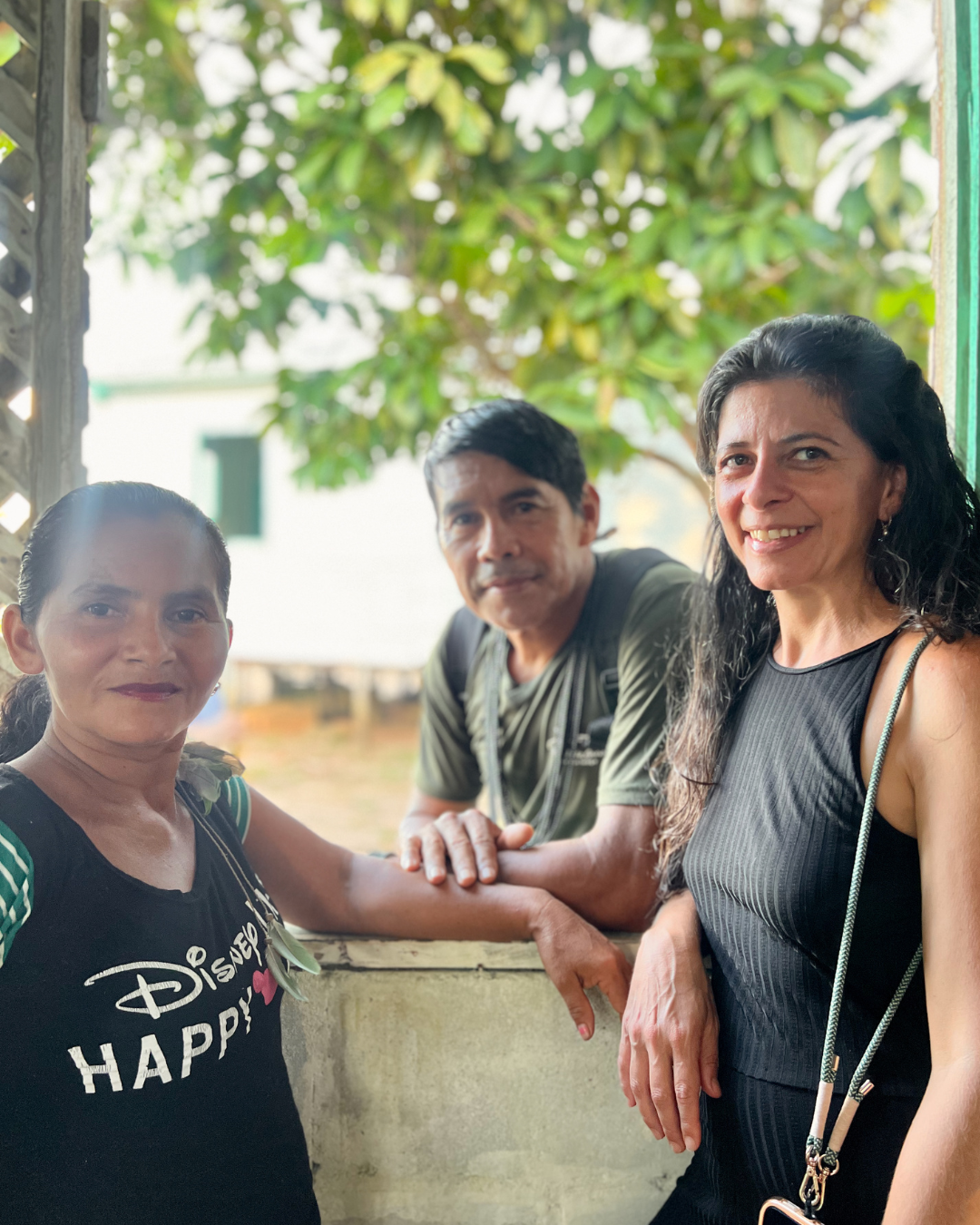
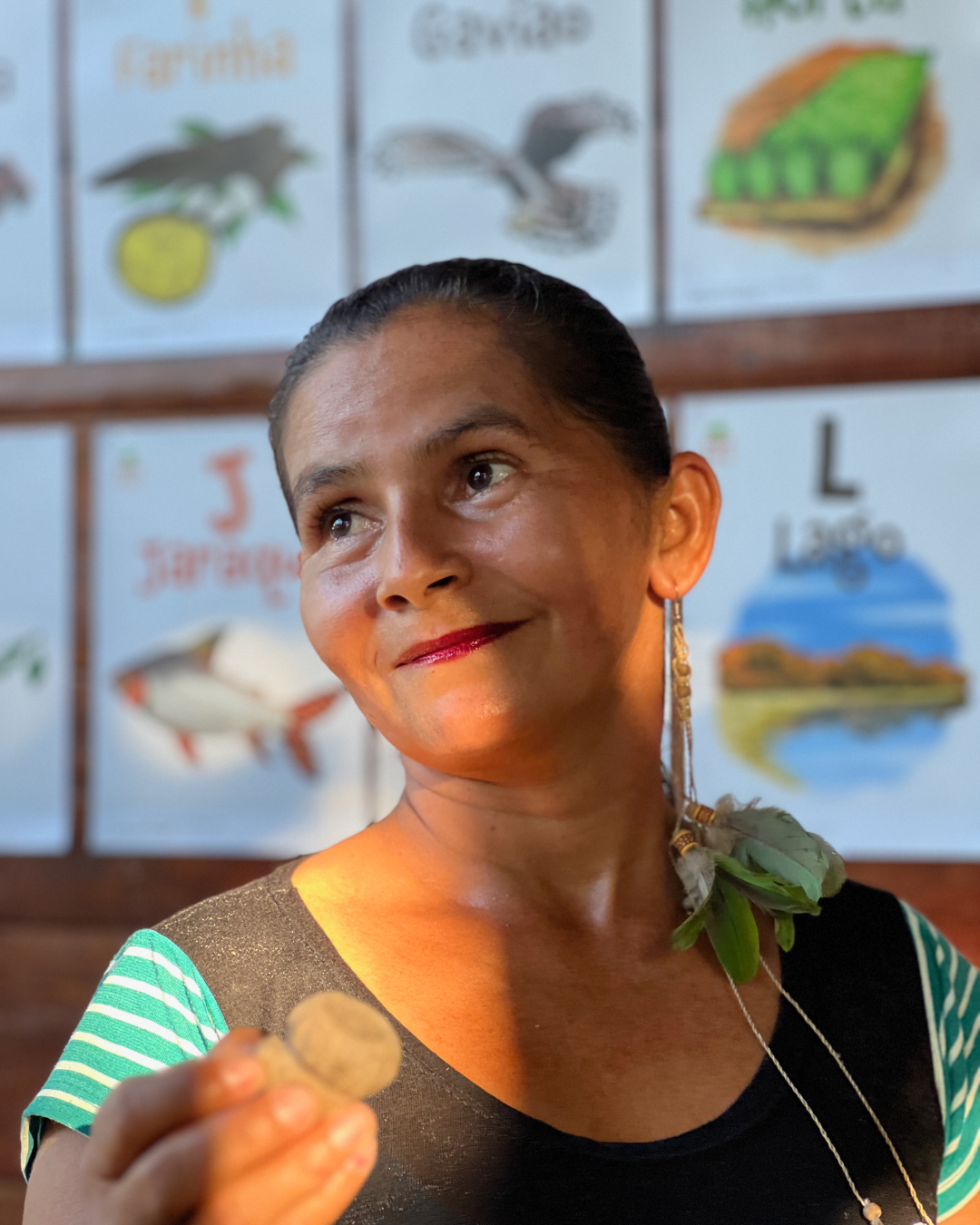
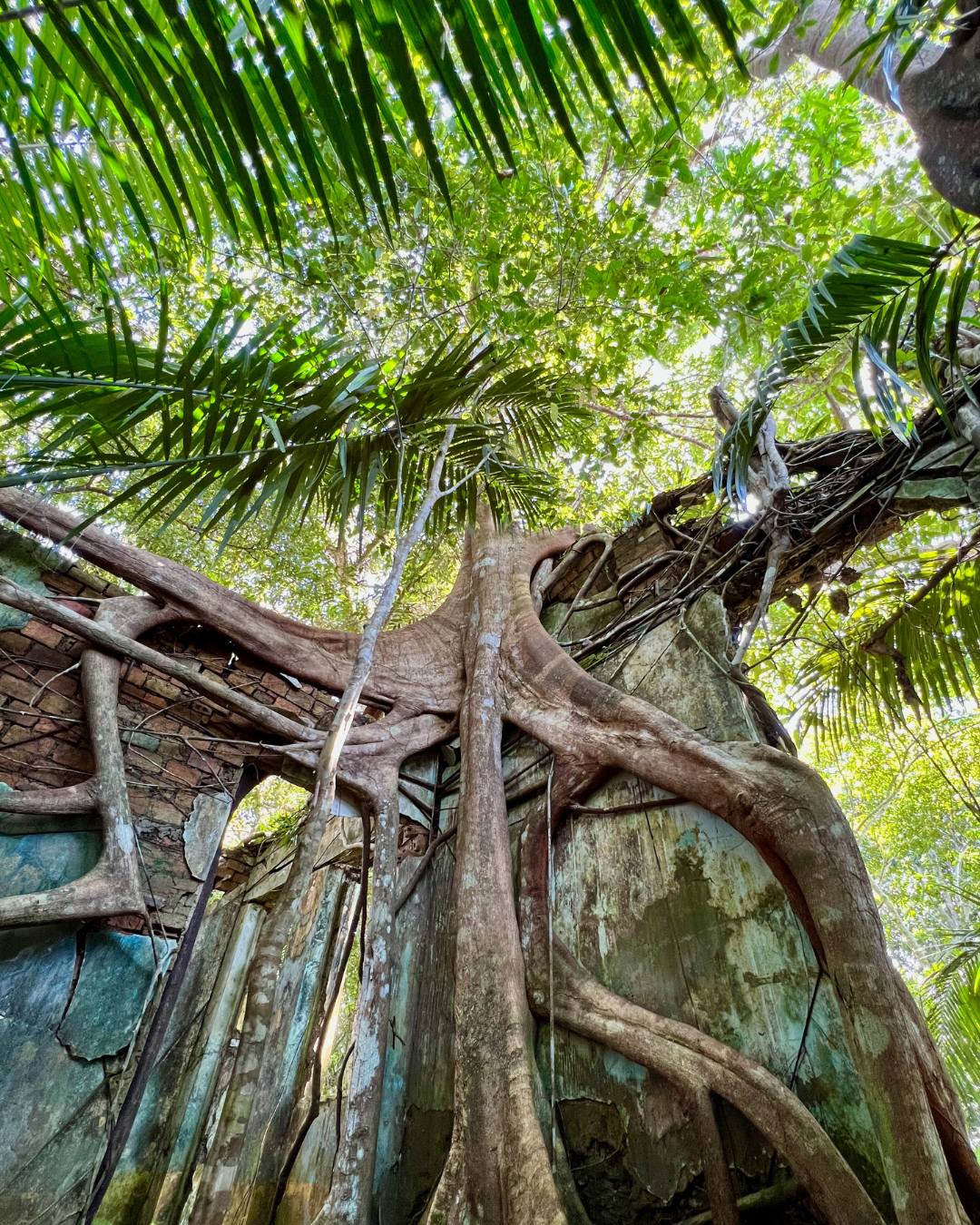
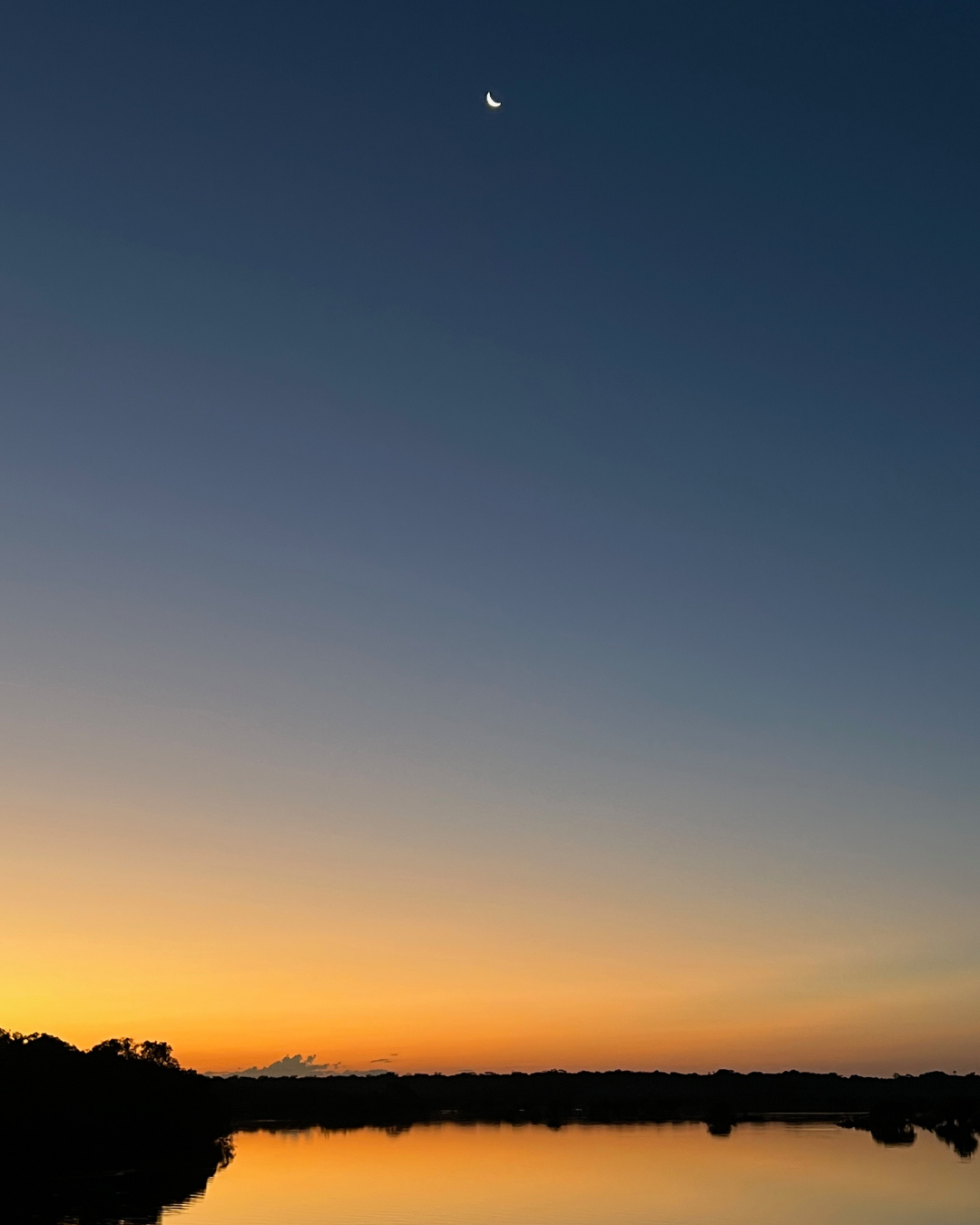
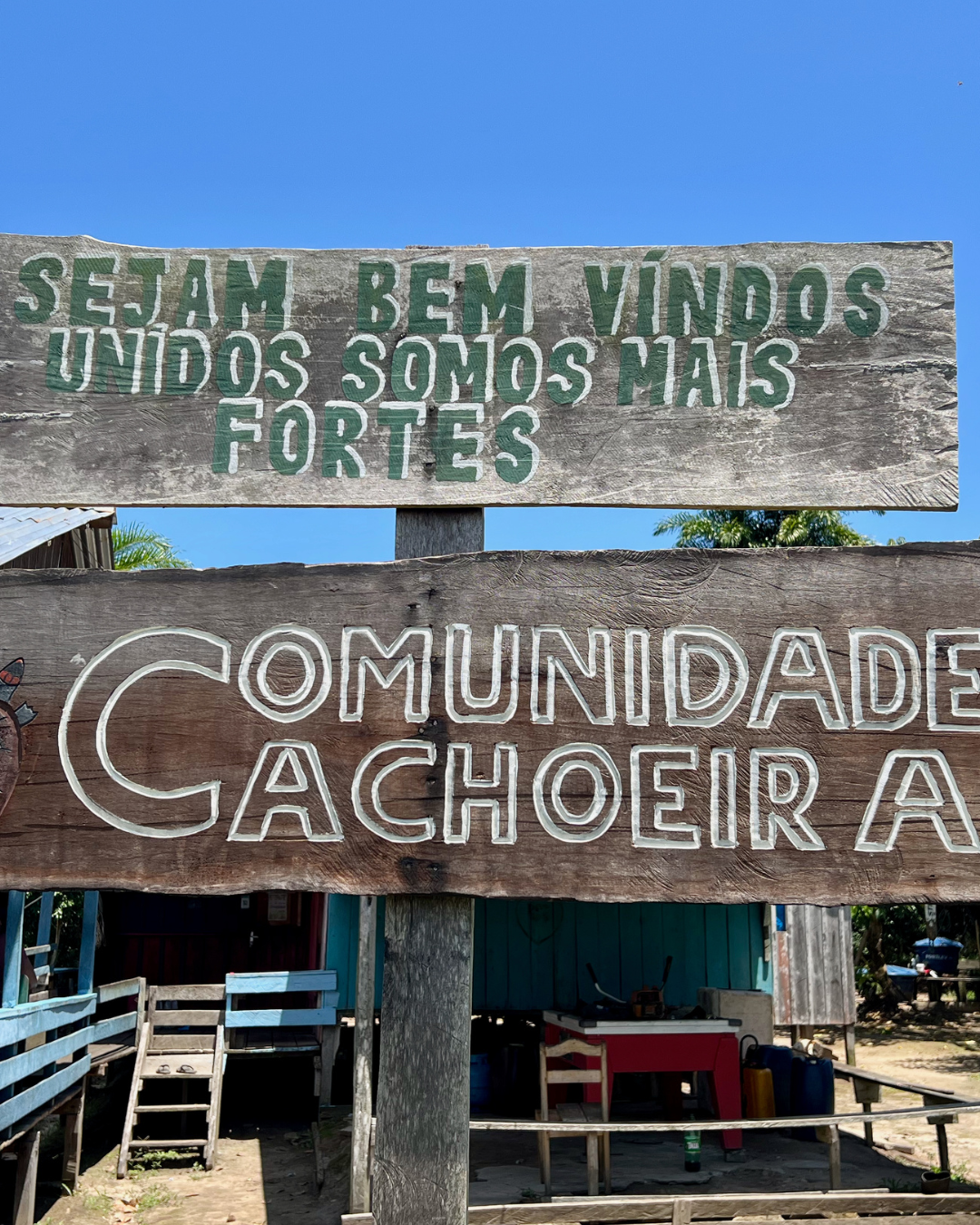
The following day, we visited the nearby historic site of Airão Velho, an abandoned village founded in 1694, rich with stories and ancient petroglyphs carved by early travellers. A kind of ‘mini Angkor Wat’ – trees growing from buildings with vast root systems cascading from high walls to the ground. Sailing on to enter Jaú National Park through the Chico Mendes Institute for Biodiversity Conservation (ICMBio) base visitor registration and control were completed. As the boat navigated the serene, mirror-like waters of the Jaú River, a tributary of the Rio Negro, we kept a constant lookout for birds and aquatic mammals. Later, venturing into the Rio Carabinani, in turn a tributary of the Jaú River, known for its wild beauty, including waterfalls and rapids, mooring at the end of the day under the Amazonian sunset near the riverside community of Cachoeira do Jaú.
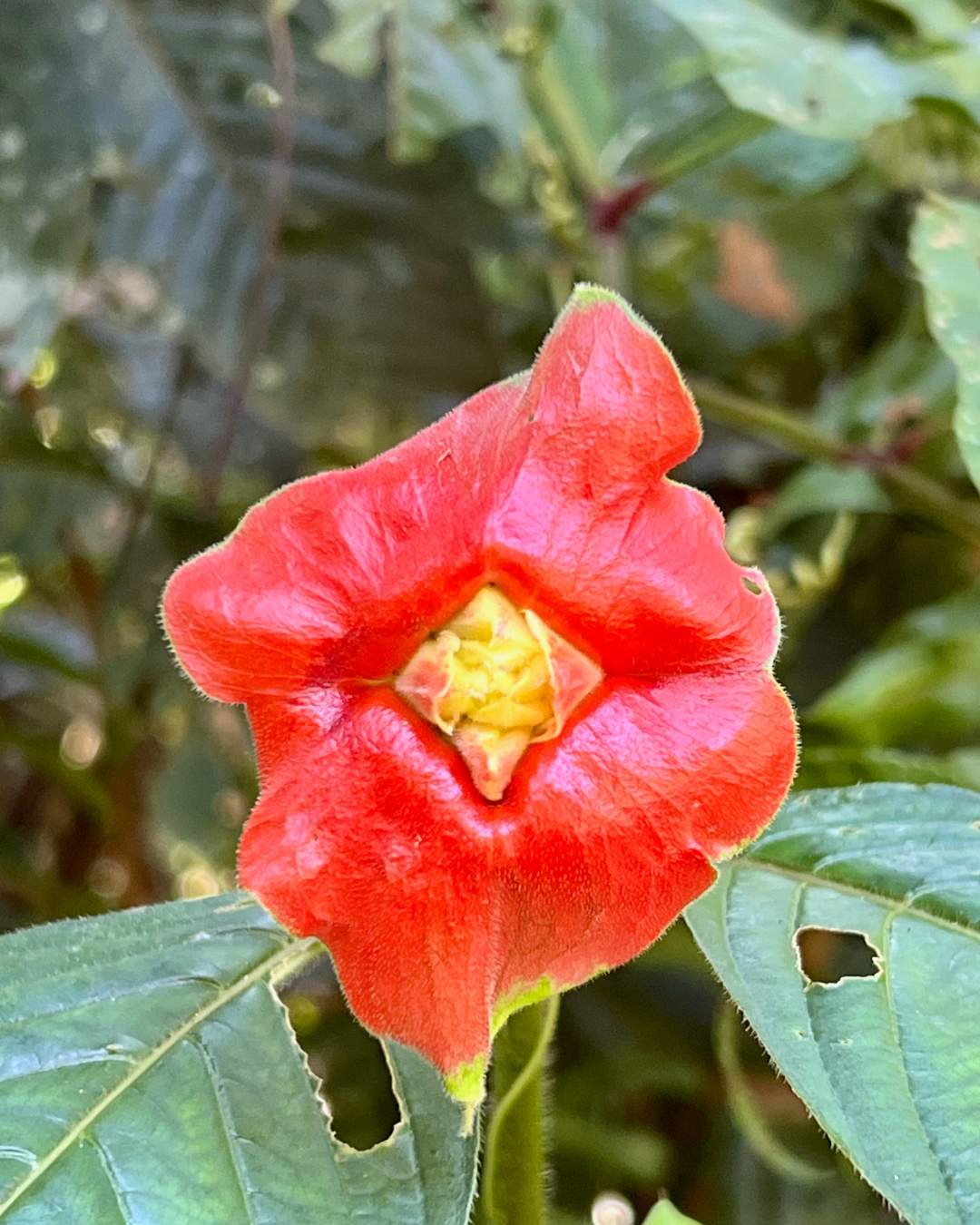
Early the next morning, perhaps our most remarkable experience, led by local master navigators we canoed in total silence for two hours between the trees of the local waters. I could have continued all day… Entrancing, hypnotic, mesmerising…
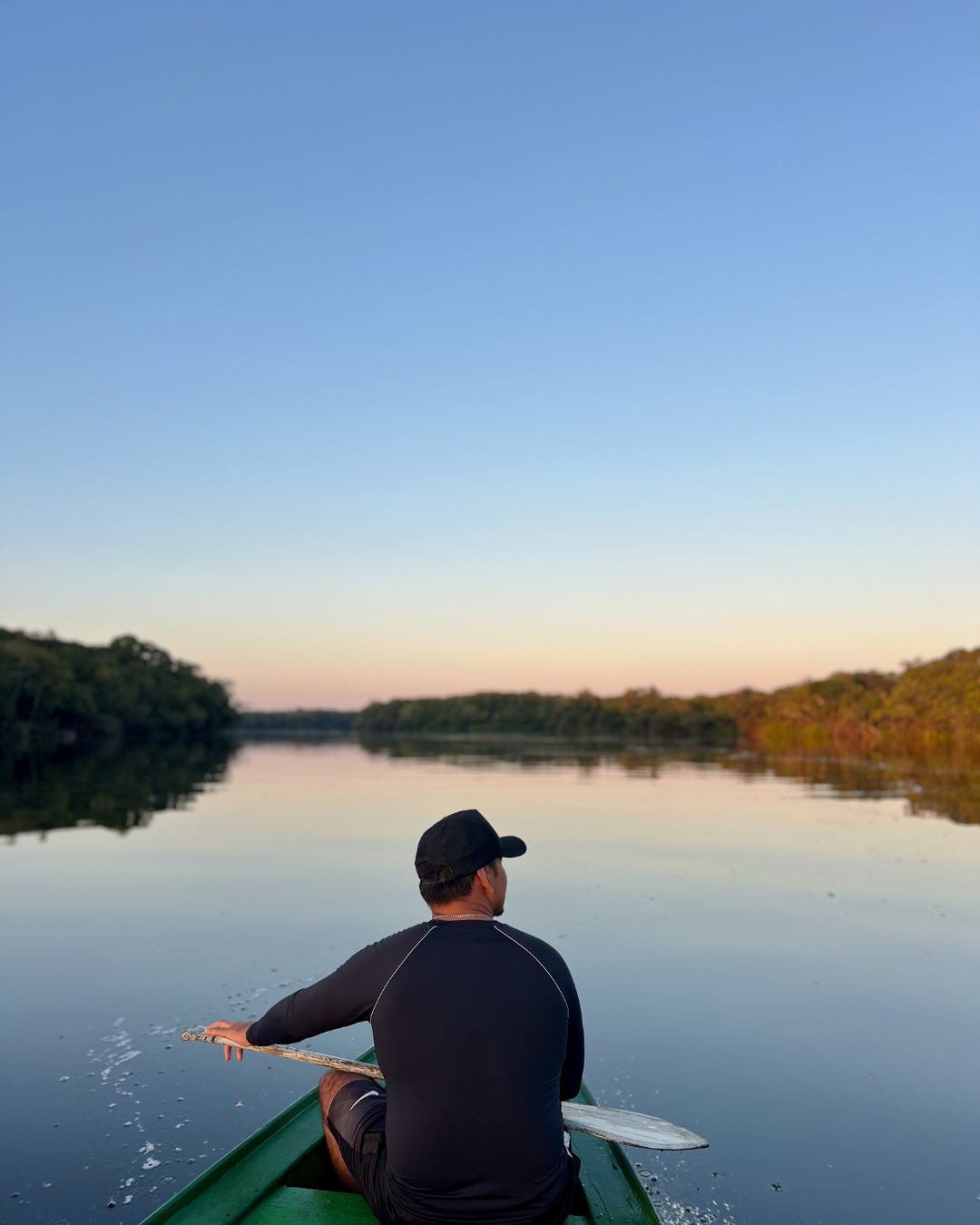
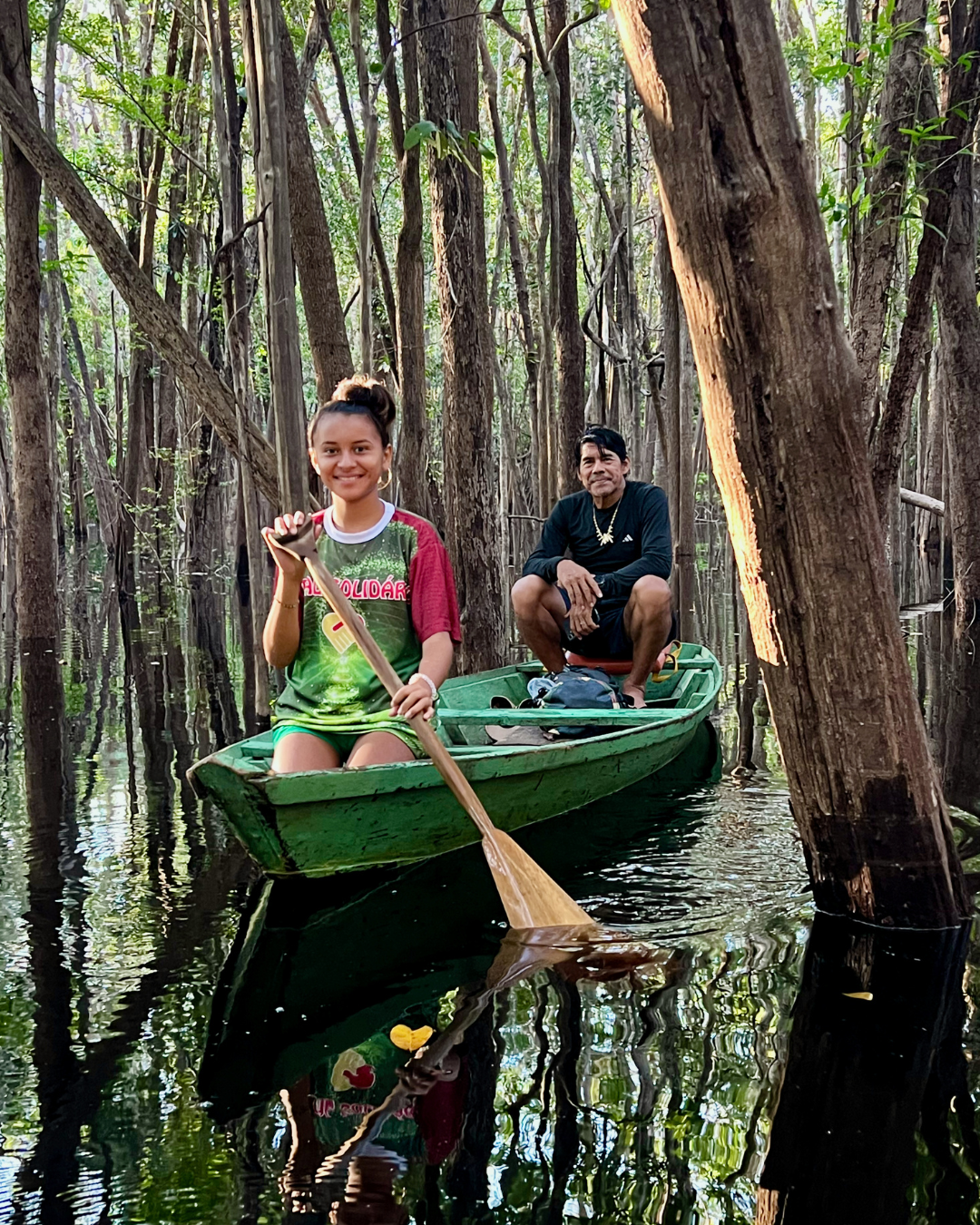
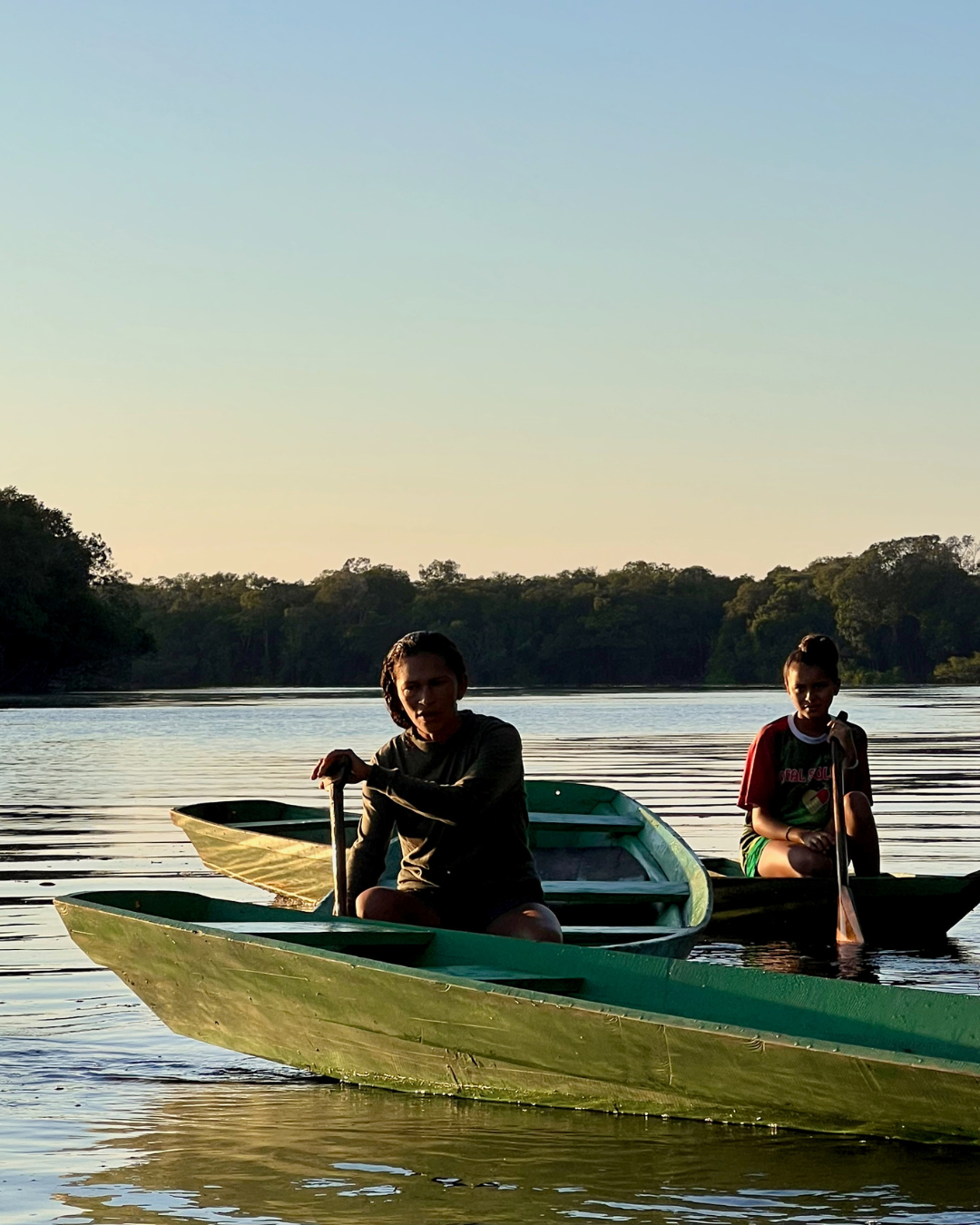
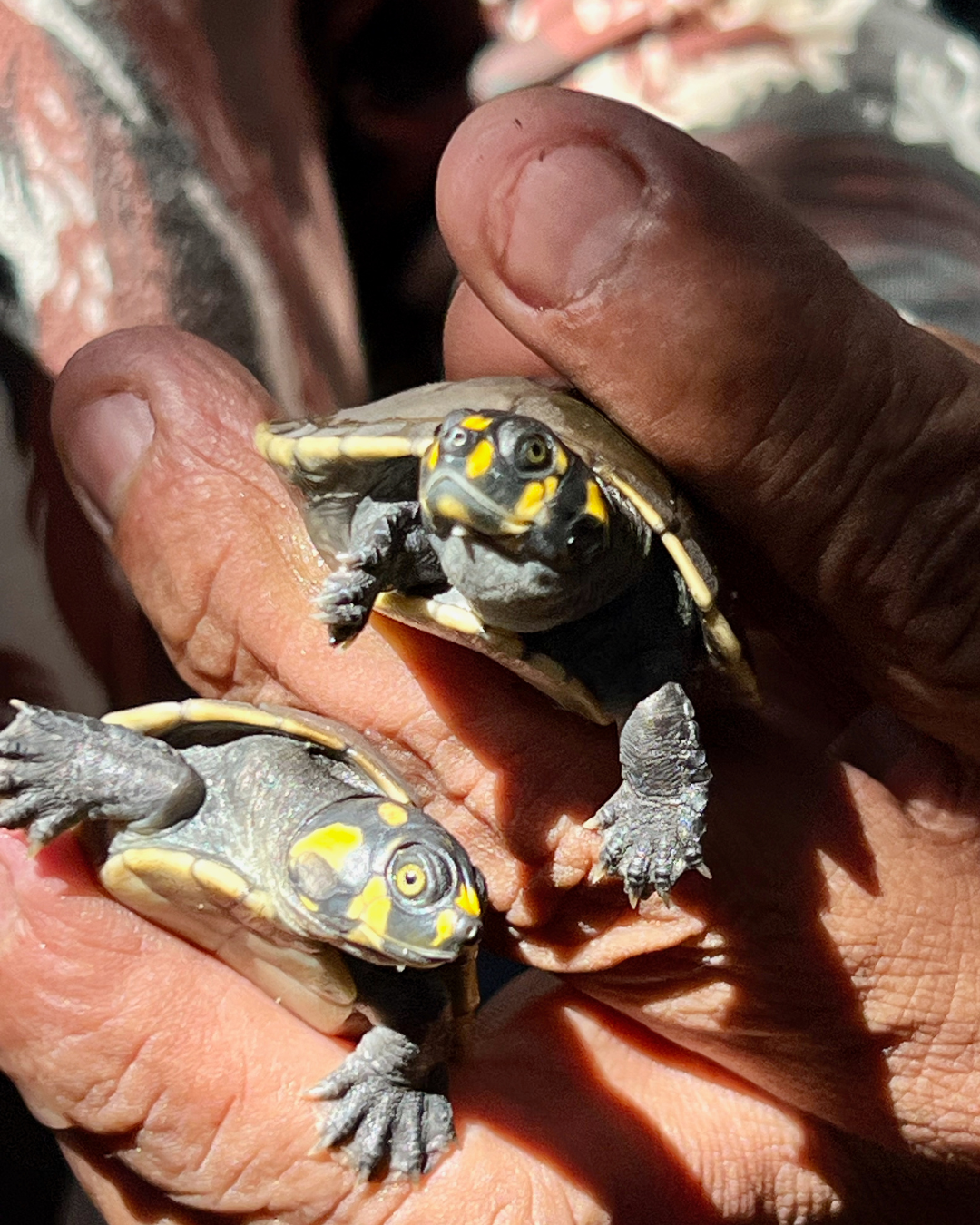
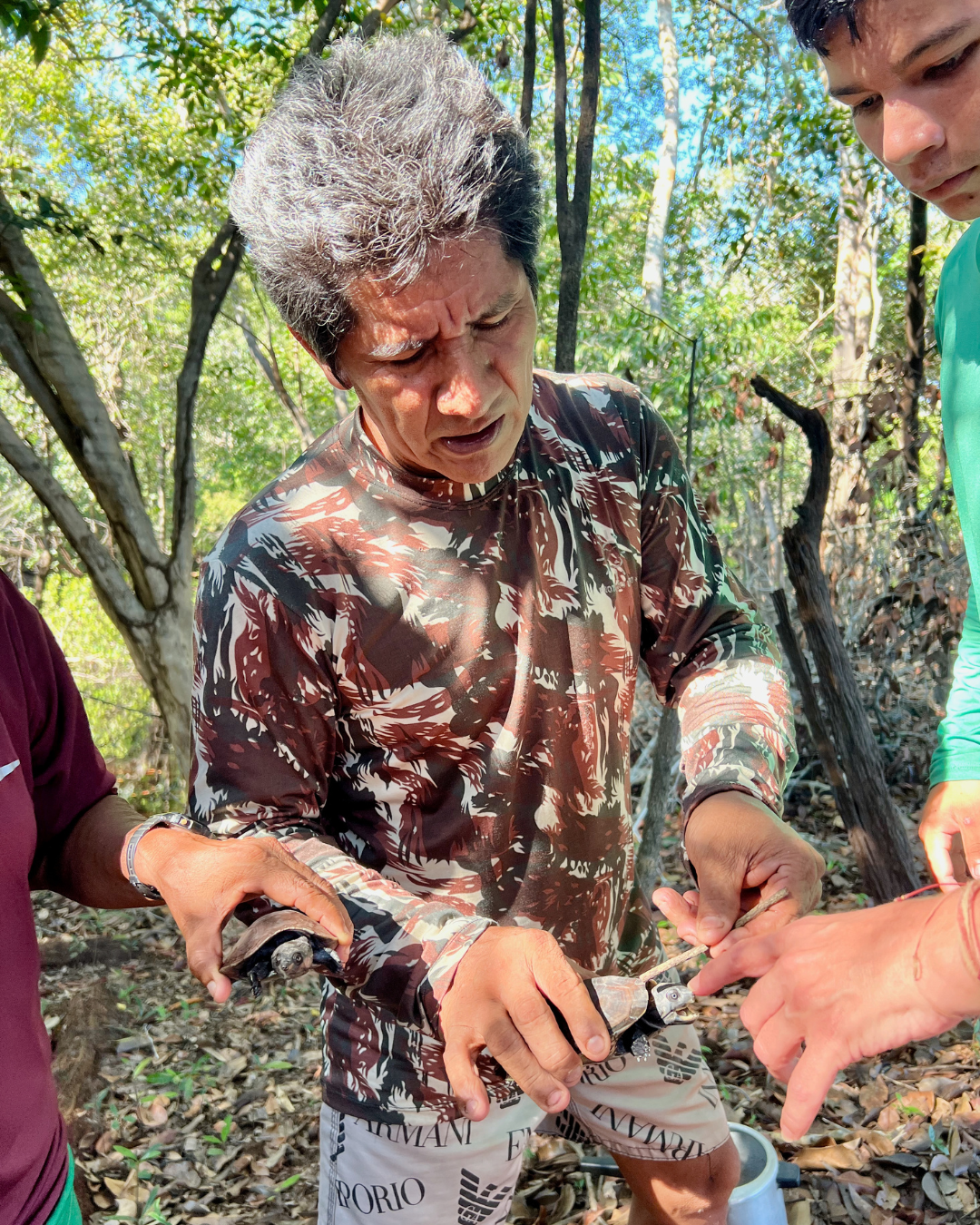
This was followed by a great privilege. The local community is engaged in turtle conservation, and had made some recent releases of baby turtles into the river, holding a small number for us to observe and better understand this process. This was not contrived, but rather a fortunately timed opportunity to witness community led conservation in action. Wonderful and inspiring for us all.
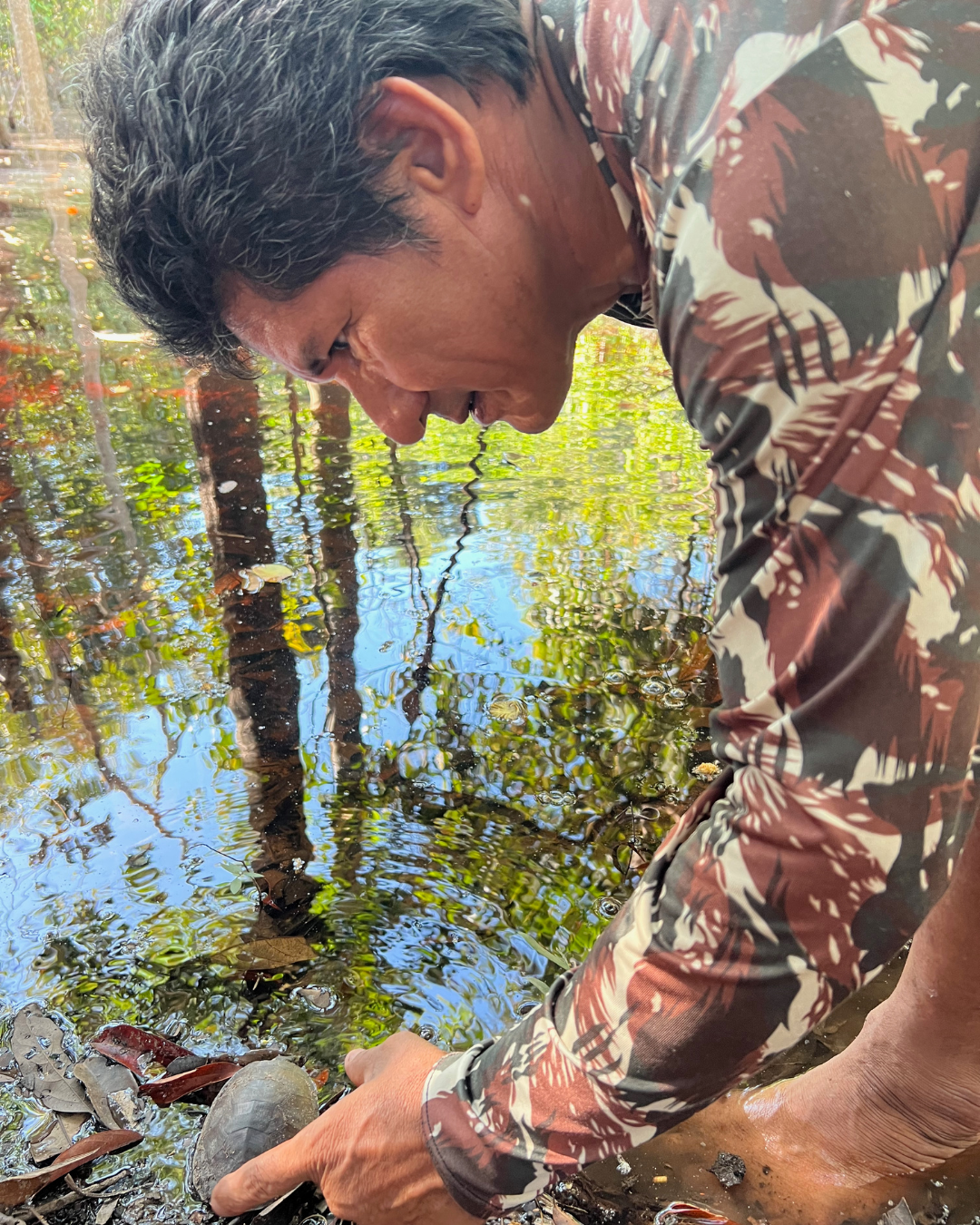
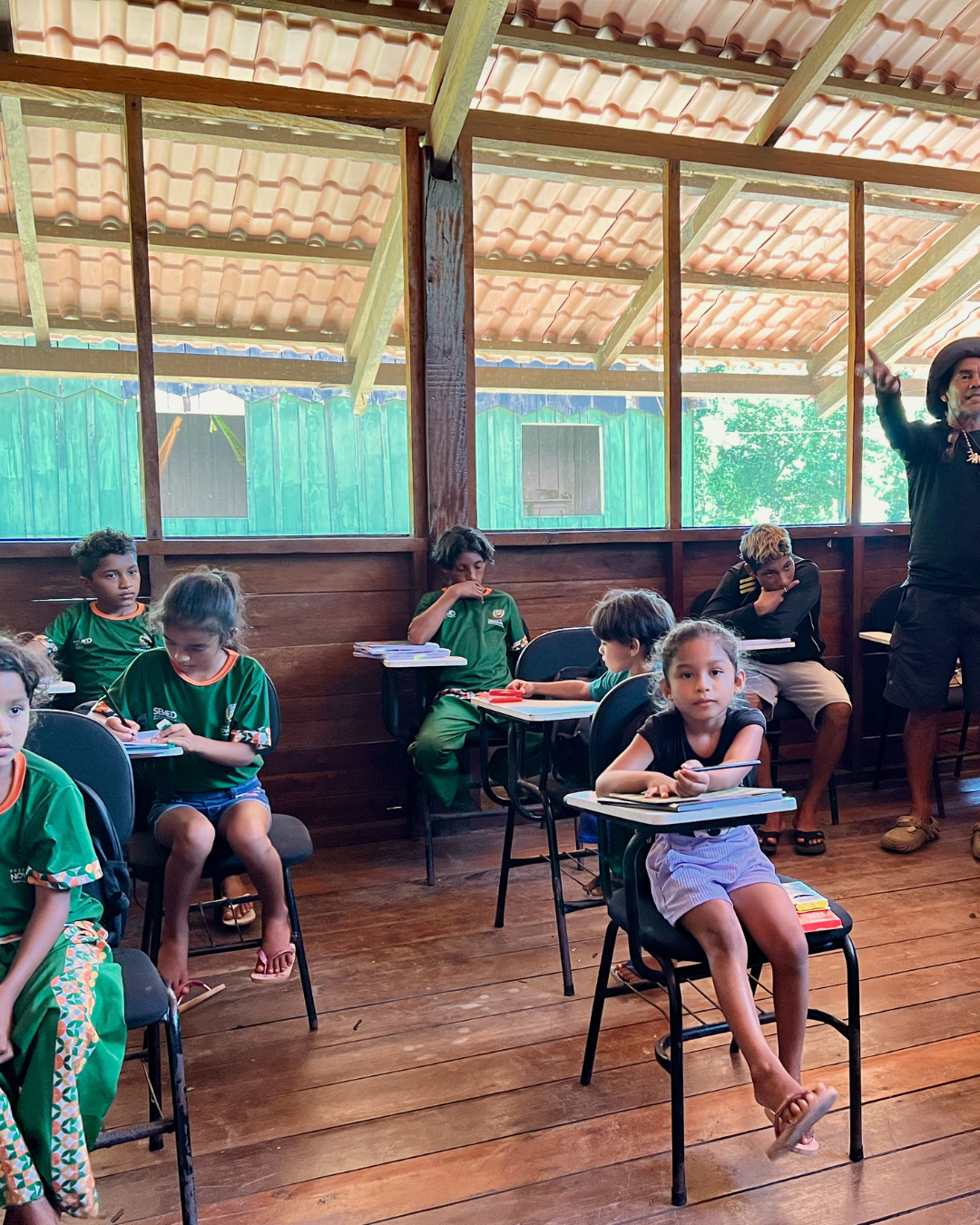
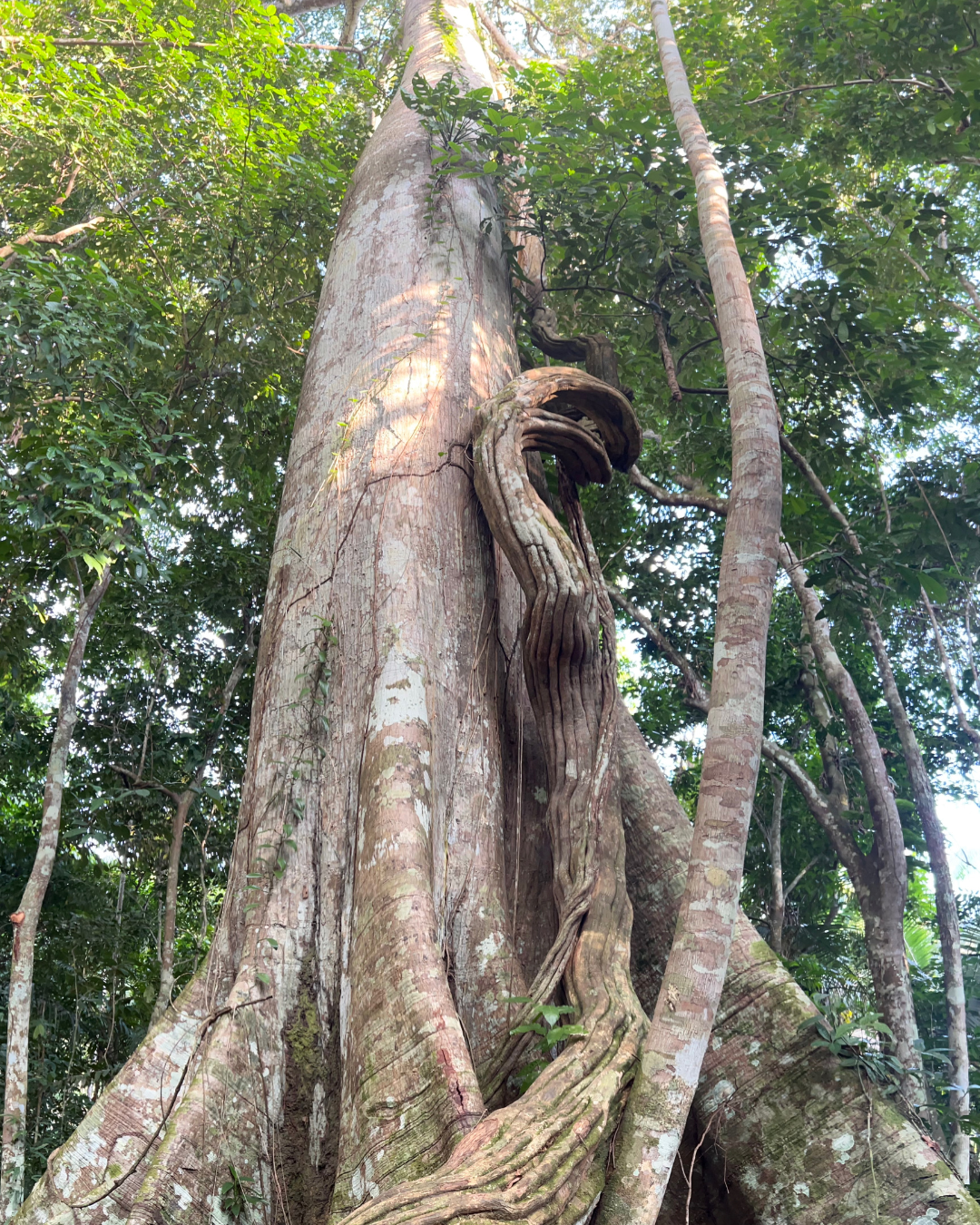
Afterwards a short trip to the Cachoeira community, exploring daily life along the river and experiencing the craftsmanship of the community. A highlight was the visit to the riverside school built by the Almerinda Malaquias Foundation (FAM). The journey continued with navigation back toward the ICMBio base, and a short forest walk leading to majestic Samaúma trees, one of the giants of the Amazon.
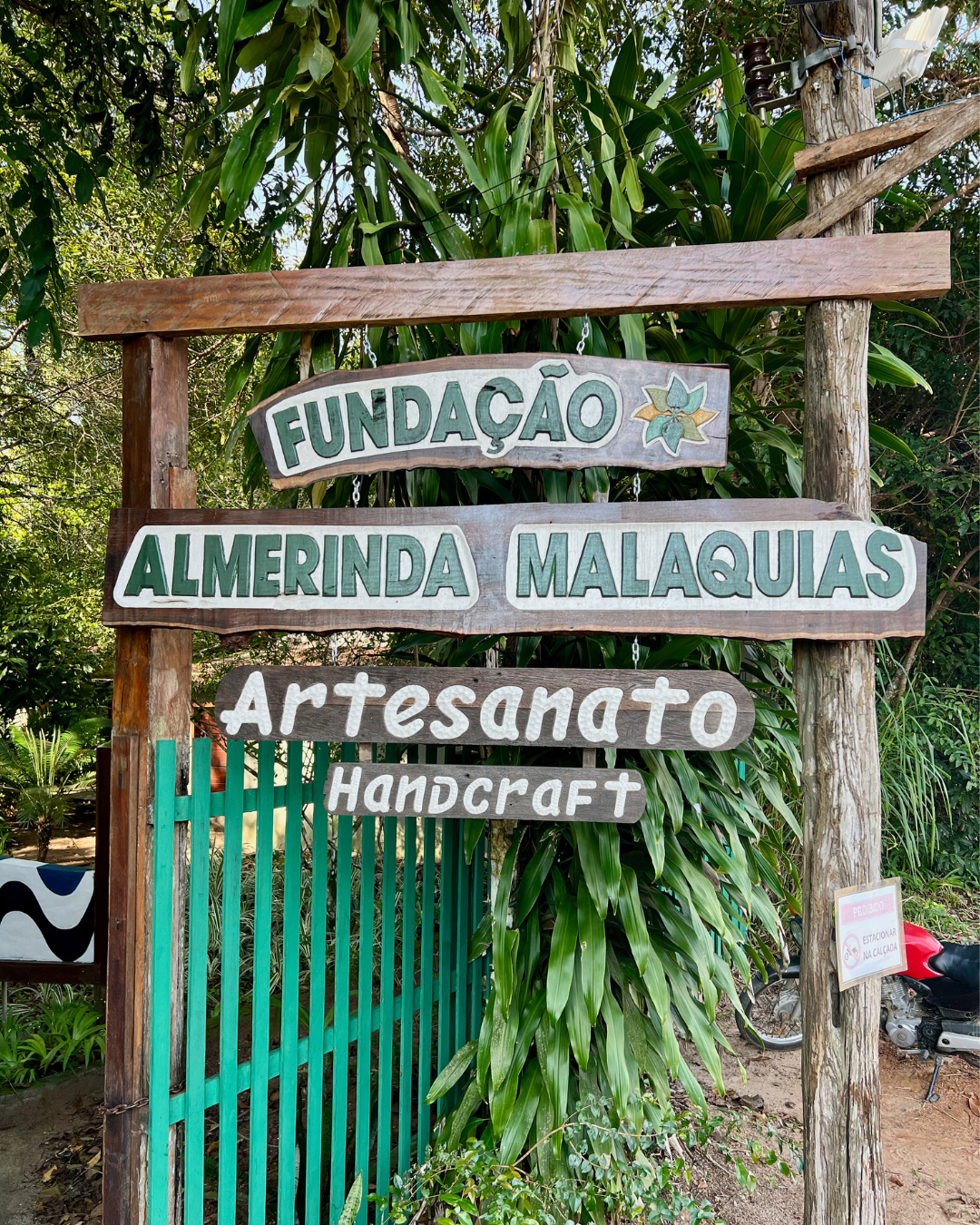
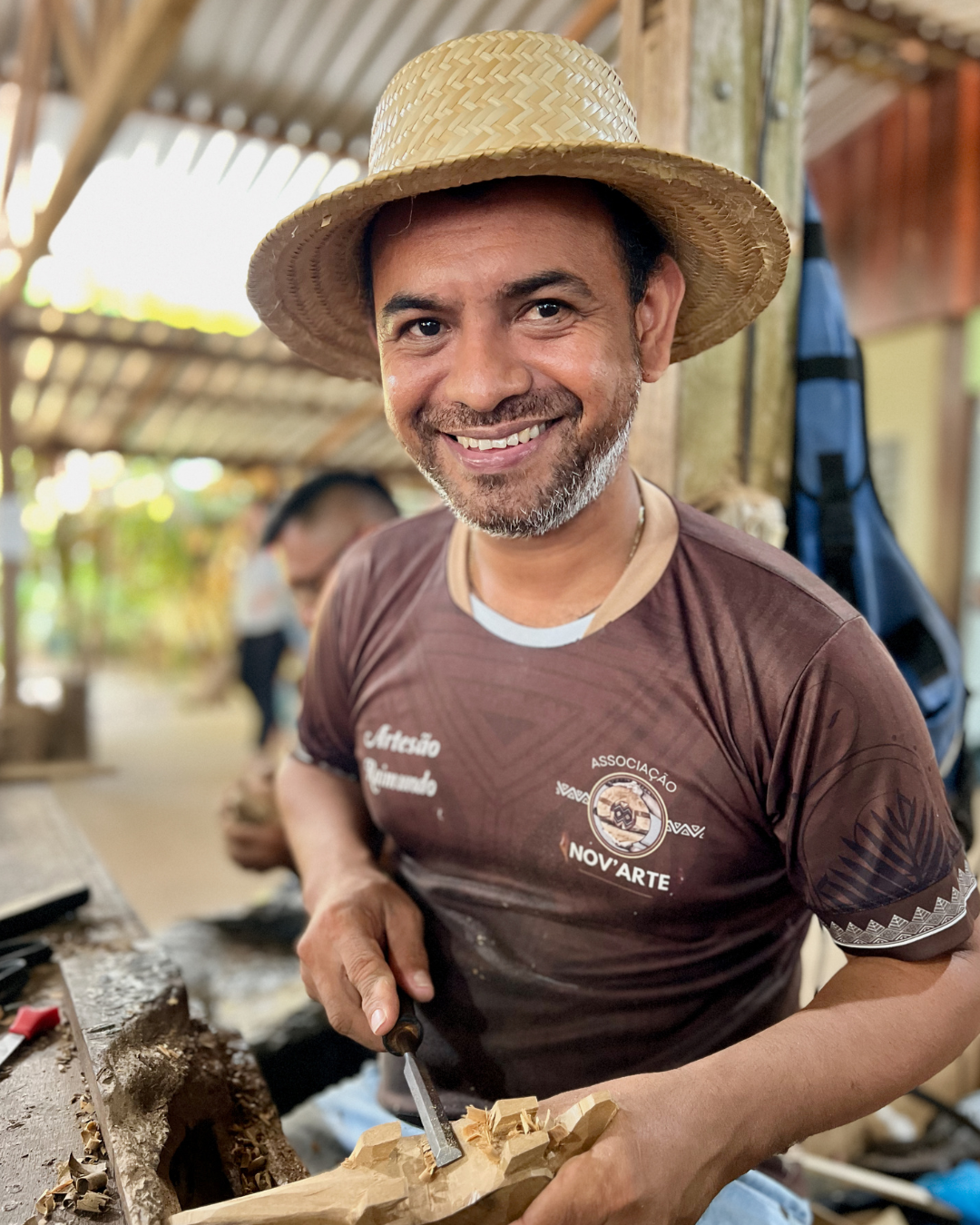
We sailed back from Jaú towards Novo Airão, observing the region’s iconic pink river dolphins towards the end. For more on the Amazon’s pink dolphins and the river system that is their home, I recommend the work of Colombian marine biologist Fernando Trujillo, the 2024 Rolex National Geographic Explorer of the Year – Fernando Trujillo: For the love of river dolphins. Disembarking in the the city of Novo Airão we visited the headquarters of Almerinda Malaquias Foundation (FAM), a transformative initiative supporting environmental education and artisanal marquetry, and the AANA artisan cooperative, where Indigenous and regional crafts tell stories of the forest.
Upon my return to Manaus, I was also invited to the Foundation for Amazon Sustainability (FAS), led by Virgilio Viana and his brilliant team. FAS is a Brazilian non-profit NGO, founded in 2008, dedicated to promoting sustainable development for local communities and conservation in the Amazon rainforest.
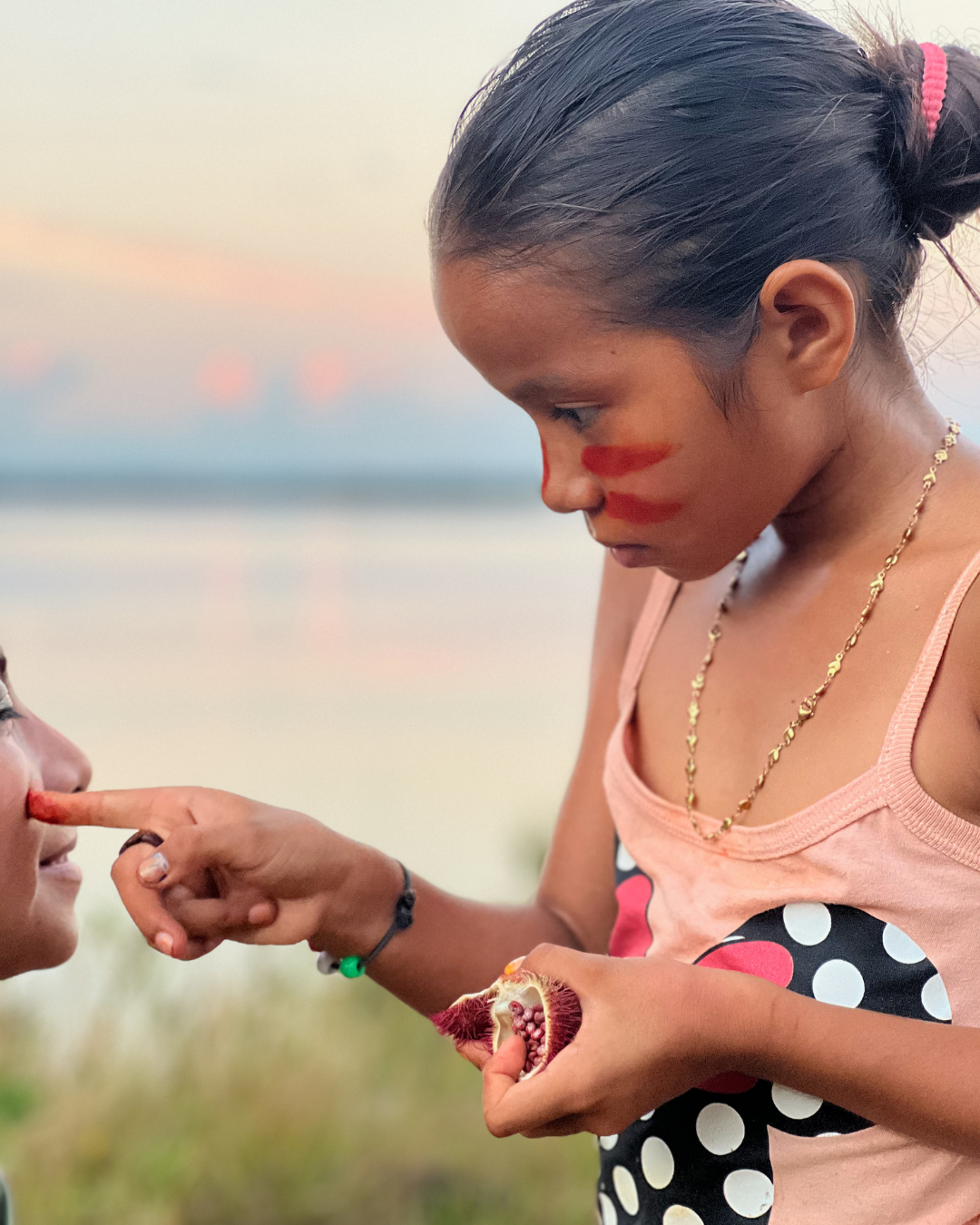
What a remarkable journey, with which I carry vividly the sounds, colours, and spirit of the Amazon. The memories that I hold most clearly are of the skies and the clouds. Looking to the Amazonian heavens, I saw the signature photography of Salgado. Immensity, power, grace, artistry, clarity, and Life… The trees in the Amazon rainforest release vast amounts of water vapour through transpiration, creating ‘flying rivers’ (‘rios voadores’) that flow in currents above the canopy. It’s estimated that these invisible aerial rivers carry more water than the Amazon River itself – roughly 20 billion tons of water vapour per day, compared to the 17 billion tons the Amazon River pours into the Atlantic Ocean.
I return to Dom Philips. Why is his, and others, work so important? To take just one point of elemental significance – the Amazon’s ‘flying rivers’ are carried by trade winds to the Andes, where they are redirected and produce rain for the whole of South America. Everything in our world is connected. Deforestation and climate change are endangering this fragile system. In 1975, less than 1% of the Amazon was deforested; in 2025 it was about 20%, with 88% of this lost to cattle pasture (we humans are eating ourselves to our own extinction). To give some sense of scale – the Amazon basin is twice the size of the vast country of India. Where does this destruction lead to? Brazilian filmmakers have captured striking images of clear-cutting and explore how human activity is so damaging the world’s largest rainforest that it will not be able to recover – The Amazon Rainforest Approaches a Point of No Return. Nature’s demise is in turn our own.
‘Man’s conquest of Nature turns out, in the moment of its consummation, to be Nature’s conquest of Man.’
C.S. Lewis, ‘The Abolition of Man’ (1943)
So, ‘How to Save the Amazon’? Please read this brilliant book. In essence, we can turn this around. Costa Rica, and so many other brilliant successes, prove this. We can move from a commodity-based economy to a nature-based bio-economy; economies based on abundance for all rather than wealth for some. By assigning a notional value to rainfall based on agricultural water prices, a review – The Amazon’s most valuable export isn’t timber – it’s rain – estimates that forest-generated precipitation in the Brazilian Amazon alone may be worth $20 billion annually, or roughly $60 per hectare per year. This is an order of magnitude greater than the annual value of timber production in the Brazilian Amazon. The Amazon is the world’s largest library of biological knowledge; an estimated 80% of the world’s species remain unrecorded and unknown to science. And so on, and so on.
Everything is connected and we must listen to local communities and Indigenous peoples. It has only belatedly been acknowledged by science that demarcation of Indigenous territories is the most cost-effective way of storing carbon and protecting biodiversity. That is because forest-dwelling communities have lived as part of nature for thousands of years, and their customs and cosmologies are geared towards cherishing their habitats. Across the world, deforestation and degradation are consistently lower in community-managed forests than unmanaged and unprotected areas.
It is about listening, about building a new relationship with nature. Or, better still, rediscovering the virtues of an old one.
The Amazon and other critical ecosystems mustn’t be viewed as a challenge to take on, or problem to solve, or a resource and mine from which to extract all; they are the solutions.
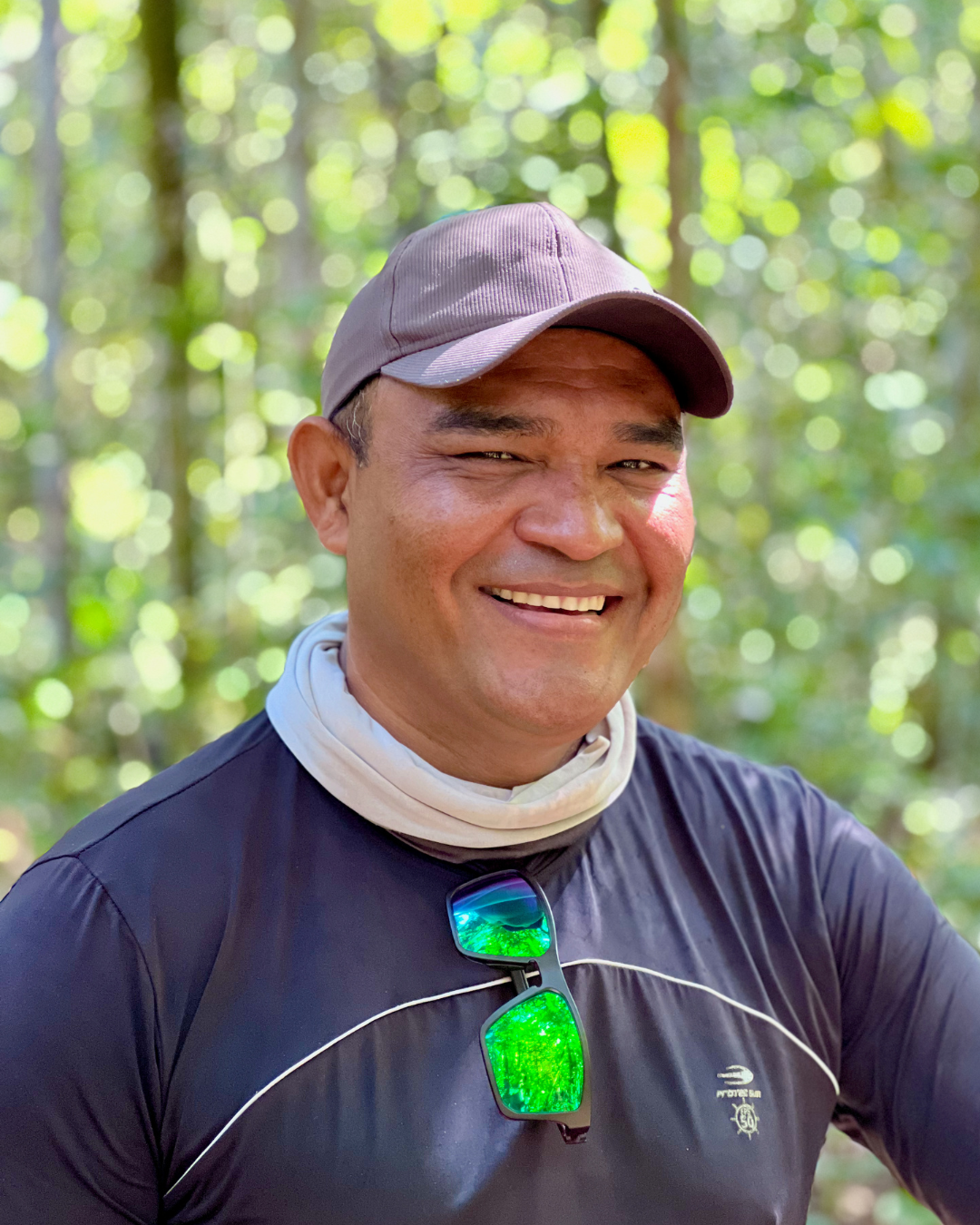
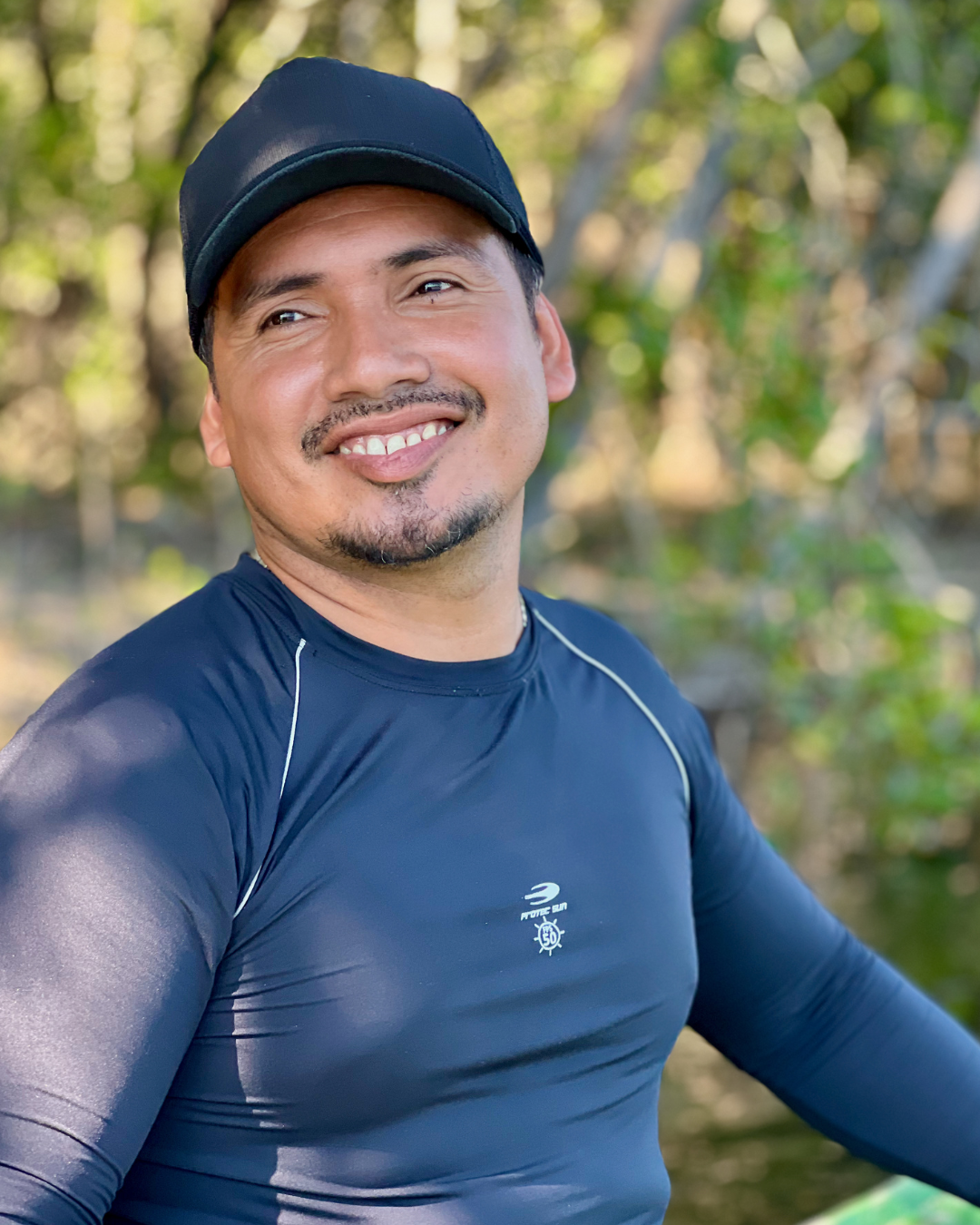
My gratitude to all who enabled the magic of our journey, and in particular our warm-hearted guide, Yuri, photography host Sitah Antunes, and the crew of the Dorinha. Sitah is a photographer and cultural facilitator, whose work brought a thoughtful and deeply respectful perspective to exploring the Amazon. Drawing on years of artistic and anthropological research and more than a decade of expeditions throughout the region, Sitah helped us create meaningful connections with the forest and the riverside communities who call this landscape home. Through conversations on photography, visual anthropology, and the cultural significance of the territory, she invited us to engage more consciously with the environment and the knowledge systems that shape life along the Amazon’s waterways. Together with Yuri, her long-standing relationships with local communities allowed for authentic and sensitive encounters, enriching the experience with personal insights and stories from the region.
Thank you for bringing ‘Alegria’ – a sense of joyfulness – to our lives.
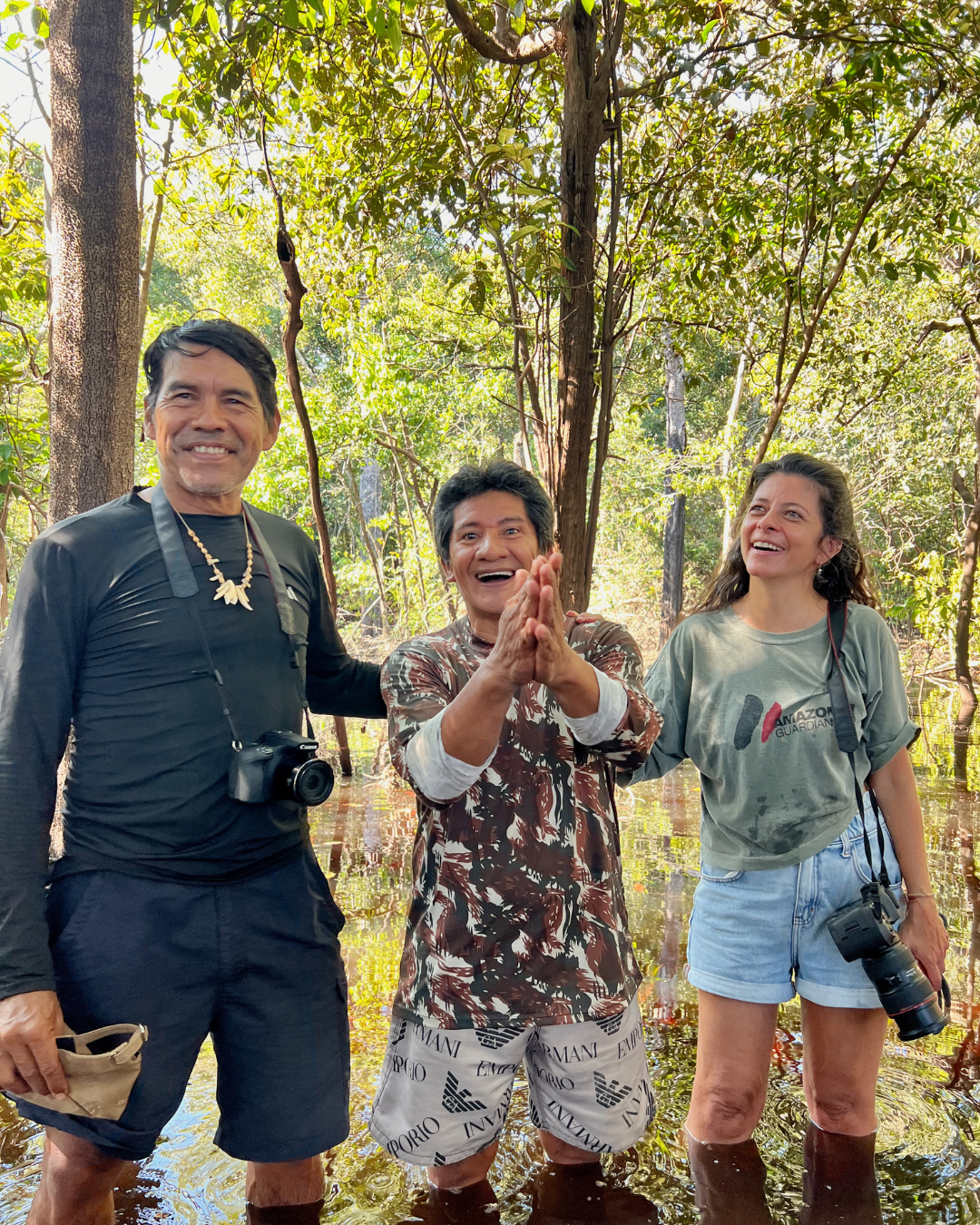
This journey financially supported and positively impacted the communities of Curitiba and Cachoeira do Jaú including the schools through the Educação Ribeirinha project, and socio-environmental projects through FAM (Fundação Almerinda Malaquias), AANA (Associação dos Artesãos de Novo Airão), and AARJ (Associação dos Artesãos do Rio Jauaperi). The turtle release activity in Cachoeira receives sponsorship for its work and released 1,300 hatchlings this year. A further 8,000 hatchlings were released in the Jauaperi region through AARJ. My sincerest gratitude to our guests who made this happen. This has been one of the happiest and rewarding journeys of my life. Thank you all.
I also highlight my personal support for the Jaguar Rivers Initiative (JRI), a huge, twenty years cross-border conservation effort aimed at restoring and protecting biodiversity throughout the Paraná River Basin in South America, covering nearly one million square miles of land across Argentina, Bolivia, Brazil, and Paraguay. The Paraná River Basin is the second largest in South America after the Amazon. Led by a coalition of four nonprofits – Rewilding Argentina, Nativa, Onçafari, and Fundacion Moisés Bertoni – the initiative focuses on connecting ecosystems through ‘river corridors’ to ensure the survival of the jaguar, other keystone species and vibrant local communities.
Finally, please see Instituto Terra – a Brazilian non-profit organization founded in 1998 by photographer Sebastião Salgado and his wife, Lélia Wanick Salgado, dedicated to environmental restoration and sustainable development in the Rio Doce Valley. Located in Aimorés, Minas Gerais, it has successfully transformed a degraded cattle ranch into a thriving, biodiversity-rich Atlantic Forest (Mata Atlântica) ecosystem.
Photographs courtesy of author
Ready to Explore the Amazon with Purpose?
Get in touch with our expert travel team today on 020 3544 8137 or connect@journeyswithpurpose.org to begin creating your dream trip.