Within the first 30 minutes of our journey to camp we saw a cheetah hunt. Our guide glimpsed a speck of golden fur sitting, poised and motionless, from some 600 metres away. We froze, scanning her eye-line until we caught site of her prey, a Thomson’s Gazelle flicking its ears, blissfully unaware of its impending predicament. As our cheetah glided gracefully through the bush in its direction we peeked some movement behind her. Four cheetah cubs, perfectly mimicking their mother, silent and alert. Inside the truck we noted how impeccably behaved they were.
The anticipation of the kill grew, each of us silently cheering for the mama and her four hungry cubs. In a flash she’s been spotted – the gazelle springs away and our cheetah lurches forward with such power that a second later the gazelle’s buoyant horns are buried in the grass.
As the cubs, no more than 6 months old, attempt to pick apart their lunch, the mother retreats to the shade of an acacia tree. She sits there for 20 minutes panting heavily, and only after she’s recovered her breath does she return to her feasting cubs and pull the gazelle into the cover beneath the tree to shelter them from greedy eyes.
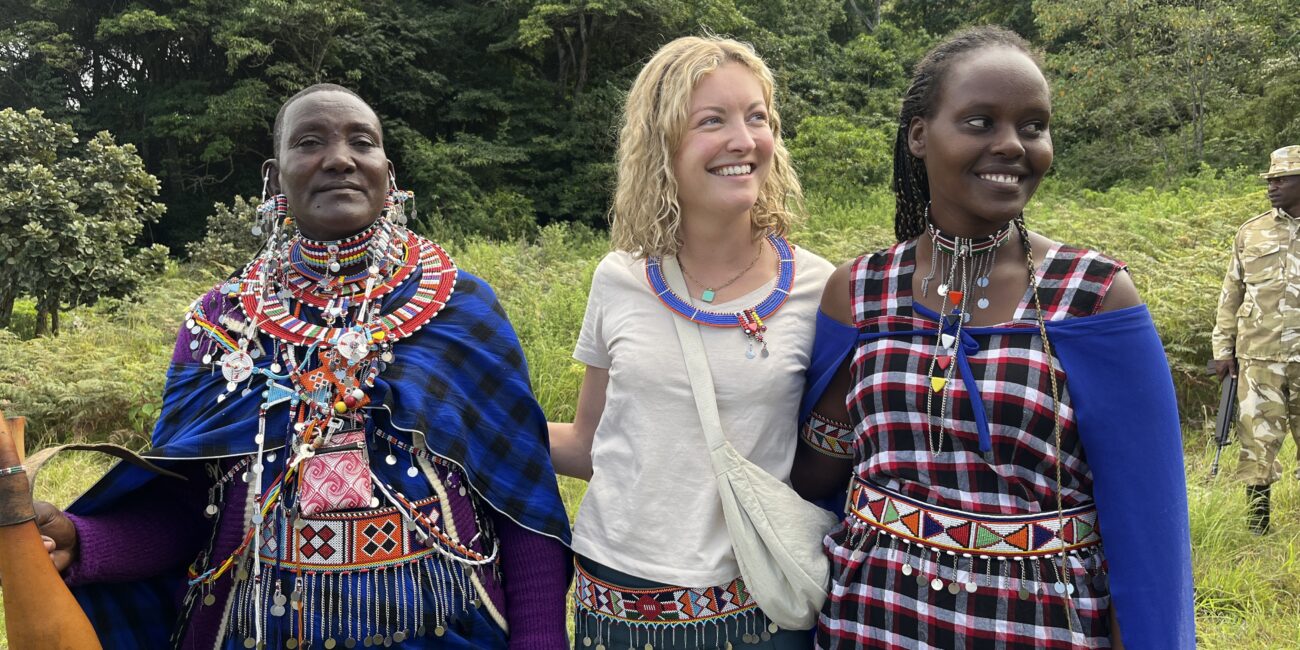
We sat there in awe, blessed by the rarity of this spectacle. The fact that we were the only car in the middle of the Maasai Mara witnessing this, made it all the more special.
Over lunch we reflected on the symbolism of a cheetah. It represents grace, power and purpose. It felt apt as the first sighting on our women’s impact journey! We’ve heard of, of variants of, the saying “reconnect to the why before you start running.” The behaviour of the mother cheetah also resonated with many, playing both the hunter and the carer.
So it was this first wildlife sighting, in the heart of the Maasai Mara, that formed a bond between the group and brought us all, as individuals, back to our place in nature.
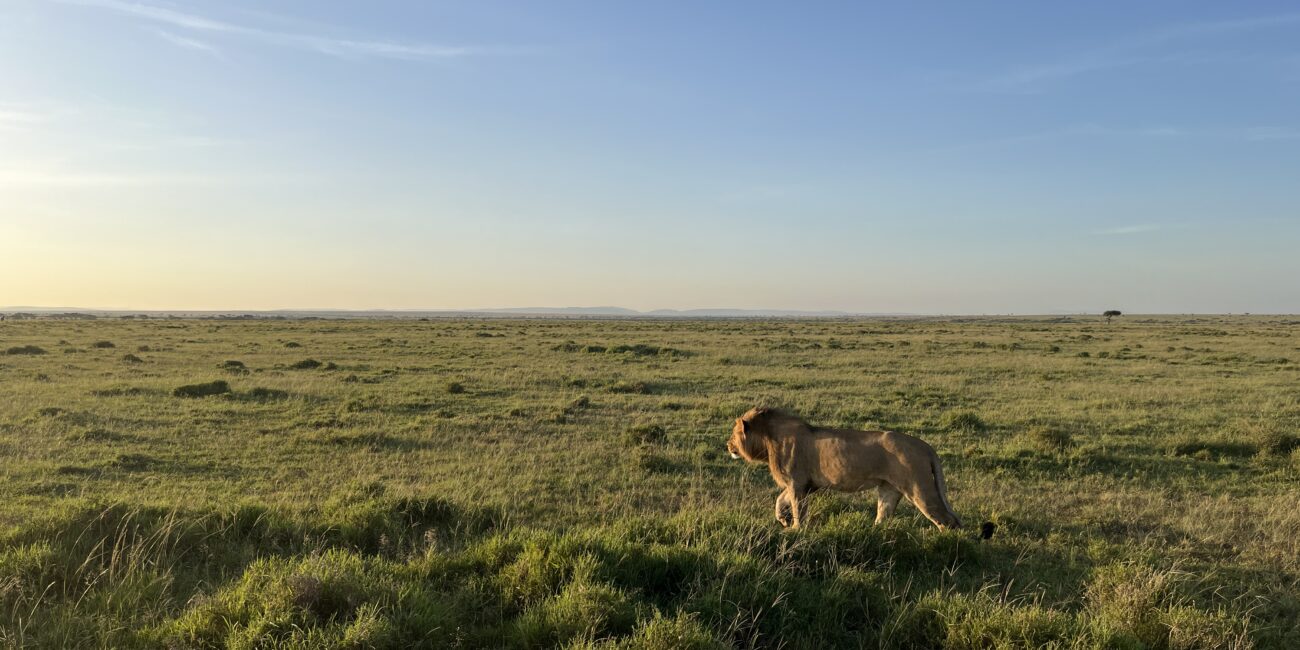
In the journey that followed, we explored four wildly different biomes across Kenya, from the Lamu archipelago in the Indian Ocean to an ancient forest in the Chyulu Hills between Tsavo West National Park and Amboseli National Park. We encountered extraordinary wildlife – including two lion kills – on sunrise game drives, seeked the indigenous wisdom on mangroves from a community of women upon which their livelihood depends, ventured into the bush on a tracking exercise with East Africa’s first all female anti poaching unit established by The Zeitz Foundation (founded by Jochen Zeitz).
Perhaps the most stimulating component was being accompanied, each day, by a remarkable conservationist. Women in Kenya who are shifting the needle on the climate crisis in their own ecosystem. Women who have said “I can make a difference”.
We heard their journey and felt their passion in their work. I learnt that local people believe pangolins are a blessing and a sign of good luck (despite being the most trafficked animal in the world), that the ocean temperature in Lamu is rising by around 1 degree a year, and that if we don’t act soon, lions could be extinct in the next 20 years.
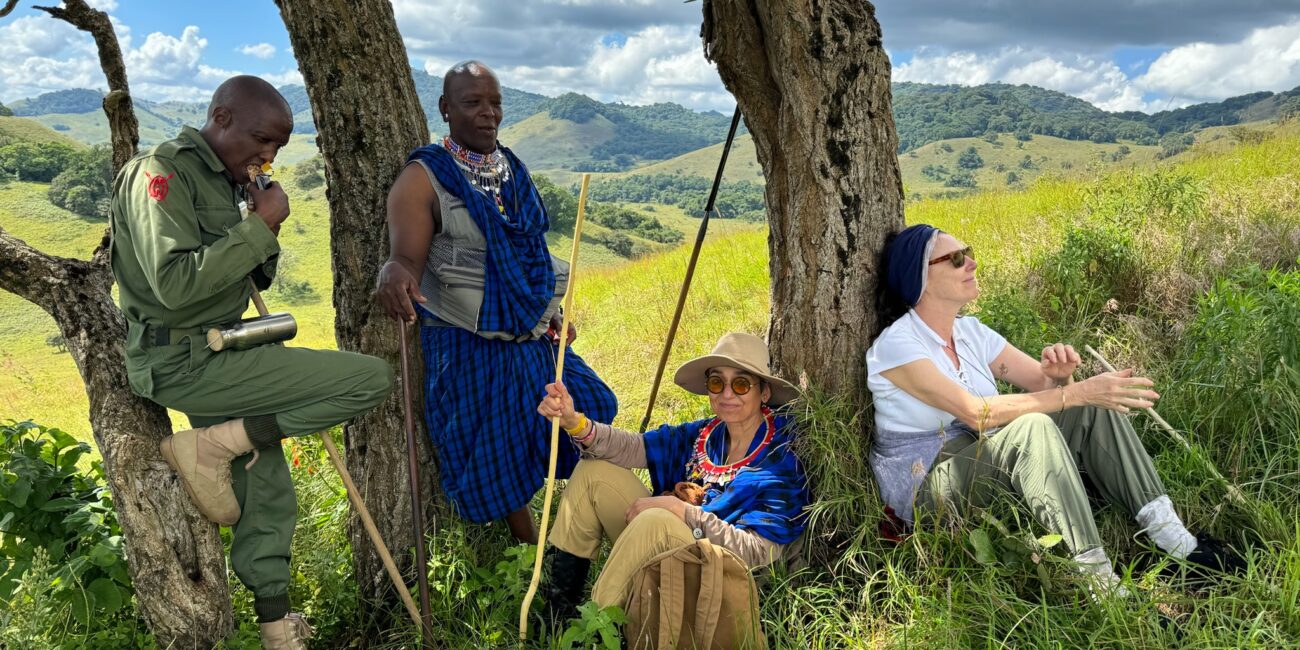
On the brighter side, we met women achieving landscape-scale impact. I met the first female driver in Samburu history. I planted a mangrove with Aisha who took the decision to forego a husband to commit to her life’s purpose. And I will never forget the strength in Veronica who, alongside eleven other girls, endured the arid heat, wildlife and night threats when traversing the mountains during paramilitary training, to qualify as a ranger to take down poachers in her region.
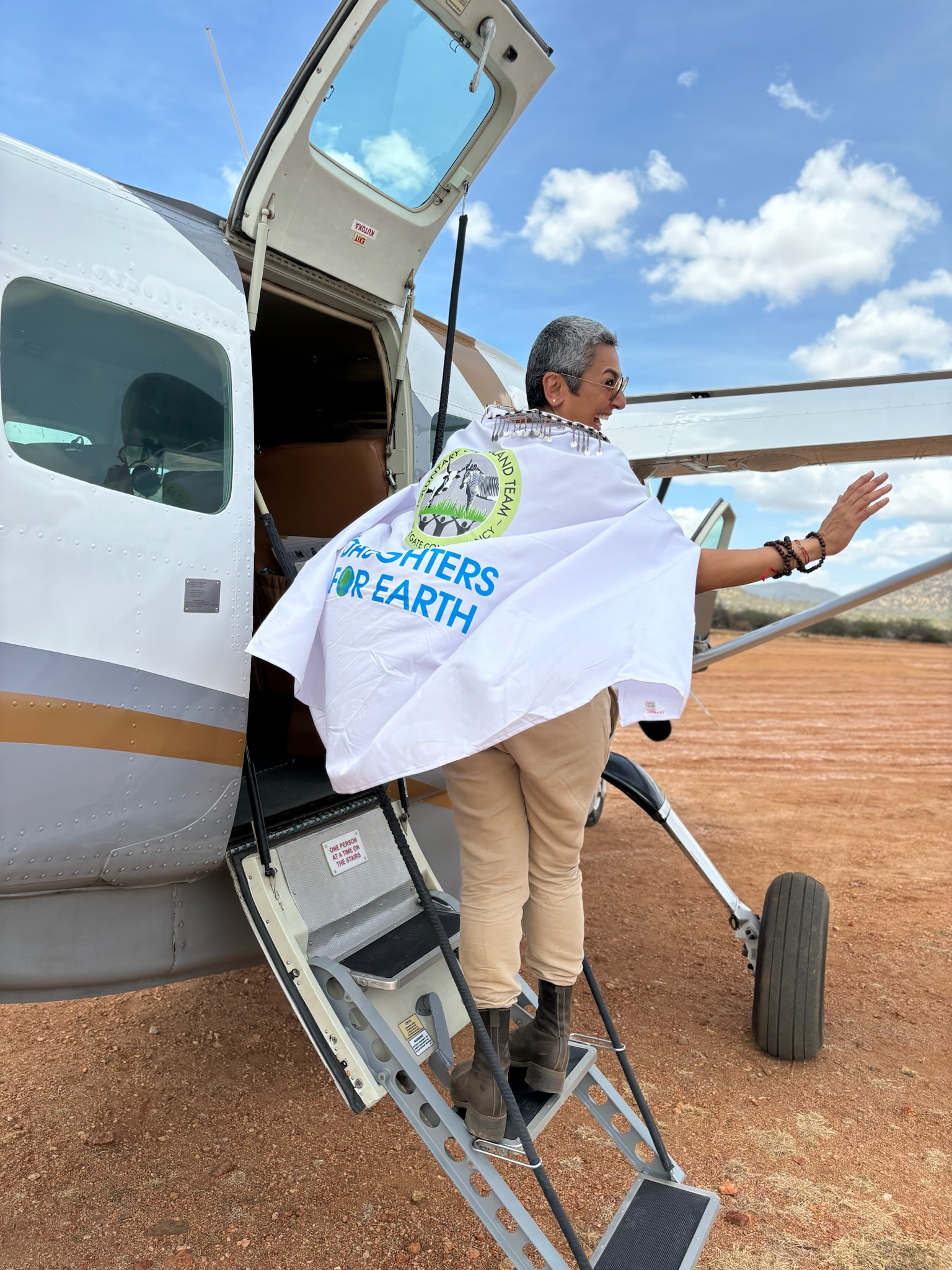
These are very few of the many personal stories we heard during our journey. Stories that don’t make the mainstream news but, to me, have a far greater impact. The journey was designed in partnership with Soul Safaris, and led by our wonderful Impact Ambassador, Taran Gehlot, pictured below.
It was in support of the grassroot projects of Daughters for Earth, an NGO co-founded by author and activist Zainab Salbi, Jody Allen and COO of Wild Lives Foundation, Rachel Rivera. Daughters for Earth is committed to raise $100 million to back over 500 projects and mobilise women and girls as protectors of the planet, as the simple Hummingbird Effect.
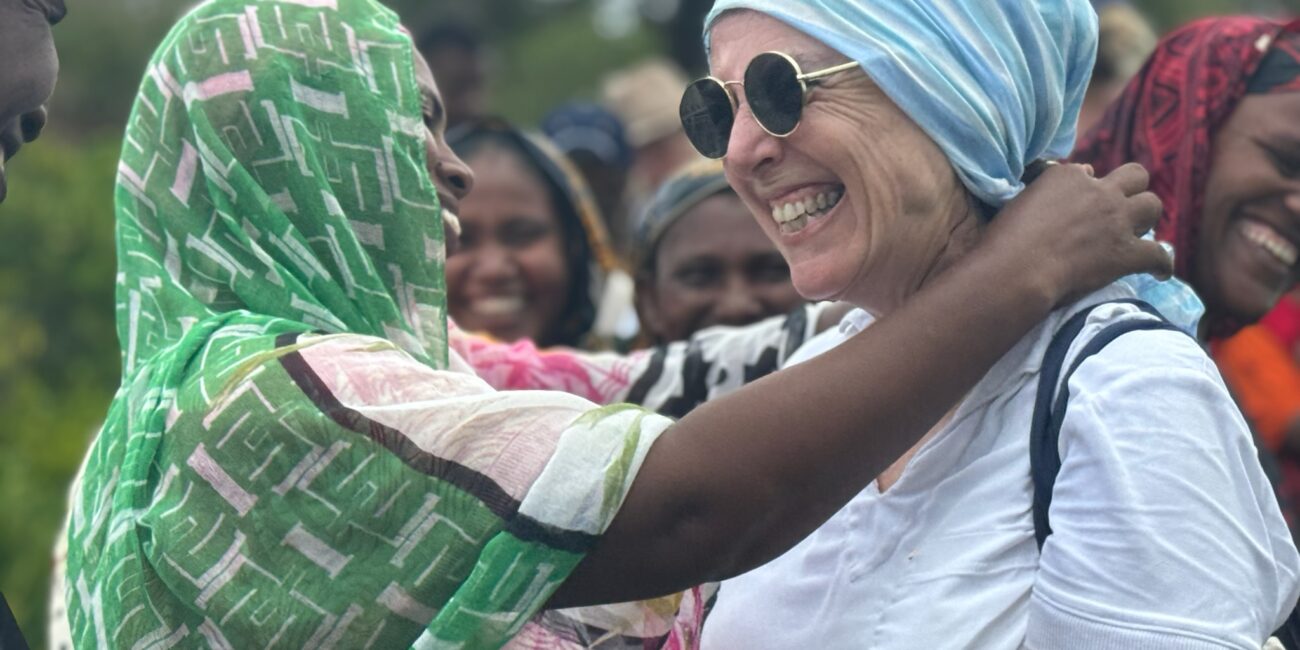
The Hummingbird Effect was inspired by the African fable, I Will Be a Hummingbird, by Wangari Maathai. The parable has a simple message, as Maathai sums it up perfectly: “We should always be like a hummingbird. I may feel insignificant, but I certainly don’t want to be like the animals watching the planet goes down the drain. I will be a hummingbird. I will do the best I can.”