Migration is one of the most fundamental expressions of life on Earth. Long before it became an icon of wildlife tourism, it was simply a necessity. The word itself comes from the Latin migrare, meaning “to move from one place to another”.
In ecological terms, migration is neither dramatic nor symbolic. It is adaptive intelligence in motion, shaped by rainfall, temperature, water availability, breeding cycles and the slow physics of survival.
Every migration tells a relational story. Between grass and grazer. Predator and prey. River and floodplain. Ocean current and plankton bloom. These movements are not performances staged for an audience, but ancient negotiations between species and landscape, refined over millennia.
Yet in the modern imagination, migration has become increasingly singular. The Great Migration of the Serengeti and Maasai Mara now dominates global attention, compressed into a narrow window of the year. For many travellers, it has become the migration. A single crossing. A single photograph. A single moment pursued alongside hundreds of others.
At Journeys With Purpose, we believe there is another way to engage with the moving world. One that steps back from compression and popularity, and instead follows nature’s quieter rhythms.
When Migration Is Reduced to a Moment
The natural world does not operate on a peak season basis. Migration is rarely punctual and never guaranteed. River crossings shift with rainfall. Herds change direction. Oceans cool or warm unpredictably. These systems and feedback loops resist certainty.
Tourism, by contrast, often seeks it. Fixed dates. Promised sightings. Predictable outcomes. The result is a narrowing of attention, where vast ecological stories are distilled into a handful of marketable weeks.
This narrowing carries consequences. Pressure on landscapes intensifies. Wildlife is surrounded. Local communities absorb seasonal extremes. And travellers themselves are often left feeling hurried, jostled and oddly disconnected from the very nature they came to experience.
The alternative is not absence, but redistribution.
The Quiet Migrations: When the Wild Moves Without an Audience
Across the world, many migrations continue along ancient pathways, largely unnoticed. These journeys may lack global branding, but they are no less profound. In many cases, they offer a far deeper understanding of how ecosystems function as generative living systems, constantly renewing and reshaping themselves through movement.
In Southern Africa, for example, July and August mark a period of extraordinary transformation. While attention turns north to East Africa, Victoria Falls reaches its most powerful state. Fed by rains that fell hundreds of kilometres upstream months earlier, the Zambezi River surges over its basalt edge, sending plumes of spray high into the air and saturating the surrounding rainforest in mist.
This is not a static landmark, but a seasonal system in motion. A visible reminder that water moves on delayed time, that cause and effect in nature are rarely immediate.
Rather than passing through on a checklist, this moment invites a different approach. From the Falls, travellers can move into the wild interiors of Zimbabwe or Zambia on walking safaris, where wildlife is encountered at human pace. Tracking animals on foot requires attentiveness and humility. You learn to read tracks, wind and silence. The bush reveals itself gradually, not as a sequence of sightings, but as a web of relationships.
Then, as the dry season loosens its grip and the first rains approach, another migration unfolds almost invisibly to the wider world.
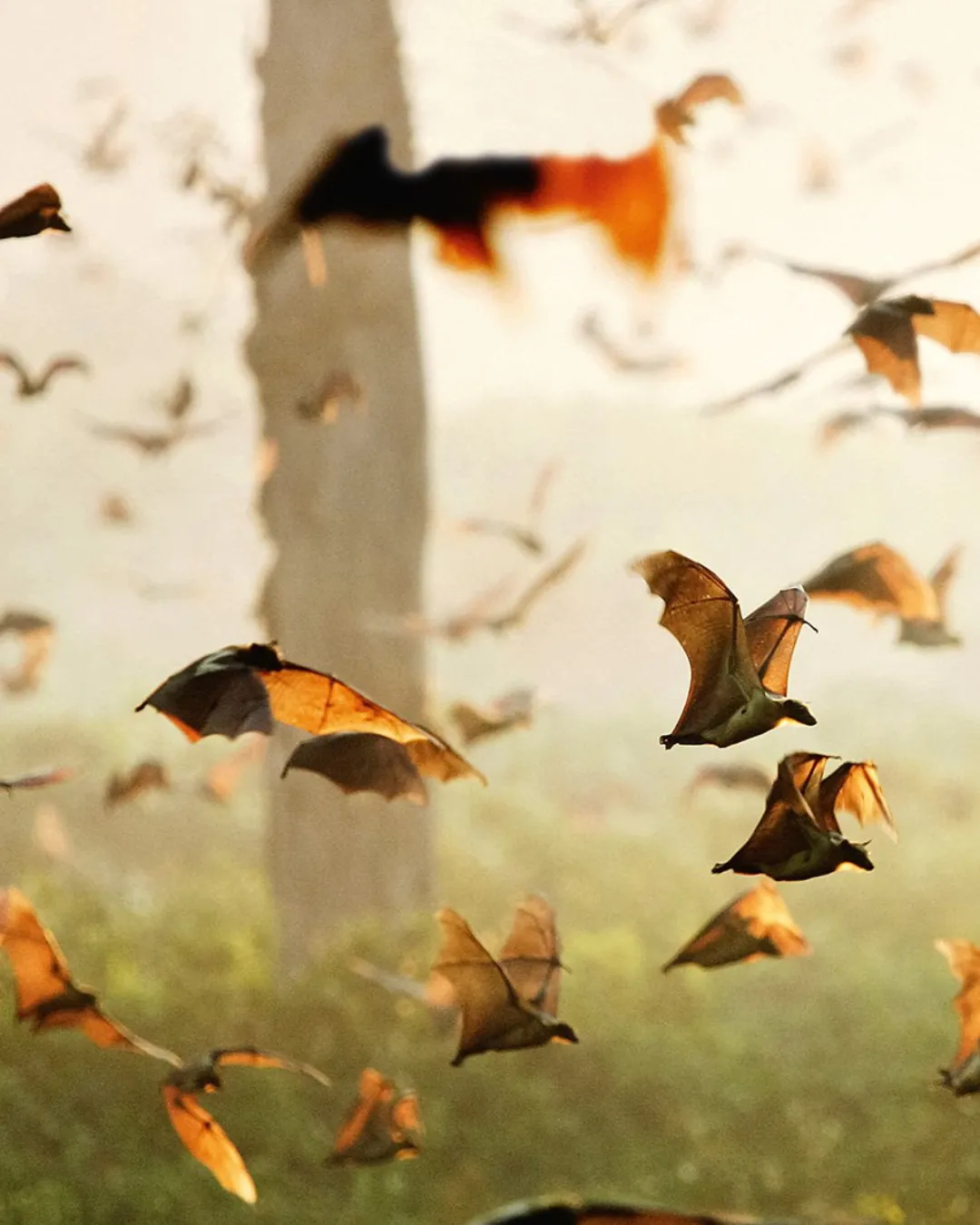
Between October and December, Kasanka National Park in Zambia hosts one of the largest mammal migrations on the planet. Millions of straw-coloured fruit bats arrive from across Central Africa to feed on seasonal fruiting trees. At dawn and dusk, the sky fills. Sound and movement overwhelm the senses. It is chaotic, visceral and fleeting.
And yet, it happens every year, with little fanfare.
Water Writes the Story
In some places, migration is inseparable from water itself. Nowhere is this clearer than in Botswana.
Each year, floodwaters from the Angolan highlands travel slowly southwards, reaching the Okavango Delta months after the rains have fallen. Between May and October, the Delta expands dramatically, transforming dry grasslands into a mosaic of channels, islands and lagoons.
This delayed flood reshapes the entire ecosystem. Wildlife converges. Predators follow prey. Birds arrive in extraordinary numbers. But there is no single moment to chase.
Here, safari is not about arrival times but about movement through space. By mokoro, drifting silently through papyrus-lined channels. On foot, following ancient elephant paths pressed deep into sand. By boat, watching the Delta breathe and shift.
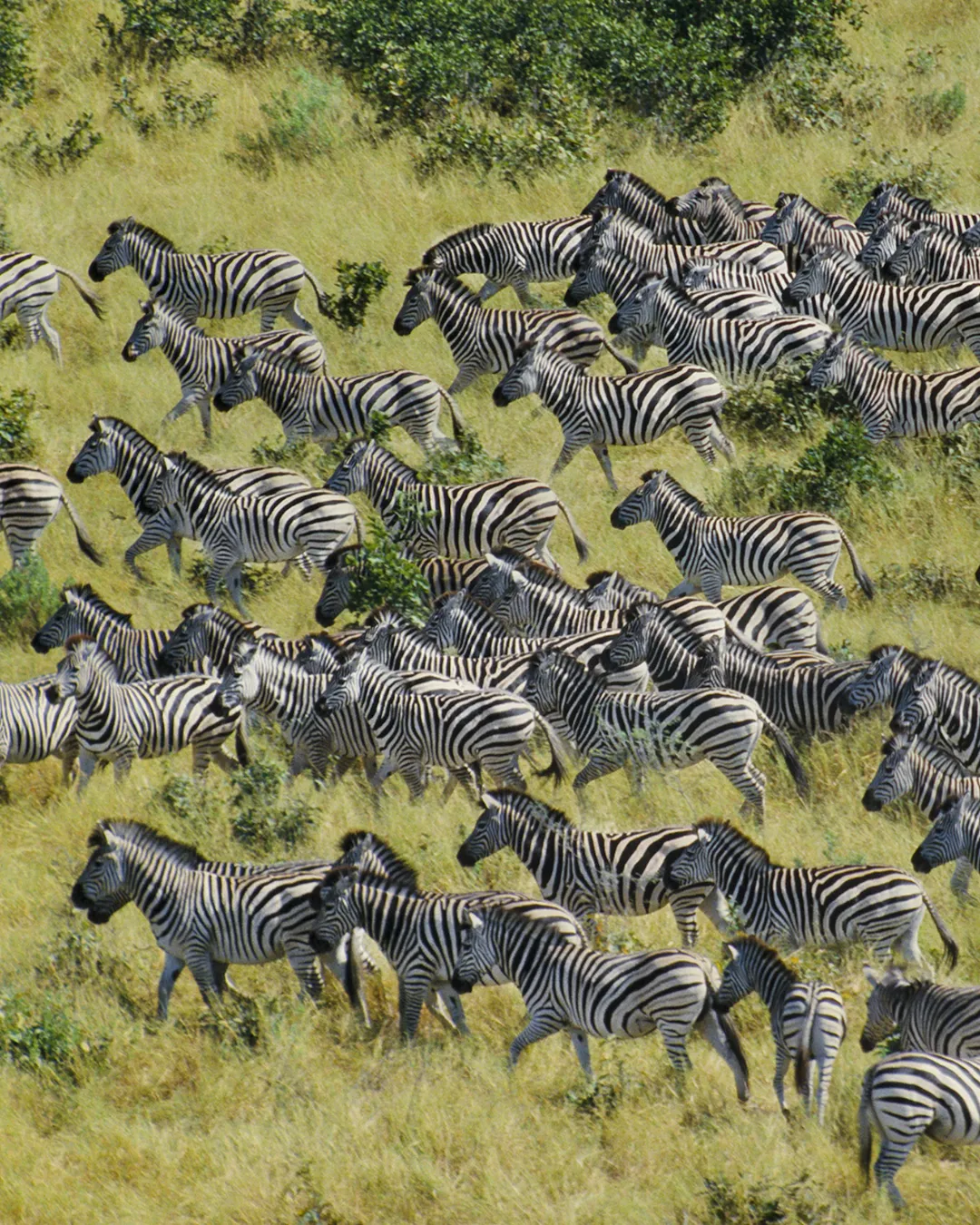
Beyond the Delta, Botswana hosts one of Africa’s least-known yet most significant migrations. Tens of thousands of zebras move between the Chobe floodplains, the Okavango and the Makgadikgadi and Nxai Pans. They travel vast distances in response to rain and mineral-rich grasses, southbound in the early wet season, northbound as water recedes.
This is Africa’s longest land migration. And it unfolds almost entirely without crowds.
When the Ocean Moves
Migration does not stop at the shoreline.
Along southern Africa’s coast, the sea follows its own seasonal intelligence. From June to November, southern right whales arrive in the sheltered bays around Hermanus to breed and calve. They linger close to shore, often visible from clifftop paths, their presence calm and unhurried.
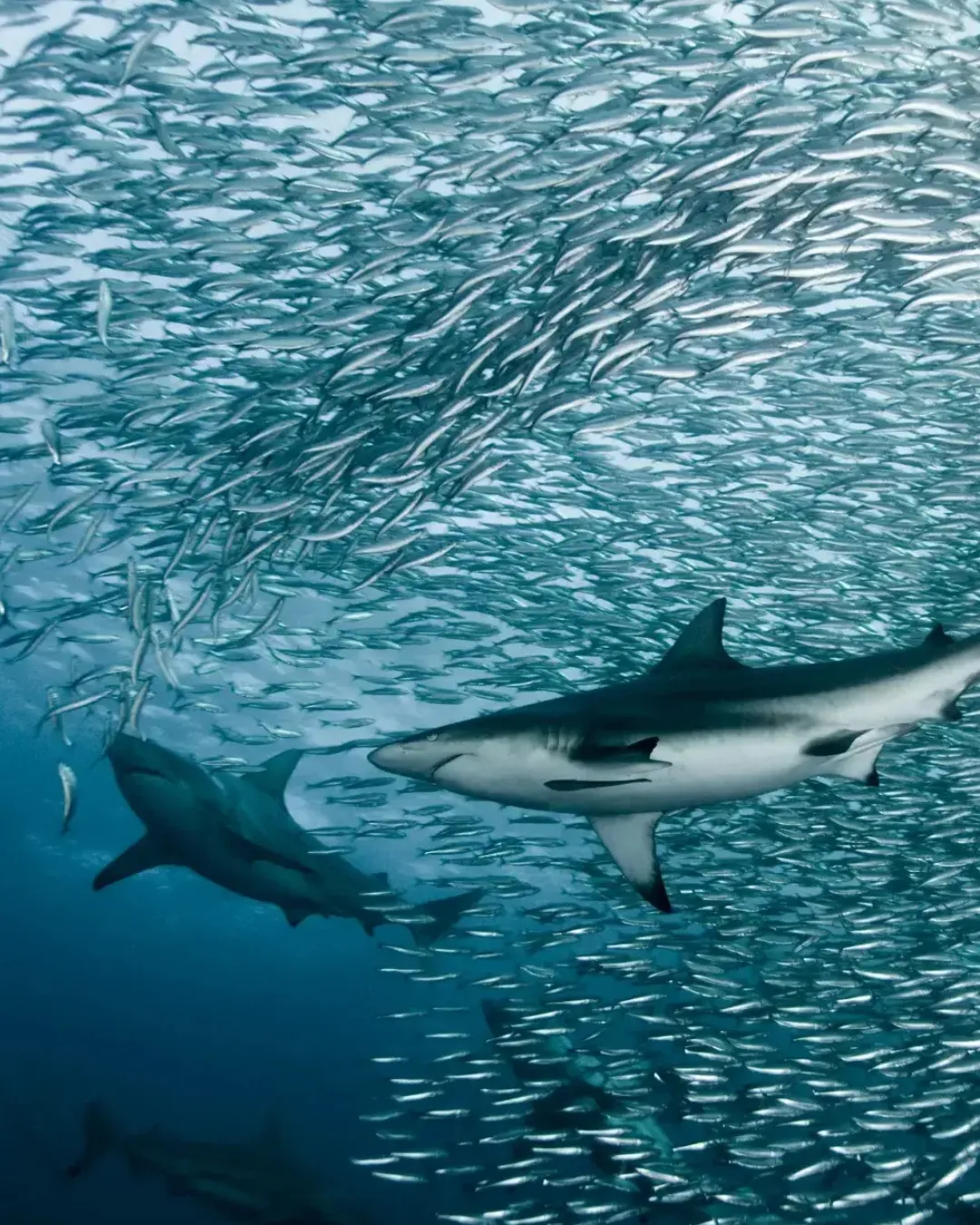
Earlier in the winter, between May and July, the Sardine Run sweeps along South Africa’s east coast. Millions of sardines move north in cold currents, triggering a cascade of predation involving dolphins, sharks, gannets and whales. It is one of the most complex and unpredictable marine events on Earth, governed entirely by ocean conditions rather than human expectation.
Further north, humpback whales migrate to the protected waters of Île Sainte-Marie off Madagascar between June and September, where they give birth and nurse their calves. In the Indian Ocean, whale sharks begin to appear off Mozambique and Tanzania between October and March, following plankton blooms along the coast.
Following Seasons, Not Crowds
Birds, too, move according to subtle cues. Flamingos gather in vast numbers across the alkaline lakes of Kenya and Tanzania, particularly Nakuru and Bogoria, drawn by algae blooms that shift with rainfall, evaporation and salinity. Their movements are fluid rather than fixed, responding continuously to changing conditions.
In Mexico, monarch butterflies travel thousands of kilometres from North America to overwinter in high-altitude oyamel forests, clustering by the millions in a living, breathing canopy. In the Tibetan Plateau, chiru antelope migrate across some of the harshest terrain on Earth to reach calving grounds, crossing highways, rivers and mountain passes in an epic act of collective endurance.
In the Arctic, caribou herds in Canada and Alaska move in vast seasonal circuits, shaping tundra ecosystems as they go. And closer to home, starlings gather in murmuration over Somerset’s wetlands each winter, forming shifting black clouds that respond instantly to predators, wind and light. Migration, here, becomes choreography: a visible intelligence shared between thousands of individuals at once.
What unites all of these migrations is not display alone, but purpose. They are shaped by ecological necessity rather than tourism demand.
Our Africa expert, Lottie Cameron on following natural cycles and travelling with intention:
“From my adventures on the continent, experiencing the quieter rhythms of nature is truly transformative. Watching wildlife move in accordance with the land and seasons, not for tourists, but for survival, gave me a profound appreciation for the interconnectedness of these ecosystems. From the Okavango Delta to Uganda’s mighty Bwindi National Park, every moment felt alive and purposeful. It’s a reminder that the most meaningful journeys come from observing nature on its own terms, with patience and curiosity.“
A Different Way to Move
The idea of moving beyond the Great Migration is not about rejecting wonder. It is about expanding it. About redistributing attention across landscapes and seasons that still operate beyond the pressure of peak demand.
By following nature’s quieter rhythms, we reduce pressure on heavily visited ecosystems. We support a broader range of conservation efforts and local communities. And we experience the wild not as a moment captured, but as a living system in motion.
Migration, in its truest sense, is movement with intent, guided by forces larger than ourselves.
Perhaps the most meaningful journeys are those that allow us to move in the same way.
Interested in embarking on a regenerative adventure?
Get in touch with our expert travel team today on 020 3544 8137 or connect@journeyswithpurpose.org to begin creating your dream trip.