Should one desire
to follow a path of learning
even though busy,
we can always find time to study
even in this world of ours.
Waka Poem of Emperor Meiji, 1906
Japan remains the most beguiling and enigmatic country I’ve ever visited, and despite the pace of the modern world it’s refreshingly unchanged in so many ways from my first visit over 20 years ago.
I find Japan to have striking and complementary dichotomies – concepts that appear opposite but instead balance and complete each other. Rather than contradictions, they function as harmonising dualities; tradition and modernity, formality and creativity, discipline and kindness, societal cohesion and individual expression, Shinto and Buddhism, and so on. It is wonderful to experience this mysterium fascinans.
One can never stop learning, and experiencing other countries and cultures is an extraordinary privilege. To this end, our quest was to journey to the northern island of Hokkaido in search of the world-famous and world-class Japanese powder snow, or ‘Japow’.
However, before we travelled to Hokkaido our group arrived in Tokyo where we spent three days and nights immersing ourselves in one of the world’s great cities.

We visited the Meiji Jingu Shinto shrine, dedicated to Emperor Meiji and Empress Shoken. Completed in 1920, it honours their role in modernizing Japan during the Meiji era. The Meiji Period (1868–1912) marked Japan’s transformation from a feudal society into a modern industrial nation. Under Emperor Meiji, the government centralized power, abolished the samurai class, modernized the military, economy, and education system, and adopted Western technologies and institutions establishing Japan as a major global power. The shrine is surrounded by a large, man-made forest of over 100,000 trees gathered from across Japan over the years. This forest was carefully designed to grow into a natural, sacred woodland, creating a peaceful spiritual space in the middle of the city.
It’s fascinating to learn more about Shinto – ‘the way of the gods’ – the indigenous, animistic, and polytheistic faith of Japan of over 2,500 years old, deeply rooted in reverence for nature and ancestor worship. Shinto remains pre-eminent in Japan.
In turn, Japanese Buddhism, introduced from China and Korea in the 6th century, is deeply syncretic and includes significant elements of both Confucianism (an ethical framework for everyday life and governance) and Taoism (harmony with nature), which evolved further by blending with native Shinto beliefs.
To understand this better, we visited the Zojoji Buddhist Temple, of the Jodo sect. The sect was founded in 1393, and moved to this site in 1598 where it became the family temple of the Tokugawa shoguns during the Edo period. Located near Tokyo Tower, Zojoji is known for its historic gates, mausoleums of Tokugawa shoguns, and rows of small Jizō statues dedicated to children. It remains an active place of worship and an important cultural landmark.
The Meiji Period marked the end of the Edo shogunate, and so it was fascinating to contrast both these landmarks and their historical significance.
A brief note on the Tokugawa shoguns, the military rulers of Japan who led the country during the Edo period (1603–1868). They belonged to the Tokugawa family, founded by Tokugawa Ieyasu, who became shogun in 1603. Although the emperor remained the official ruler, the shogun held the real political power. The Tokugawa shoguns enforced a strict class system, and limited foreign contact through a policy of isolation called sakoku. Samurai were the warrior class of feudal Japan who served the shoguns. There is an interesting article here – ‘Fabled knights of old’: The true story of Japan’s mysterious samurai – in conjunction with the British Museum’s ‘Samurai’ exhibition, available till 4 May 2026.
As I grew up I was fascinated by the brilliant films of Akira Kurosawa, including Seven Samurai (upon which The Magnificent Seven western is based), Yojimbo (which inspired Sergio Leone’s A Fistful of Dollars), Throne of Blood, Kagemusha and Ran – of which tell tales of the shoguns and samurai, often with references to Shakespeare (Macbeth and King Lear). Also the 1980 TV series, Shōgun, based on James Clavell’s 1975 magnificent and seminal novel of the same name. Remade in 2024, the new Shōgun series is evidence of our persistent interest in this major piece of history and culture.
Japan is world renowned for its great gardens and in Tokyo exemplars include the Shinjuku Gyoen National Garden – 144 acres of Japanese traditional, formal French, and landscape English-style gardens – and Hamarikyu Gardens, with the Nakajima teahouse.
On our second evening we visited the Shinjuku Sumo Club – an immensely informative and enjoyable experience, with two professional wrestlers Hiro and Sugi. Towards the end, for those brave enough there was also an opportunity to enter the dohyō with Hiro and Sugi and test their sumo skills. A wonderful evening of learning, theatre and fun.
Interspersed amongst these we travelled west and east on Tokyo’s rail and subways systems, strolled amongst shops and arcades, walked the Shibuya Scramble Crossing (the world’s busiest pedestrian intersection), and joined sake, whisky and coffee tastings. Tsukiji fish market was also great entertainment. Thank you to our patient guide, Grant, whose calm pace kept us on the move with ease, and answered our many questions with great erudition and depth borne of a passion and years of application and complete immersion in Japan.
As regards gastronomy, it is pointless to add to what is already universally known – unimaginably exceptional food at every turn.
We finished our time in Tokyo with the teamLab Borderless interactive show in the Azabudai Hills, a mesmeric blend of light, sound and other senses. Unmissable.
On to Hokkaido, the northernmost of Japan’s four main islands and the country’s second largest after Honshu.
Hokkaido is famous for its heavy snowfall, making Japan reputedly the ‘world’s snowiest country’. From this comes the term ‘Japow’ – a blend of ‘Japan’ and ‘powder snow’ – referring to the exceptionally light, dry, and deep powder snow found here. It’s renowned globally among skiers and snowboarders for creating a unique, ‘floating on a cloud’ sensation.
Why does Japan, and especially Hokkaido, get such good powder snow? Vast cold air masses move from Siberia south-east across the Sea of Japan where they pick up moisture over the relatively warmer water. When they hit Japan’s mountains, the air rises and dumps huge amounts of dry snow. Every day we spent in Niseko, it snowed heavily with wonderfully light and powdery flakes. An exceptional example of why it’s so important to cherish and protect our climate systems.
We flew from Tokyo to Sapporo, Hokkaido’s capital and headed for the town of Niseko, which has become a world-famous winter and ski destination. Whilst Niseko has experienced skiing over the past 100 years, it’s during the last 10-15 years only that it’s significantly developed. We stayed at the centrally located Setsu Niseko, the proud winner of ‘Japan’s Best Ski Hotel’ 2025.
We spent the next week skiing on and off piste in the powder snow of the core Niseko ski areas around the base of Mount Annupuri – the Village, Grand Hirafu, Hanazono, and Annupuri – all within easy reach by car and bus. A little further away, approximately 45 minutes by car, is Rusutsu, with fabulous views and tree skiing through perfectly spaced birch forests – my personal favourite. In addition to the on and off piste skiing, there are also opportunities for backcountry access through controlled ‘gates’, of which we took full advantage. All in the care and direction of our wonderful guides, Carmen and Oscar. Thank you both.
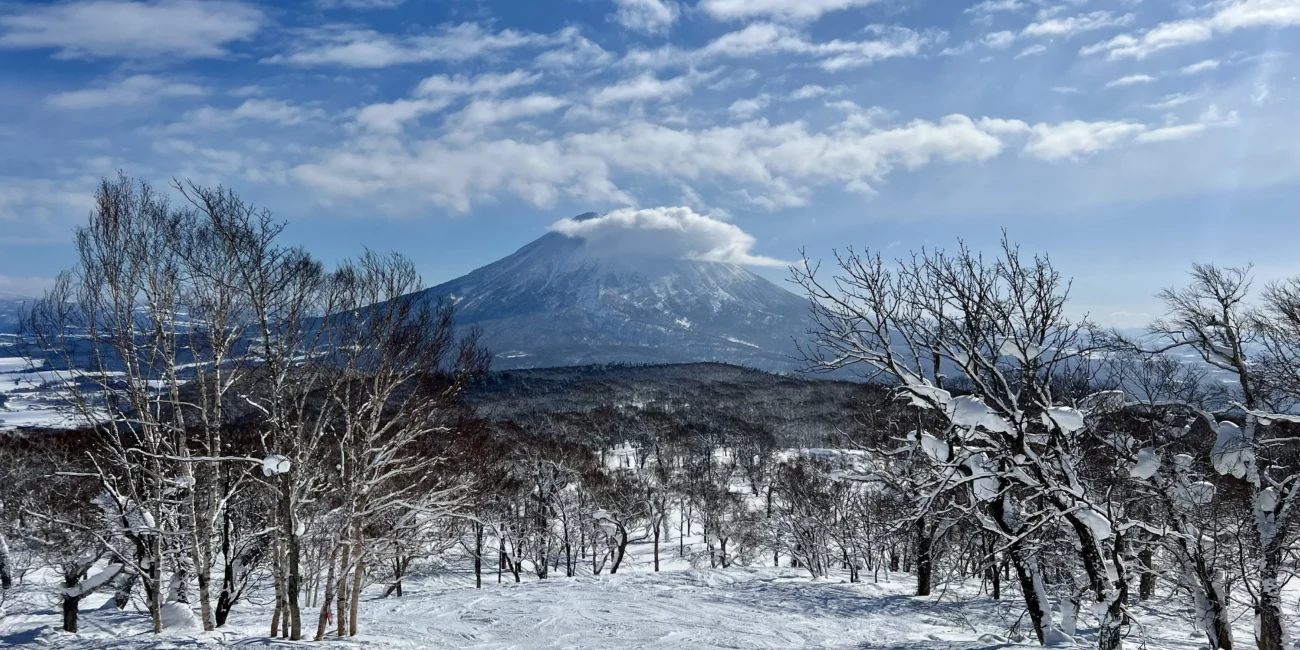
Without doubt, Niseko and the surrounding areas have the prettiest and most striking winter landscapes of anywhere I’ve been in the world. Winter around Niseko feels quiet, vast, and almost dreamlike — a landscape shaped by constant snowfall and volcanic terrain, with forests of birch and pine, and traditional houses and barns peeking out of the huge snow drifts. On calm days, everything feels soft and muted; sounds are absorbed by layers of powder, creating an almost surreal stillness. The trees are a defining feature. Birch forests become sculptural — branches coated in thick, pillowy snow. After heavy storms, the trees look rounded and exaggerated, like something from a winter painting. And all the while snow falls, or on a sunny day ice crystals twinkle and shimmer in the air around you, and the forests sparkle.
And in the midst of all this is the geological and aesthetic masterpiece – Mount Yōtei – a perfectly conical stratovolcano, rising 1,898 meters within Shikotsu-Toya National Park. It’s nicknamed ‘Ezo Fuji’ for its striking resemblance to Mount Fuji. The mountain dominates the Niseko region and is a centrepiece of both ecological and tourism interest in Hokkaido.
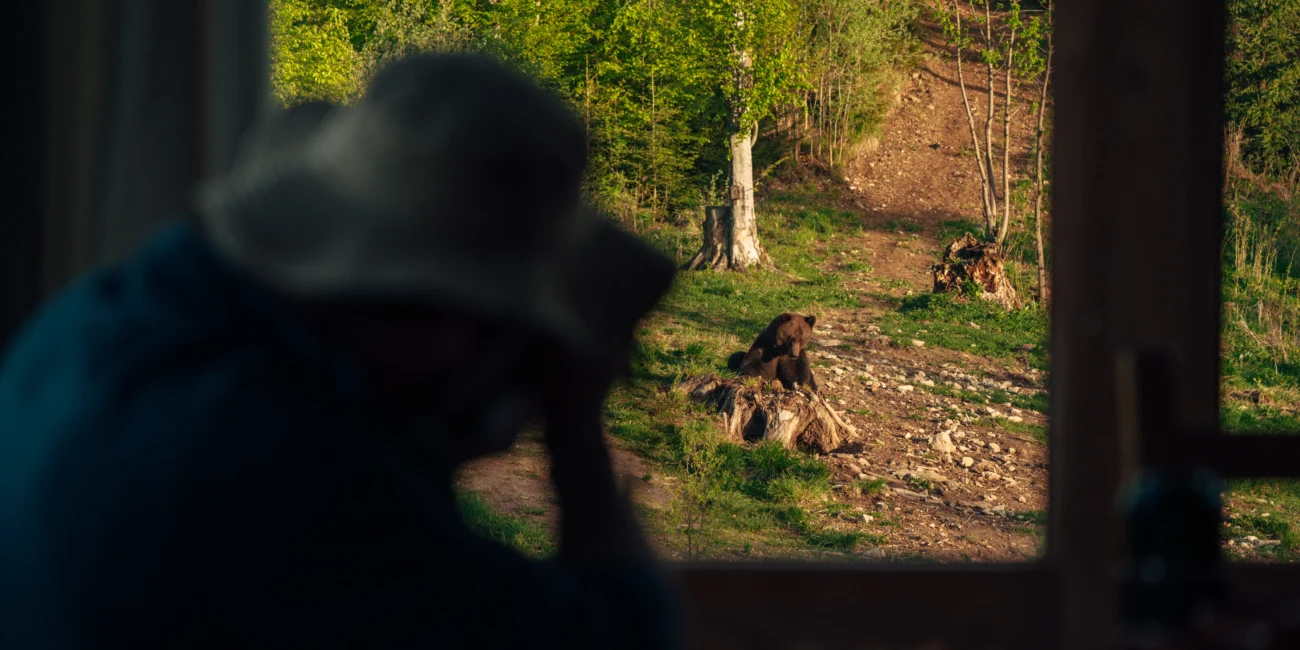
Nature is an elemental aspect of Japan, and particularly Hokkaido. Whilst Hokkaido is about 20% of Japan’s land area it has only about 5% of its population, and therefore less crowded. Overall it’s more rural and rugged, with nature experiences a major reason to visit – National Parks, volcanoes, hot springs (onsen), lakes, and some of Japan’s most distinctive and cold-adapted wildlife that includes Hokkaido brown bears, red-crested cranes, red foxes, Ezo red squirrels, Ezo Fukuros (Ural owls), Ezo sika deer, the world’s largest raptor – the owashi eagle (Stellar’s sea eagle), and the largest living species of owl, Blakiston’s fish owl. Along the coasts are seals, sea lions, dolphins, seasonal whale species and a wonderful array of fish species including crab, sea urchin and salmon. Hokkaido is home to seven National Parks, including the largest – Daisetsuzan – a region of primaeval forests and big peaks including the highest, Asahidake at 7,513 ft (2,290 m). Magnificent mountains, waterfalls, dense forests, active volcanoes, emerald-blue oceans and endemic wildlife and biodiversity inspire a return.
As with all developing nations though there are pressures on the natural environment and to this extent, it’s worth reading two articles which share further information on Rewilding in Japan – James Whitlow Delano’s article here and Daniel Martin Eckhart’s article here. Fascinating and actionable reading.
Culturally, Hokkaido is incredibly rich. The traditional people are the Ainu, an indigenous group with a distinct culture, language, and history that predates the arrival of ethnic Japanese settlers. They are believed to have descended from the Jomon people, Japan’s ancient hunter-gatherers, and possibly other northern populations inhabiting Hokkaido, the Kuril Islands, and Sakhalin. It was not until the 15th century that ethnic Japanese began settling in southern Hokkaido for trade, fishing, and land, and not until the late 19th century after the Meiji government formally annexed Hokkaido that the Ainu were considered Japanese subjects.
In 2008, Japan recognised the Ainu as indigenous people and efforts continue to preserve their original culture, with a history deeply tied to the land, rivers, and wildlife of the island. Ainu practice an animist religion, believing that kamuy (spirits) inhabit animals, plants, and natural features, and there are a series of rituals, emblems and crafts that accompany these traditions.
Highly recommended is the photography of Aaron Jamiseon, who has an wonderful portfolio documenting the beauty of Hokkaido. Also recommended is the film Golden Kamuy and the series of the same name – Golden Kamuy – The Hunt of Prisoners in Hokkaido. Whilst fiction, the settings of Hokkaido in winter are beautiful, and the Ainu and Imperial Japan under Emperor Meiji in the Russo-Japanese war are based on this historical period.
Our magnificent journey to Hokkaido fittingly came to an end centred on food. For lunch, a Michelin-recognised pizzeria, Pizza Studio Tamaki (PST), with a hugely engaging and snow-ball throwing manager, served the best pizzas I can remember. And for our grand finale the great fortune to have dinner at the nigh on impossible-to-book ‘Raku-Ichi’, famously described by Anthony Bourdain as the ‘best soba of my life’. A gastronomic privilege.
A final word – on Matcha. Matcha is both a cultural icon and a versatile ingredient, celebrated in Japan for centuries. A finely powdered green tea made from specially grown and processed Camellia sinensis leaves, it is consumed by whisking the powder directly into hot water, so you drink the whole leaf rather than an infusion. It has a rich, creamy, slightly bitter, and umami-packed flavour, and comes with significant health benefits – it’s high in antioxidants (especially catechins), and contains L-theanine, which promotes calm alertness – a gentle caffeine boost without the jitters of coffee. It’s also mixed with a variety of other foods, cakes and sweets, so fittingly I spent my last Yen at the airport on my favourite – Matcha KitKats!
My immeasurable gratitude to the overwhelmingly kind and generous Richard Chalmers for making this magic happen. And to our incredible multi-gen group of ten – filled with laughter, spirit and love. Thank you special friends.
Photographs courtesy of author, and most particularly the talented Harry Spawforth.
Snowflakes are falling,
white is all around your feet,
diamonds from the sky.
Haiku poem
Interested in a rewilding journey?
Get in touch with our expert travel team today on 020 3544 8137 or connect@journeyswithpurpose.org to begin creating your dream trip.