Welcome to the Continent's Tallest Mountain
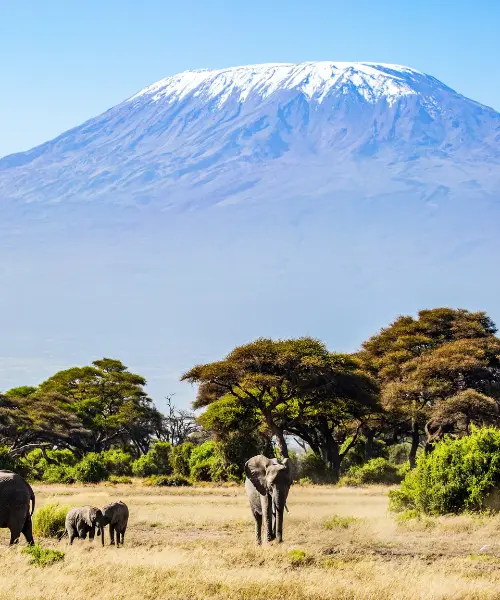
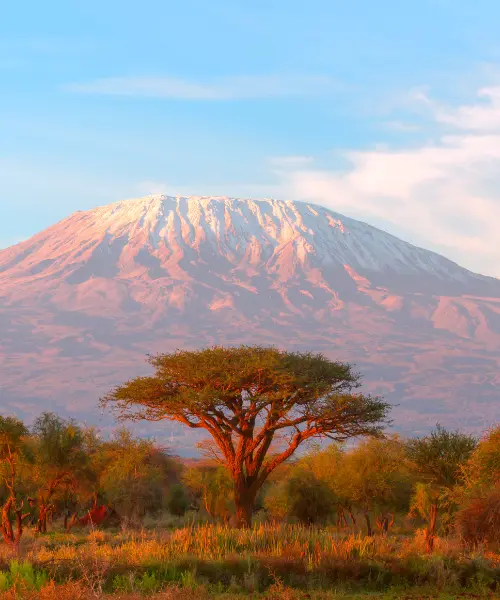
Standing solo above the golden grass sea of the surrounding savannah, Mount Kilimanjaro is as much a spectacular geographical phenomenon as it is an icon of African magnificence.
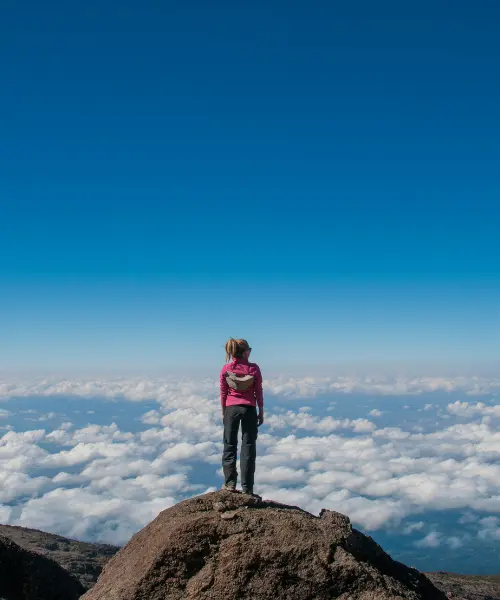
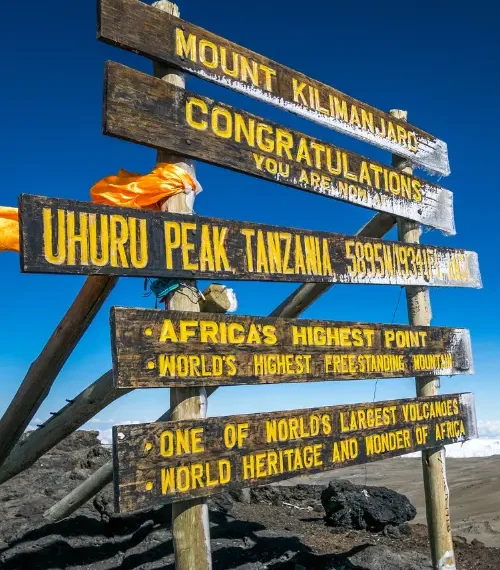
Reaching a staggering 5,895m above sea level at its peak, Kilimanjaro holds the accolade of being the world’s tallest free standing mountain and a popular hiking route in Africa. With this comes the unique distinction of being visible from over 100 kilometres away on a clear day. Add the rich wilderness of East Africa’s national parks to the foreground and you are treated to some of the most spectacular scenery found across the entire planet.
Mount Kilimanjaro Safari Destinations
Eastern Africa is home to perhaps the greatest selection of safari locations on the planet, many of which play an important role in the region’s conservation and regenerative travel movement Some of which are blessed with Mount Kilimanjaro’s imposing outline gracing the horizon – a lone-standing bastion that seems to overlook the plethora of species that exist under its long-reaching gaze.
Here are a selection of the best national parks in East Africa that combine safari wildlife with the continent’s most iconic landmark painting the horizon:
Arusha National Park
An otherworldly landscape of vast grasslands, dormant volcanoes and glistening lakes, Arusha National Park is the quintessential Mount Kilimanjaro safari destination. A must visit for any luxury holiday to Tanzania, this national park is known not only for its views of Africa’s most renowned mountain, but also for being home to the nation’s second highest mountain, Mount Meru.
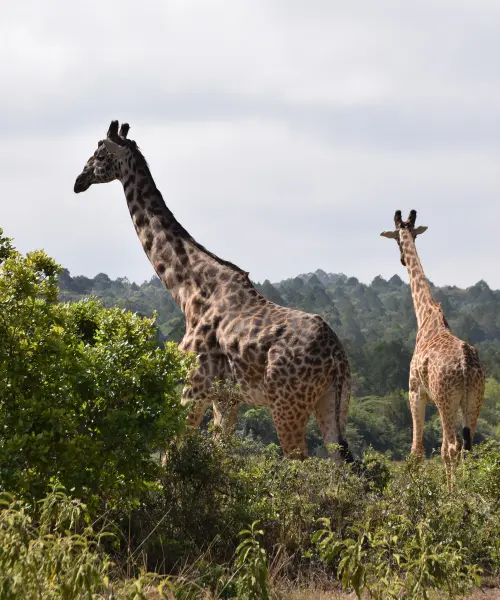
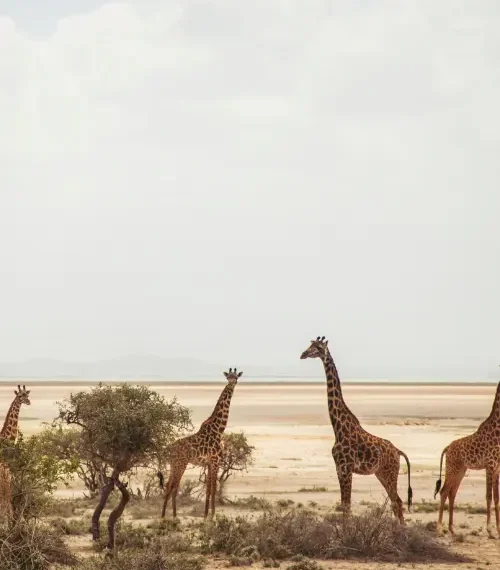
Arusha is home to a bountiful variety of wildlife, however you should not expect the same premium game-viewing opportunities offered up by the region’s more renowned safari spots. Nonetheless, the opportunity to see grazing elephants, galloping giraffes or the occasional lazing leopard in front of some of the clearest views of Mount Kilimanjaro is an image that you will never forget.
Accommodation in Arusha
Legendary Lodge
Legendary Lodge in Arusha is an accommodation option that undeniably lives up to its name. Sat among a lush tropical garden, you can see Mount Meru from the comfort of your split level cottage, unwinding with a cup of steaming hot coffee harvested from the local working coffee farm in which this lodge is situated. Complete with a steam room, sauna, gym and swimming pool, Legendary Lodge is the perfect place to relax between safari drives in Arusha National Park.
Amboseli National Park
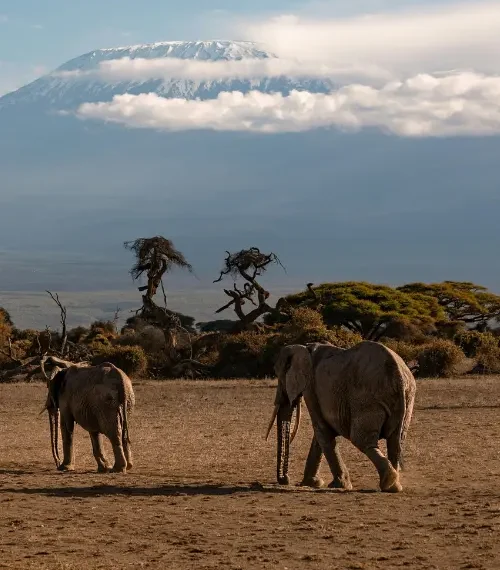
Crossing the border into Kenya, Amboseli National Park offers you some of the greatest wildlife spectacles that Africa has to offer and showcases the importance of sustainable tourism in Kenya. Venturing through the park, you will have the opportunity to explore a wide range of different ecosystems, from the arid bed of Amboseli Lake to the swaying golden grasses of the savannah to the luscious greenery of the dense woodlands. With this variety of environments comes a glorious array of inhabitants, and some of the best views of Mount Kilimanjaro.
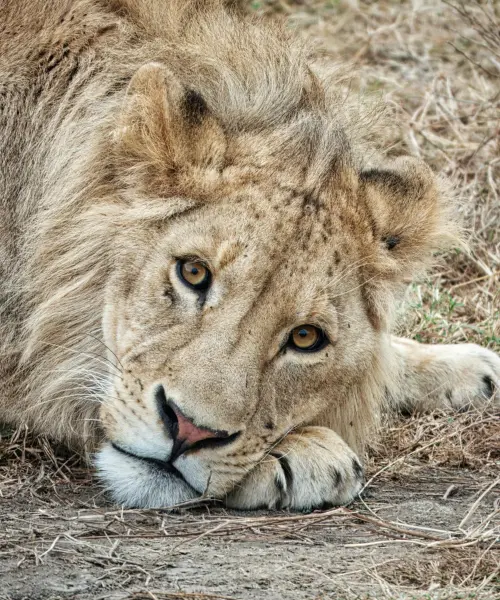
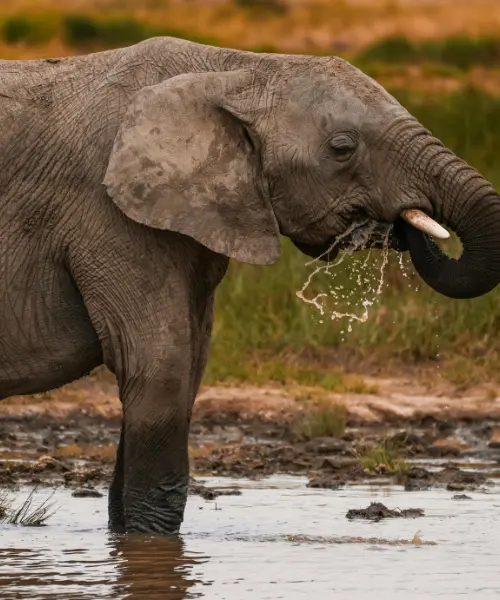
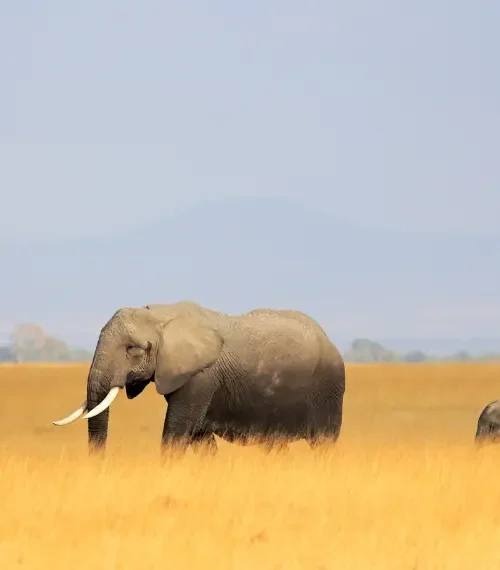
You will also have the opportunity to encounter grazing herds in their hundreds, over 600 tropical bird species and Africa’s most famous big cats resting ahead of a night of hunting, all under the backdrop of Mount Kilimanjaro’s iconic plateaued peak. However, perhaps the national park’s most famous residents are its elephants, which provide incredible photo opportunities as they gather on the horizon-spanning flats of the region’s former lake beds. In fact, the name “Amboseli” derives from the Maasai word, meaning “salty dust” – a testament to the landscape’s dramatic conditions.
Accommodation in Amboseli
Tawi Lodge
Award-winning for its eco-innovation and offering eye-catching views of Kilimanjaro from the comfort of your private cottage, Tawi Lodge is a safari accommodation experience that you will never forget. Created as a vital corridor joining Amboseli National Park, Chyulu and Tsavo, you have the chance to observe passing wildlife as it stops for a drink at the waterhole, before taking a swim in the pool or unwinding in the spa – a perfect pairing with a sustainable safari experience.
Angama Amboseli
For a unique perspective and crystal clear view of Mount Kilimanjaro, Angama Amboseli offers guests “pyjama safaris”, allowing you to watch the sun rise on Kilimanjaro with minimal cloud cover in the comfort of your pyjamas.
Tsavo West National Park
A vast expanse of pure African wilderness, amongst its copper-toned earth and the deep emerald greens of its multifarious flora lies a magical aura that makes Tsavo West National Park a scenic landscape of the most grandiose manner. Renowned for offering some of the most incredible game-viewing on earth, you will no doubt see this national park live up to its towering reputation.
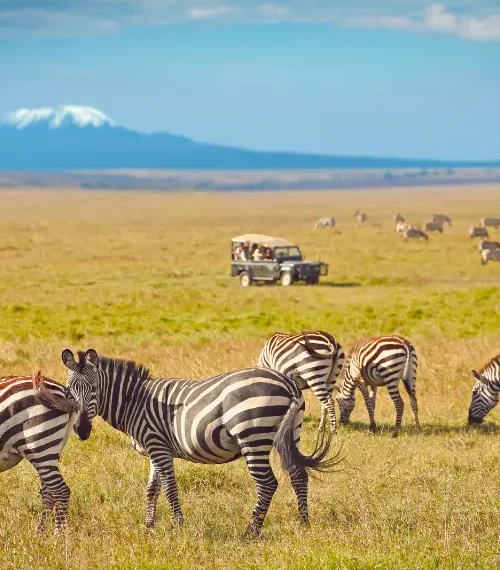
While Mount Kilimanjaro is not visible from every part of Tsavo West’s 9,065 square kilometres of protected land, as you venture to the northwestern reaches of the park on a clear day the mountain’s deep violet visage is gradually revealed. With the full spectrum of Eastern Africa’s classic wildlife inhabitants roaming the open expanse here, and Kilimanjaro dominating the skyline behind, this is a safari experience not to be missed.
Accommodation in Tsavo West
Campi ya Kanzi
A pioneer in community-focused tourism, Campi ya Kanzi helps local Maasai landowners to protect over 100,000 hectares of wild land between Tsavo West and Chyulu National Parks. Your tented cottage is one of six nestled among the regions rolling green hills, overlooking a local watering hole and Mount Kilimanjaro on the horizon. The open plan lounge, swimming pool and dining area – complete with delicious authentic Italian cuisine – make for an unforgettable stay.
Best Time to Visit Mount Kilimanjaro
The best time to visit Mount Kilimanjaro depends on what you are looking to experience from your visit to this African icon.
Best Time For a Safari By Mount Kilimanjaro
Due to the drier conditions, and therefore greater visibility, high season in Kenya and Tanzania typically falls between July and November. With this come excitable crowds looking to get a glimpse of the region’s iconic Great Migration.
However, the best time for a safari by Mount Kilimanjaro tends to be in the quieter months, between November and May. This is thanks to rains reducing the amount of dust in the air, making for clearer views of the famous mountain and its surrounding wilderness. This is why, along with the iconic pearl-white snowy peak, this season is typically favoured by photographers looking to capture that perfect image of Africa at its most spellbinding.
Best Time to Climb Mount Kilimanjaro
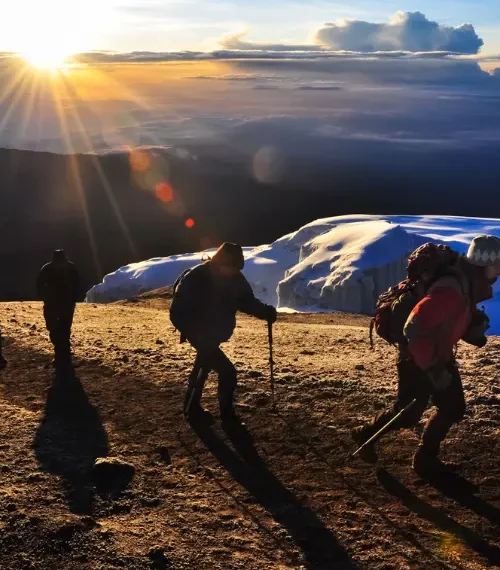
Those looking to summit Mount Kilimanjaro are better off opting for the drier seasons, which fall from December to March and June to November. However, with the preferable weather comes an increase in climber numbers.
Climbing outside these popular windows can mean fewer climbers, but also increases the likelihood of tougher climbing conditions in the form of heavy rain, slippery surfaces and even snow as you approach the summit.
Getting to Kilimanjaro
Thanks to its eponymous international airport located in Tanzania, getting to and from the Mount Kilimanjaro region is easily done. Flights to Kilimanjaro come directly from both Europe (Amsterdam and Zurich), as well as the Middle East (Doha and Istanbul), making it an easy destination to reach from most regions across the globe.
Arusha is just an hour’s drive from Kilimanjaro International Airport. Meanwhile both Amboseli and Tsavo West are a three hour drive from the airport over the border into Kenya, with the mountain’s outline visible in the distance for much of the trip.
Interested in a mount kilimanjaro safari?
Creators of unforgettable experiences, the team at Journeys With Purpose can help you build a Mount Kilimanjaro safari trip that encompasses both luxury and conservationism. Get in touch with our expert travel team on +44 20 8044 9538 or at connect@journeyswithpurpose.org and begin crafting your dream African adventure today.